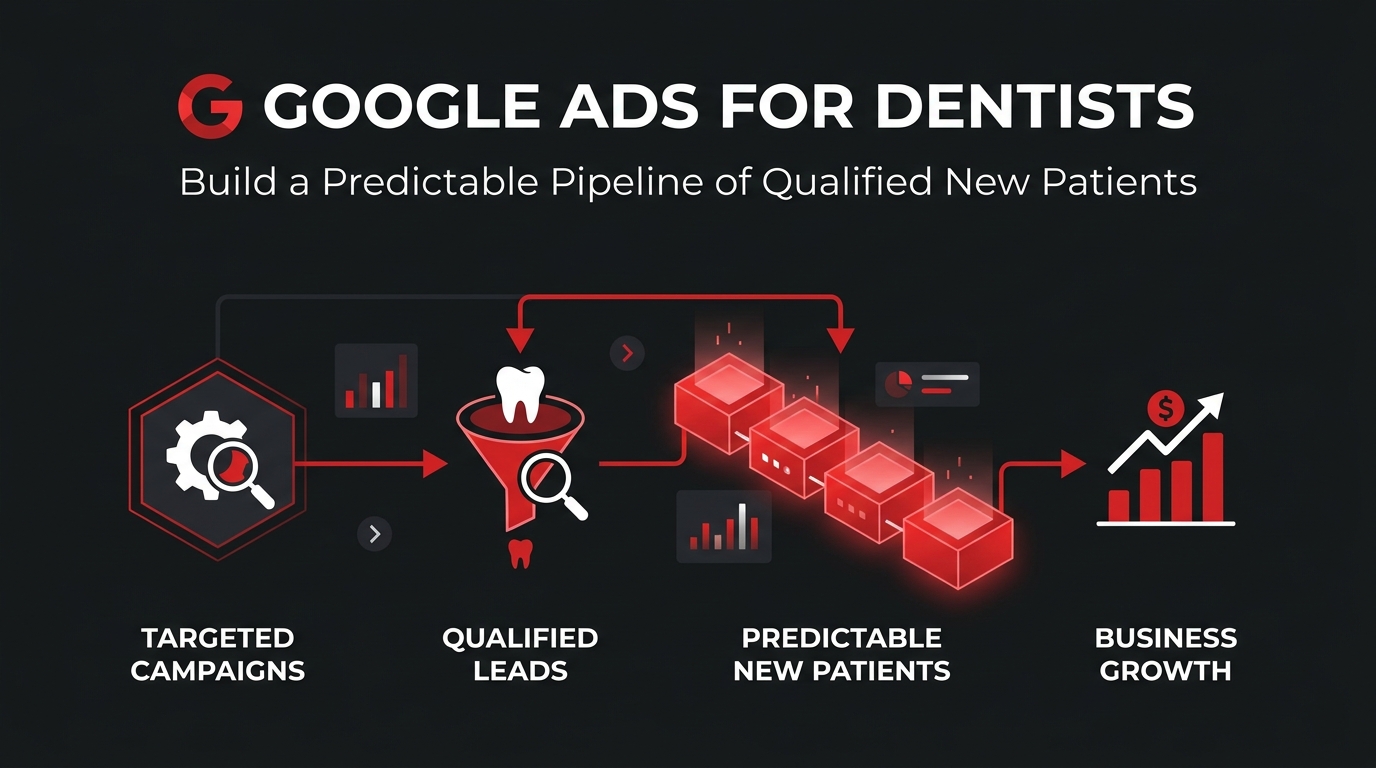
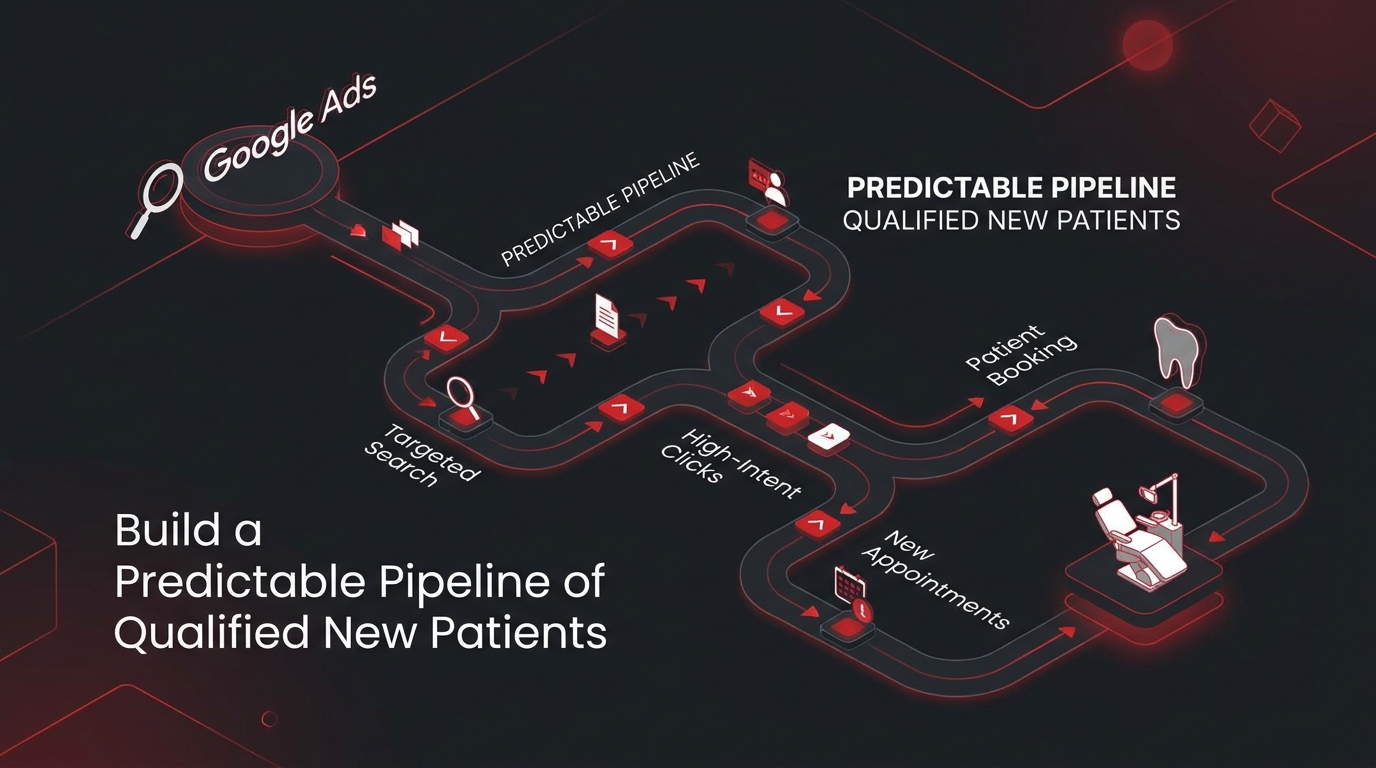
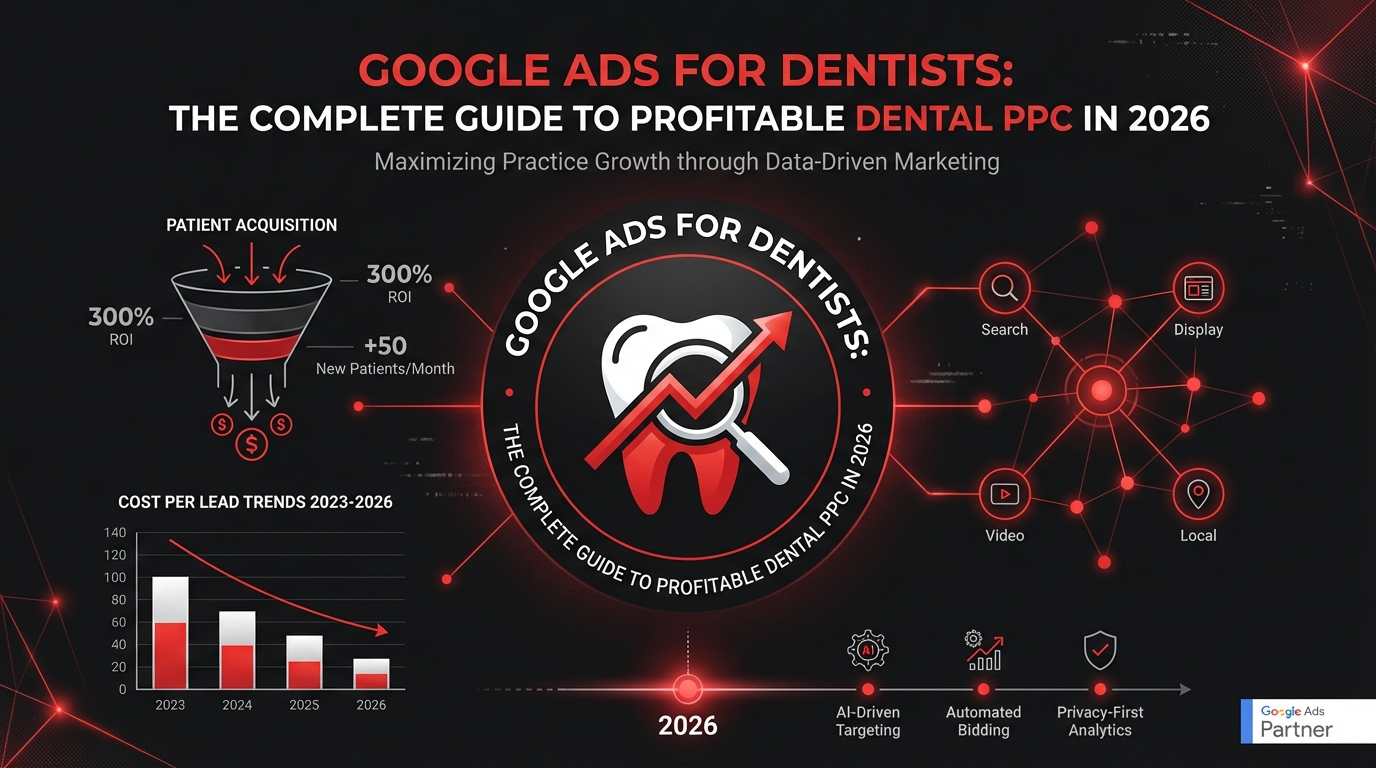
Meta description: Google ads for dentists done right drives booked consults and bigger treatment plans. Learn the exact system to generate, qualify, and convert patients.
Most owners asking about Google Ads for dentists are really asking a harder question: “How do I create consistent production growth without burning money?” That’s the right question. Tactics alone won’t save you. A complete revenue system will.
At Closing More Cases, we’ve seen the same pattern repeatedly: a practice spends on marketing, gets inconsistent results, then blames the channel. In reality, the bottleneck is usually one of three things—wrong offer, weak follow-up, or poor consult conversion. Once those are fixed, the same traffic starts producing dramatically better outcomes.
If you want a deeper breakdown of positioning and messaging before scaling spend, review CMC’s dental growth playbooks and our strategy resources for practice growth. Then use the steps below to build a system that turns attention into booked, accepted treatment.
Why Google Ads for dentists often underperforms in real practices
Most campaigns underperform because they optimize for cheap leads, not valuable cases. A $25 lead is useless if that person no-shows or only wants a cleaning. A more expensive lead can be wildly profitable if it turns into a $6,000–$20,000 treatment plan.
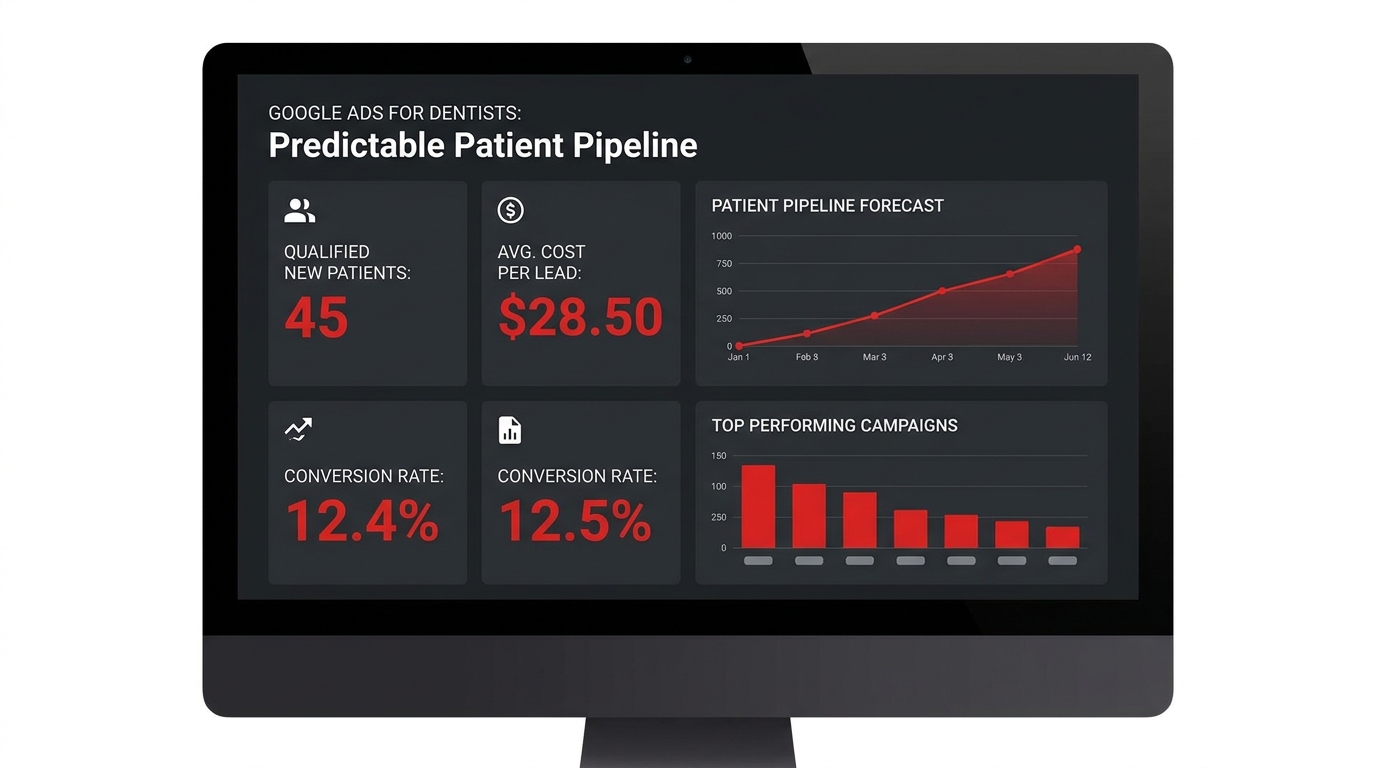
The right scoreboard is simple: cost per qualified consult, show rate, treatment acceptance rate, and production per start. If your dashboard doesn’t show these numbers weekly, you’re flying blind.
A second issue is offer-market mismatch. If your ad and landing experience are generic, you attract generic demand. High-value patients respond to specificity: exact outcomes, clear timelines, financing clarity, and social proof that feels credible.
Google’s own guidance on quality and relevance reinforces this principle: better alignment between intent, ad copy, and destination page improves both efficiency and conversion outcomes (Google Ads Quality Score factors).
What should be included in a high-performing Google Ads for dentists system?
A real growth system has five layers:
- Demand capture: your search visibility or paid intent capture.
- Qualification layer: messaging that filters out low-fit patients.
- Speed-to-lead engine: immediate response and structured booking.
- Consult conversion process: diagnose, educate, present, close.
- Retention/referral loop: keep momentum and expand LTV.
Practices that run these five layers consistently usually see stronger economics in 60–120 days than practices obsessing over one channel for a year.
To sharpen consult conversion, use a repeatable communication flow and outcome-based scripting. The ADA’s patient communication resources are a strong baseline, but your team still needs role-play and accountability to move case acceptance.
How long does it take to see results from Google Ads for dentists?
Short answer: fast signals in 2–4 weeks, dependable trends in 8–12 weeks, and compounding gains in 4–6 months.
Weeks 1–2 should produce leading indicators: better click-through, stronger call quality, and more qualified inquiries. If those indicators don’t improve quickly, your messaging or targeting is off.
By week 8, you should see meaningful lift in booked consults and show rate if follow-up is tight. By month 4+, the real compounding begins: stronger review profile, more branded searches, better close rates from improved trust.
The mistake is quitting before data stabilizes or scaling before conversion is ready. Either one destroys ROI.
How to improve ROI when using Google Ads for dentists
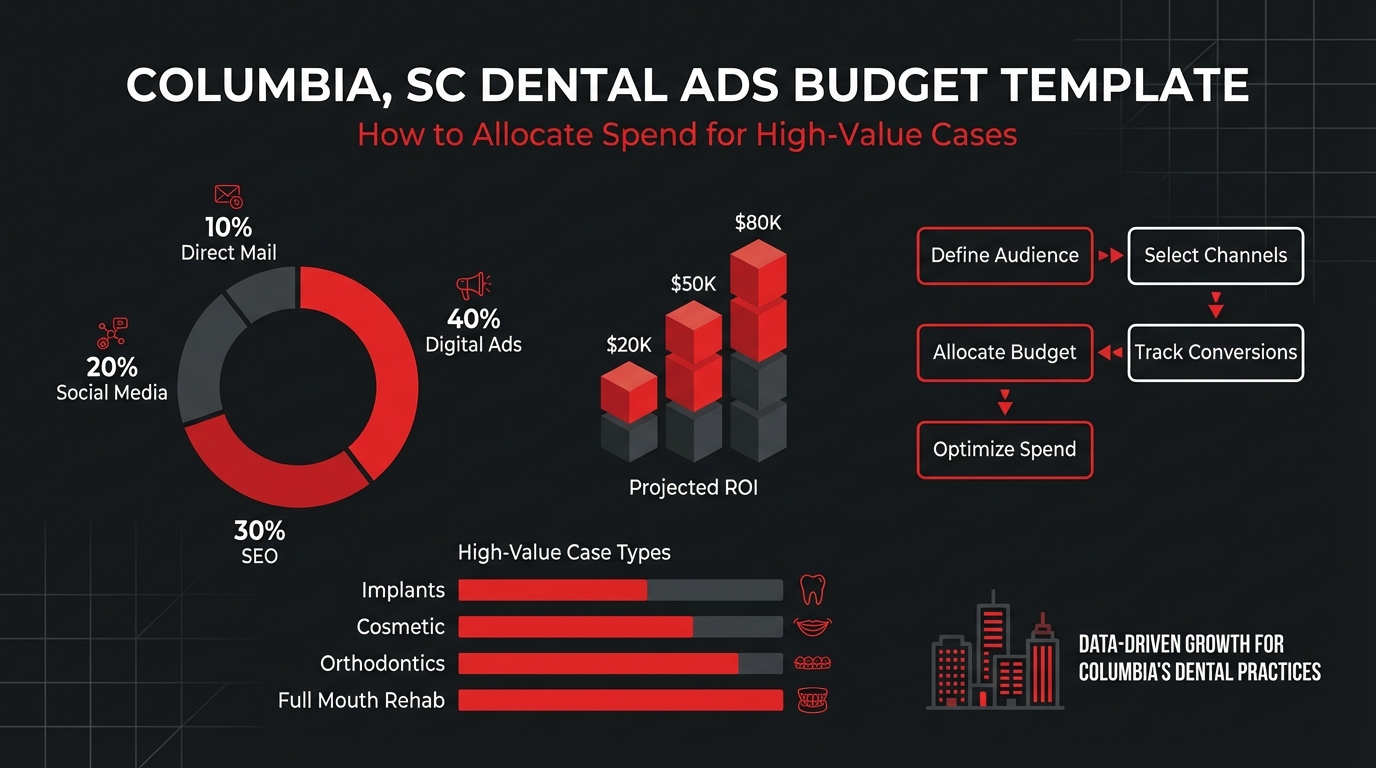
Start by defining your acceptable acquisition economics. If a procedure yields $8,000 in production and your target marketing-to-production ratio is 10%, your allowable acquisition cost is $800 per start. That one number should guide channel decisions.
Then tighten the full journey:
- Targeting: focus on procedure and problem-aware terms.
- Ad/message clarity: call out outcomes, timeline, and financing.
- Page structure: answer top objections above the fold.
- Follow-up cadence: first call in under 5 minutes, then structured reattempts.
- Consult standardization: same diagnostic and presentation framework every time.
For operators building a full front-end growth engine, our case acquisition framework and dental sales process breakdown can help you align marketing and in-office conversion.
Common mistakes practices make with Google Ads for dentists
Mistake 1: Chasing volume instead of case value
A flood of low-intent leads will overwhelm your team and mask the real issue. Protect calendar capacity for higher-value opportunities.
Mistake 2: Treating no-shows as a “marketing problem”
No-shows are usually a communication and expectation-setting problem. Confirmation workflows, pre-visit education, and financial clarity matter.
Mistake 3: No ownership of follow-up
If no one owns speed-to-lead KPIs, response times drift and close rates collapse.
Mistake 4: Ignoring call quality
Recorded call reviews often reveal the truth: weak discovery, rushed pricing, no emotional context, and no confident close.
Mistake 5: Reporting vanity metrics
Clicks and impressions are not growth. Production, starts, and accepted treatment are growth.
Do Google Ads work for dental practices?
Google ads for dentists works best when you connect marketing to operations: fast follow-up, a strong consult process, and a clear financial conversation. The practices that win don’t just generate interest—they convert interest into scheduled treatment with a repeatable process.
How much should a dentist spend on Google Ads?
Google ads for dentists works best when you connect marketing to operations: fast follow-up, a strong consult process, and a clear financial conversation. The practices that win don’t just generate interest—they convert interest into scheduled treatment with a repeatable process.
What keywords should dentists avoid in Google Ads?
Google ads for dentists works best when you connect marketing to operations: fast follow-up, a strong consult process, and a clear financial conversation. The practices that win don’t just generate interest—they convert interest into scheduled treatment with a repeatable process.
How fast can Google Ads produce new patient leads?
Google ads for dentists works best when you connect marketing to operations: fast follow-up, a strong consult process, and a clear financial conversation. The practices that win don’t just generate interest—they convert interest into scheduled treatment with a repeatable process.
Are Google Ads better than Facebook Ads for dentists?
Google ads for dentists works best when you connect marketing to operations: fast follow-up, a strong consult process, and a clear financial conversation. The practices that win don’t just generate interest—they convert interest into scheduled treatment with a repeatable process.
Final takeaway: build the full system, not just the channel
If you’re serious about scaling, stop asking whether one tactic is “good” or “bad.” Ask whether your full growth system converts qualified attention into accepted treatment predictably.
When Google Ads for dentists is connected to strong offer design, disciplined follow-up, and a structured consult process, it becomes a reliable production engine—not a gamble.
CTA: Book a free strategy call: https://www.closingmorecases.com/contact-us
90-day execution plan practice owners can implement this quarter
Week 1-2: audit your current patient journey from first click to treatment acceptance. Pull call recordings, measure response times, and identify the top three conversion leaks. Most teams find immediate improvement simply by tightening who calls leads, how fast they respond, and what is said in the first two minutes.
Week 3-4: rebuild the offer and page/message structure around case value. Instead of generic “new patient specials,” lead with procedures and outcomes that matter to your production goals. Add proof points, financing clarity, and a simple next-step CTA.
Week 5-8: standardize consult flow and front desk follow-up. Create scripts, checklists, and scorecards so each patient experience is consistent. Consistency is what turns occasional wins into monthly predictability.
Week 9-12: scale what works and cut what doesn’t. Reallocate budget toward keywords, ad groups, and messaging themes that produce accepted treatment—not just leads. Review results weekly and make one focused optimization decision at a time.
The operators who win are not guessing weekly. They run a simple system, track the right numbers, coach the team, and keep improving execution. If your practice commits to this cadence for 90 days, you’ll have cleaner data, better consult quality, and stronger production confidence heading into the next quarter.
KPI targets to track every Monday
Track these five numbers weekly: qualified consults booked, consult show rate, treatment acceptance rate, production per start, and cost per accepted case. If one number drops, fix the process at that stage before adding more budget. This keeps growth profitable and controlled.