Introduction
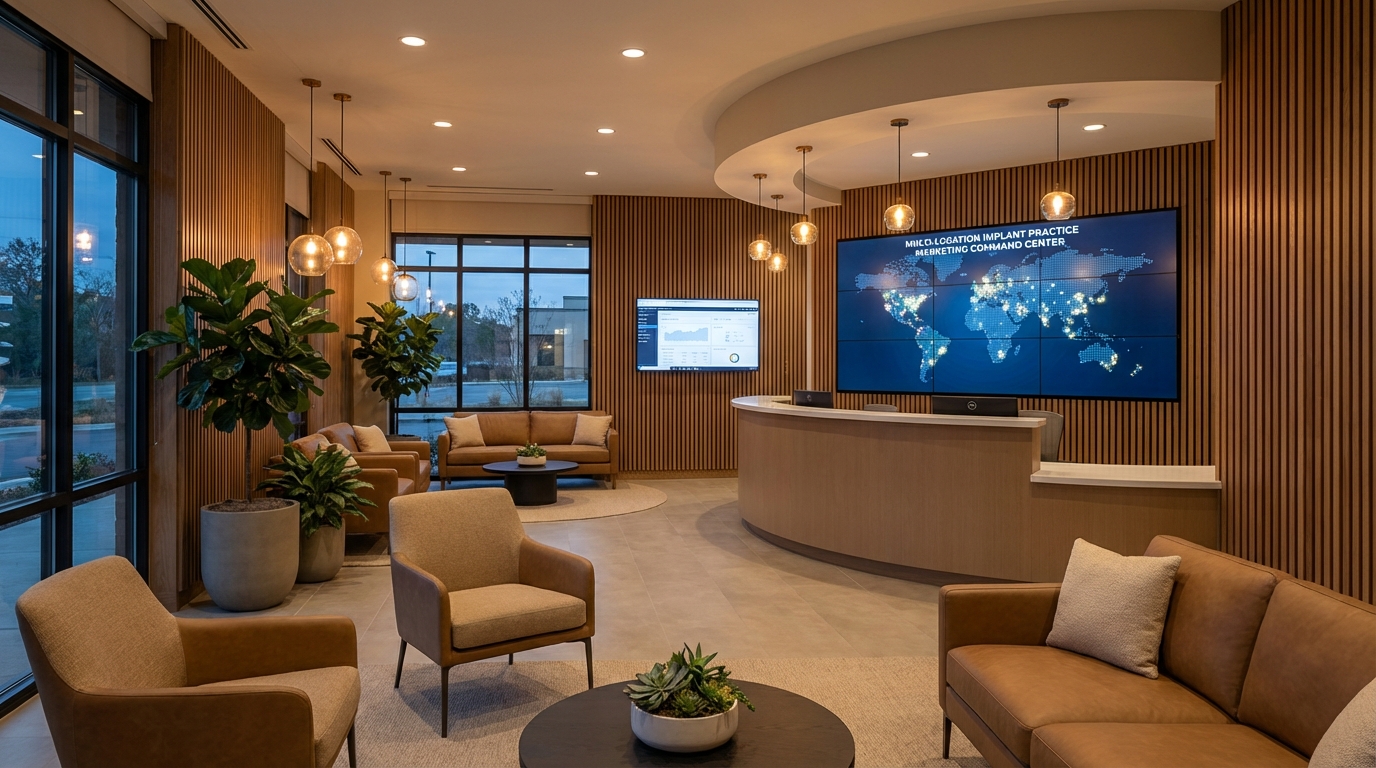
Multi-location implant practices finally hit a tipping point when every region shares the same visibility into performance, messaging, and outcomes. Instead of letting each office run its own marketing experiments, a command center approach lets leadership see which markets are converting, which consults are lagging, and where to reallocate ad spend. Channels that book high-value cases—organic search, paid ads, and referrals—can stay synchronized without slowing down the daily work of practice leaders.
The command center should pull in revenue numbers (from the same files that power the Dental Practice Financial Health Dashboard), appointment demand, and conversion data, then surface the actions that earn the most BOFU traffic. When you combine that with proven frameworks from the Dental Appointment Setting Service Guide, each clinic finally operates inside a unified revenue operating system—just like the ADA recommends through its practice management resources at https://www.ada.org/resources/research/health-policy-institute/your-ada.
Map revenue signals with a central dashboard
H2 Overview
A command center starts with visibility. Pull in implant consult volume, case acceptance rates, and paid media ROAS so you can compare markets without asking anyone to manually send spreadsheets. The Dental Practice Financial Health Dashboard is the blueprint: it tracks profit, revenue, and marketing spend in one place while tagging each metric with a recommended next step. Add a live feed from your CRM (or your practice-management software) and let it trigger notes to the operations lead when a consult count drops 10% week over week.
H3 Internal Alignment
Use the same dashboard to highlight the BOFU keywords that are working. In the dashboard, tag keywords like “dental implant financing” or “implant case acceptance system” and flag the landing page that drove the most appointments. Encourage each location to log their weekly experiments so the command center can pick a winner and scale it across the group. When everyone maps to one set of KPIs, communication becomes faster and the brand feels cohesive.
H3 External Context
Pair your internal data with public research to keep the team aligned with market expectations. For example, share regional treatment demand benchmarks published by the ADA’s Health Policy Institute or the current seasonality trends noted by McKinsey’s practice operations team at https://www.mckinsey.com/industries/healthcare/our-insights. When the group sees how their performance compares to national norms, it’s easier to recommend pushing more budget to a lagging clinic or doubling down on a high-performing funnel.
Run localized SEO + paid-media loops for each region
H2 Strategy
Every location should behave like a mini-office with its own geographic keywords, but the command center prevents duplication and wasted spend. Build on the frameworks in Dental SEO Services and feed the same keyword research into both your organic content calendar and your paid-media campaigns. The command center keeps a shared spreadsheet of city-specific terms, landing pages, and creative variations so you can deploy the most relevant messaging instantly.
H3 Local-to-Regional Playbook
Rotate the paid budget to focus on underperforming markets flagged by the dashboard. When a city’s search volume spikes for “implant marketing agency pricing,” drop a new landing page and schedule an upgraded LinkedIn + Google Ads push. This keeps the conversion pathway warm and stops any one office from burning budget on stale keywords. Share the September 2025 playbook for multi-location groups (like the one in Dental Marketing Agency Chattanooga) to show what success looks like.
H3 External Reinforcement
Use data from Search Engine Journal’s local SEO guides (https://www.searchenginejournal.com/local-seo/what-is-local-seo/) to keep the technical checklist sharp. Bring those learnings into your command center daily standup so the team sees that citations, backlinks, and schema updates directly influence the BOFU conversion rates you care about. The external benchmark keeps internal discussions tied to measurable SEO behaviors.
Align case acceptance rituals across every office
H2 Teams that Coach the Same Way
Case acceptance is still a human process. If each coordinator is running their own script, the revenue command center loses its most direct lever. Build a shared case-acceptance playbook pulled from Dental Implant Case Acceptance Sales System and the consult-presentation steps in Dental Treatment Plan Presentation: 5-Step Closing Formula. The command center can monitor whether each clinic follows the same steps, then surface coaching opportunities when acceptance dips.
H3 Behavioral Cues
Map out the behaviors that lead to success: number of consult reminders, follow-up message timing, and financing offers discussed. Feed those behaviors into your CRM so the dashboard can signal the team to call or text a prospect when an appointment is about to slip. This shared ritual ensures that high-intent visitors receive the same high-touch treatment no matter which office they booked.
H3 External Trust Signals
Share evidence from DentistryIQ’s practice management research (https://www.dentistryiq.com/practice-management/sales/article/14191843/case-acceptance-strategies) during monthly review calls. When coordinators see the same external authority repeating what you practice internally, adoption is smoother and the command center gains credibility.
Turn every visit into a booking with premium CTAs + automation
H2 Conversion-Ready Assets
Reserve a section of your command center for CTA performance. Each landing page should mention either https://www.closingmorecases.com/contact-us or https://www.closingmorecases.com/contact-us, and measure which CTA generates the most traction for complex implant cases. Promote those CTAs through high-intent traffic sources and double down on the creative that prompts people to schedule a 30-minute strategy call.
H3 Automation + Follow-up
Pair your CTAs with the systems in Dental Appointment Setting Service Guide to automate reminders, pre-consult forms, and text nurturing. This reduces no-shows and makes sure prospects are prepped before they ever step into the door. The command center tracks automation health (open rates, click-throughs, drop-offs) so you can swap messages in real time when engagement dips.
H3 External Inspiration
Use HubSpot’s marketing automation benchmarks (https://blog.hubspot.com/marketing/marketing-automation) to set expectations for open rates and time-to-book. When your command center holds those benchmarks next to internal KPIs, you can highlight when a clinic is outperforming or lagging and provide tactical support immediately.
Call to Action
Ready to move from fragmented marketing to a command center that delivers predictable implant revenue? Book a free strategy call or request a free website audit so we can configure your dashboards, storytelling, and conversion systems the same day.
Q: What KPIs belong in a multi-location marketing command center?
A: Track consult volume, case acceptance rate, paid-media ROAS, organic keyword rankings, CTA conversions, and automation engagement. Tie each KPI to a ready-to-activate playbook so you can move budget or coaching focus in minutes.
Q: How do internal dashboards stay in sync with front-line teams?
A: Use the dashboard to publish a weekly “reality” summary and require each coordinator to log their updates (GPS, wins, obstacles). The command center only stays relevant when it reflects what the team is doing each day.
Q: Should each location use the same SEO keywords?
A: No—each site needs local keywords, but the command center owns the shared keyword library, so you avoid duplicate content while still learning from what’s working in similar markets.
Q: What automation tools should we pair with the command center?
A: Connect your CRM, booking software, and email/text automations so data flows into the same dashboard. Anything that nudges prospects toward the CTA—like form follow-ups or payment-plan nudges—should feed back into the command center.
Q: How do we prove the command center drives revenue?
A: Compare appointment-to-closing rates before and after the command center rollout, and tie the increase to the CTA conversions that you can trace back to either the strategy call or audit landing pages.
Q: What’s the best way to scale the command center as the practice grows?
A: Add new markets incrementally while keeping the same playbooks. Train a “revenue operator” at each office to own the command center feed so leadership can keep expanding without losing visibility.