slug: why-cosmetic-dentistry-roi-matters
meta_description: Discover how cosmetic dentistry ROI transforms practice revenue. Learn pricing strategy, patient segmentation, and case value calculations for implants, veneers, and smile design.
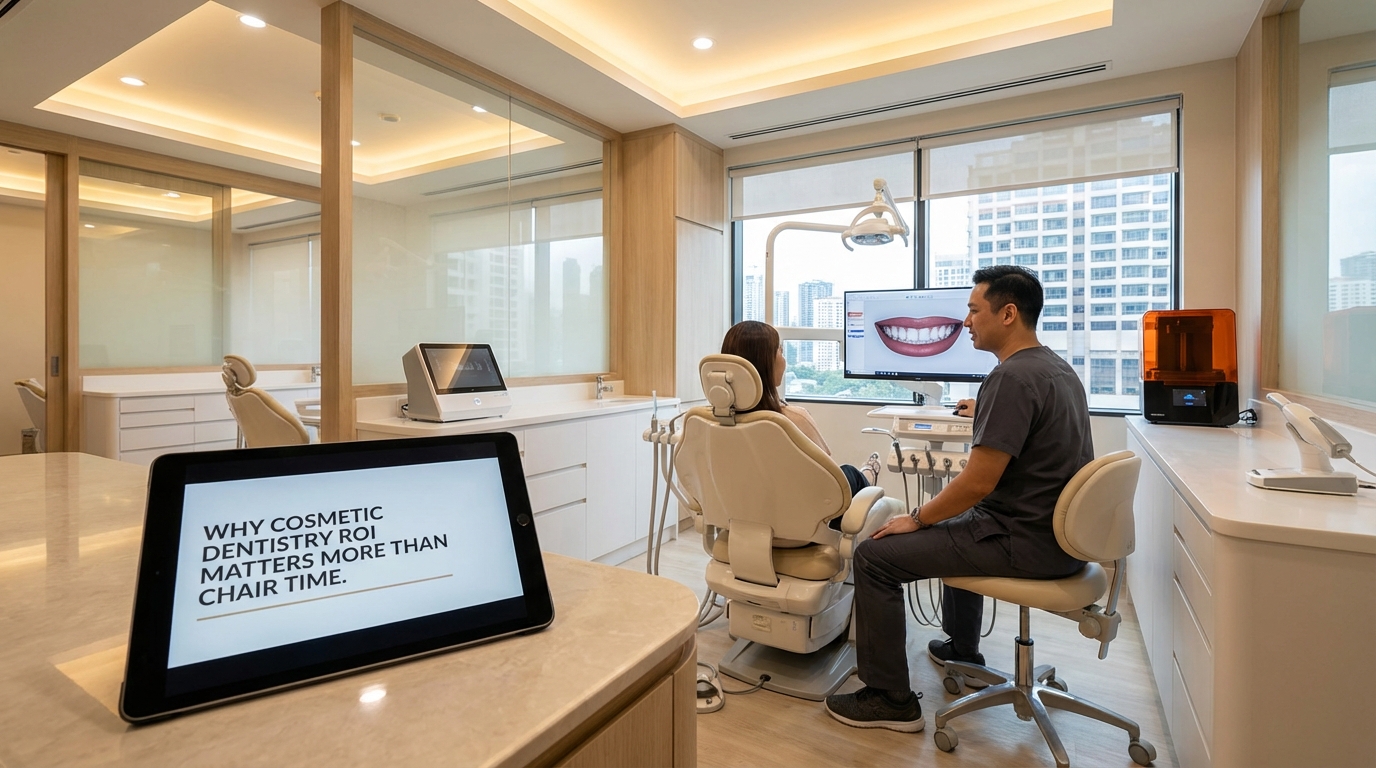
Why Cosmetic Dentistry ROI Matters More Than Chair Time
By KamCosmetic1,752 words9 min read
Introduction
You're sitting in a treatment consultation. A 45-year-old patient wants a smile makeover: six veneers, crown adjustment, whitening. You quote $6,000. She says yes.
Here's the problem: You just spent 3 hours on treatment planning, clinical time, and lab coordination for $2,000 profit. Meanwhile, your hygienist is booked selling $500 cleanings.
The issue isn't your price. It's your measurement.
Practices that dominate cosmetic dentistry don't think about chair time. They think about case value, patient lifetime value, and revenue per clinical hour. They segment patients by treatment acceptance, price sensitivity, and esthetic ambition—then they price accordingly.
This article breaks down the ROI model cosmetic-forward practices use to 3x revenue without increasing patient volume. Whether you're building a cosmetic brand from scratch or optimizing existing cases, this framework will show you where the money actually is.
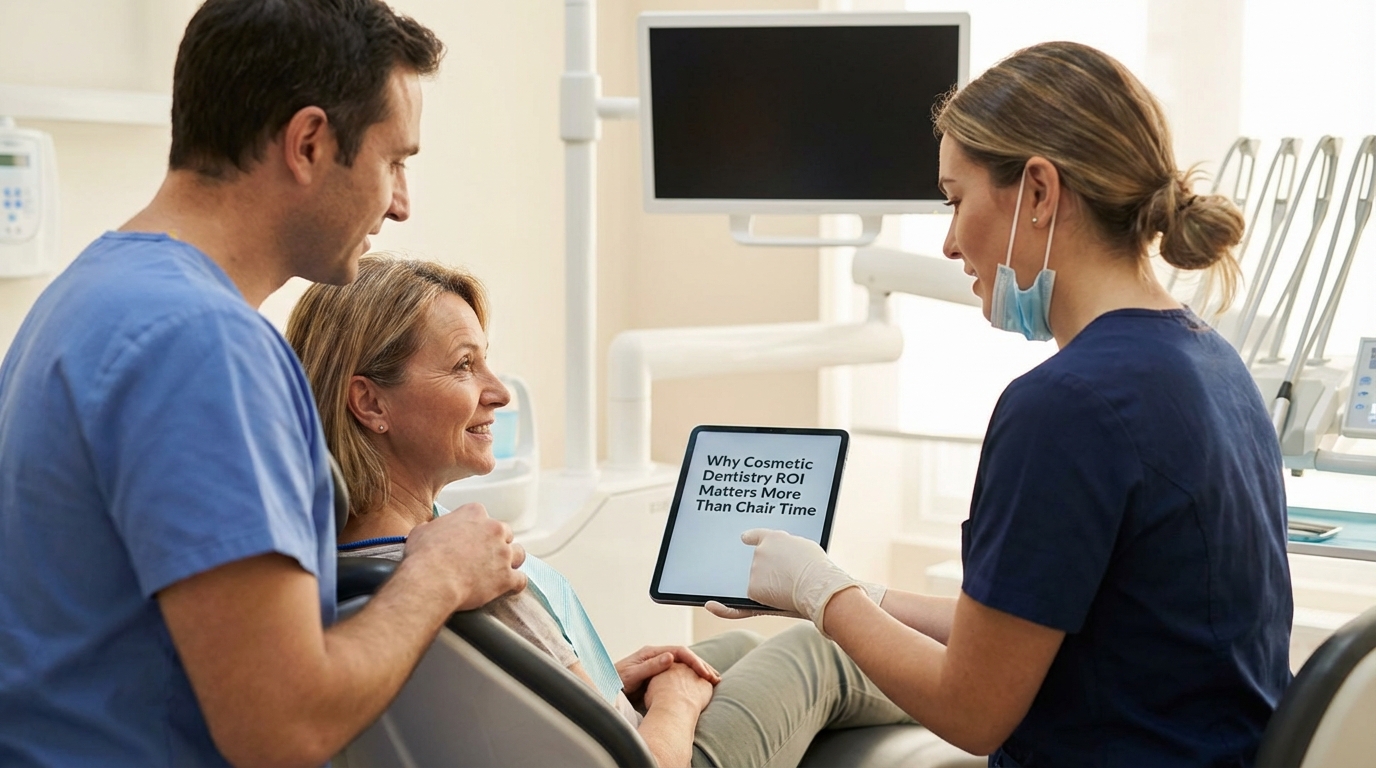
The Cosmetic Dentistry ROI Framework
Why Most Practices Leave Money on the Table
Traditional practice metrics focus on case completion and patient volume. A hygienist books 8 cleanings a day = good revenue. A doctor completes 4 cosmetic cases a month = baseline performance.
But cosmetic dentistry ROI measures something different:
Revenue per clinical hour = Total cosmetic revenue ÷ Hours spent on cosmetic work
Case acceptance rate by price = Percentage of patients accepting treatment over $3,000
Patient lifetime value (cosmetic patients) = Projected revenue from one patient over 5 years
Here's where it gets interesting: A single cosmetic implant case ($4,500–$8,000) generates more profit per hour than 6 hygiene visits. Yet most practices staff hygiene proportionally while treating cosmetic work as a byproduct.
The practices winning in cosmetic dentistry restructured their workflow, pricing, and patient communication around ROI—not volume.
The Three ROI Levers
Lever 1: Case Segmentation Not all cosmetic cases are created equal. A patient wanting a single veneer repair is not the same as one wanting full-mouth reconstruction. Practices segment cases by:
- Treatment complexity (1–3 teeth vs. 4+ teeth)
- Price sensitivity (under $2K vs. $3K+)
- Cosmetic ambition level (smile enhancement vs. transformation)
Result: You communicate differently, price differently, and allocate doctor time strategically.
Lever 2: Price Positioning by Case Type
- Quick cosmetic cases (single tooth bonding, minor whitening): $400–$1,200
- Mid-range cases (2–3 veneers, cosmetic crown): $2,000–$4,000
- Premium cases (full-mouth renovation, smile design + implants): $5,000–$12,000+
The practices printing money focus on premium case volume—not quantity, but value per case. A doctor completing 2 premium cases per week (10/month) generates $50,000+/month in cosmetic revenue alone.
Lever 3: Treatment Planning ROI Your treatment plan is a sales document. High-ROI practices:
- Use digital smile design to show before/after (increases acceptance by 25–40%)
- Bundle complementary services (whitening + veneers = lower per-item cost, higher total)
- Present financing options upfront (removes price objection)
- Train coordinators to reframe cosmetic work as "investment in your brand"
See Dental Implant Case Acceptance: The Psychology Behind the Yes for deeper case acceptance frameworks.

Building Your Cosmetic Revenue Model
The Math: From $20K/Month to $60K/Month in Cosmetic Revenue
Scenario A: Volume-based (current state)
- 8 hygiene patients/day × 20 days = 160 cleanings
- 2 cosmetic consultations/week × 4 weeks = 8 cases
- 5 cases accepted (63% acceptance) × $2,500 average = $12,500/month cosmetic revenue
- Profit: ~$5,000/month (40% margin after lab, materials, overhead)
Scenario B: ROI-based (optimized state)
- 6 hygiene patients/day × 20 days = 120 cleanings (fewer volume, better quality)
- 6 cosmetic consultations/week × 4 weeks = 24 cases (more targeted, higher-intent)
- 12 cases accepted (50% acceptance, but higher value) × $4,500 average = $54,000/month cosmetic revenue
- Profit: ~$24,300/month (45% margin with premium pricing)
The shift: Same practice, same doctor hours, 4.3x revenue increase. How?
- Repositioned the practice as a cosmetic destination (website, patient communication, case studies)
- Segmented patients by intent and price sensitivity
- Raised pricing 80% ($2,500 → $4,500 average) through better case selection and treatment planning
- Concentrated cosmetic consultations with high-intent patients only
- Built internal case studies showing transformations (social proof drives premium positioning)
This isn't fantasy. It's what cosmetic-driven practices do consistently.
Patient Segmentation by ROI Potential
Create a simple intake filter to segment patients:
| Patient Segment | ROI Potential | Communication Strategy | Pricing |
|---|---|---|---|
| Esthetic Enthusiasts (seeks Instagram-worthy smile) | High ROI | Digital smile design + before/after case studies | Premium ($4K–$8K) |
| Treatment Pragmatists (wants function + appearance) | Medium ROI | Clinical benefits + aesthetic benefit combo | Mid-range ($2K–$4K) |
| One-Off Fixers (single tooth issue) | Low ROI | Quick solutions, efficiency-based | Standard ($500–$1.5K) |
Your hygienist or coordinator asks 2 simple questions during intake:
- "What brought you in today?"
- "If you could change anything about your smile, what would it be?"
Answers tell you the segment. Esthetic Enthusiasts get a digital smile design consultation with the doctor. One-Off Fixers get the standard consultation. This pre-filtering 2x's acceptance rates because you're talking to the right segment about what matters to them.
Pricing Strategy for Cosmetic Cases
Three-Tier Cosmetic Pricing Model
Tier 1: Standard Cosmetic ($400–$1,500)
- Single tooth bonding, minor shade correction, whitening
- 30–45 minutes clinical time
- High volume, lower profitability per case
- Example: Emergency cosmetic repair
Tier 2: Advanced Cosmetic ($2,000–$4,500)
- 2–4 teeth (veneers, cosmetic crowns, combined cases)
- 1.5–2.5 hours clinical time
- Medium volume, solid margin
- Example: "Hollywood smile" renovation
Tier 3: Premium Cosmetic ($5,000–$15,000+)
- Full-mouth transformation, smile design + implants, complex anteriors
- 3–6+ hours across multiple appointments
- Low volume, high profitability per hour
- Example: Comprehensive esthetic/restorative case
The ROI play: Shift 30% of your cosmetic volume from Tier 1 → Tier 2, and 10% from Tier 2 → Tier 3. You don't need more patients. You need better cases.
Justifying Premium Pricing
Patients resist high cosmetic pricing when they view it as cosmetic. They accept it when they view it as investment in their professional/personal brand.
Reframe your pitch:
❌ "We can do 4 veneers for $4,000."
✅ "Your smile is the first thing people notice. For a high-impact professional like you, a 4-tooth veneer transformation positions you as polished and confident. The investment is $4,000 and typically lasts 10+ years. That's about $400/year to lead with your best self."
Notice the shift:
- Focus on professional impact (not "cosmetic whim")
- Cite longevity (spreads cost across years)
- Emphasize confidence/brand (emotional ROI)
- State the investment term (makes it feel smaller)
This language works because it aligns with how cosmetic patients think. They don't want cheaper teeth. They want high-impact results they're proud to show off.
For treatment coordinator scripts and case acceptance techniques, see Dental Implant Case Acceptance.
Building Your Cosmetic Case Study Library
Why Case Studies 2x Cosmetic Case Acceptance
Cosmetic patients buy on visual proof, not credentials. A before/after photo of a 10-tooth transformation is worth more sales copy than 1,000 words about your cosmetic expertise.
High-ROI practices build a case study library. Here's the system:
Step 1: Select High-Impact Cases
- Look for dramatic transformations (shade, shape, alignment)
- Include diverse demographics (age, gender, profession)
- Document consent to use photos (signed consent required)
Step 2: Create Digital Smile Designs
- Use software like Smile Designer or Cerec to show the "after"
- Show before/after side-by-side
- Include 3/4 view and front view
Step 3: Build a Cosmetic Portfolio
- Create a dedicated page on your website: /cosmetic-smile-gallery
- Organize by case type: veneers, crowns, whitening, full-mouth
- Add patient testimonials (first names only, with age + profession if available)
Step 4: Use in Consultations
- iPad presentation during cosmetic consultation
- "This is similar to what we could do for you."
- Dramatically increases acceptance and justifies premium pricing
Practices with 20+ cosmetic case studies close cosmetic cases at 65%+. Practices with <5 close at 35%. The gap is real. Q: How much should I invest in cosmetic dentistry marketing? A: If cosmetic is 10% of your practice, allocate 20–30% of your marketing budget there. Cosmetic patients are higher intent, higher lifetime value, and more referral-prone. They're worth the investment in targeted ads, case studies, and social proof.
Q: What's a realistic cosmetic case acceptance rate? A: 35–45% is baseline for most practices. With premium positioning and digital smile design, 55–70% is achievable. Above 70% usually means you're under-pricing or over-filtering for high-intent patients only.
Q: Can I do cosmetic dentistry without cosmetic training? A: Yes, but certifications like ADC (American Academy of Cosmetic Dentistry) or formal esthetic training dramatically improve results and patient confidence. Consider at least 1 continuing education course on smile design and cosmetic principles. It pays for itself on the first premium case.
Q: How do I convince my team cosmetic cases are worth the time? A: Show them the math. A 2-tooth veneer case ($3,500) at 1.5 hours = $2,333/hour clinical revenue. A standard crown ($1,500) at 45 minutes = $2,000/hour. Cosmetic is higher ROI and higher esthetic satisfaction. Your hygienist doesn't mind referring if they see the doctor invested.
Q: Should I separate cosmetic from general dentistry pricing? A: Yes. Price cosmetic cases 15–25% higher than equivalent restorative work. You're paying premium lab fees for cosmetic-grade materials, spending more planning time, and delivering higher-impact results. Patients expect to pay more for "elective" care.
Q: What's the fastest way to build cosmetic case volume? A: Get your existing patients cosmetic cases before chasing new patients. Train your team to identify upgrade opportunities (shade mismatch, old edges) and present cosmetic refinements. You'll 2x cosmetic volume in 60 days without increasing patient visits. Every smile tells a story. If yours needs an upgrade, let's talk strategy.
Book a free strategy call — 20 minutes with Blake to review your smile goals and explore cosmetic options that fit your life.
Book a free website audit — See how your current website positions cosmetic dentistry and identify revenue opportunities you're missing.
Frequently Asked Questions
Ready to Close More Cases?
Book a free strategy call and see how we help dental practices add 40+ new patients in 90 days.
Book Your Free Strategy CallRelated Articles
Cosmetic9 min read
Atlanta Cosmetic Dentistry Reputation Repair Tactics
Atlanta Cosmetic Dentistry Reputation Repair Tactics
Cosmetic8 min read
Digital Smile Design Marketing System That Converts High-Value Cosmetic Dentistry Cases
Convert cosmetic dentistry leads into booked consults with a digital smile design marketing system that blends education, financing, automation, and a ready-to-close team.
Cosmetic7 min read
High-Value Smile Reconstruction Revenue Engine for Dental Practices
Build a high-value smile reconstruction revenue engine that turns consult waitlists into financed cases and predictable cash without adding staff.