slug: regenerative-dentistry-marketing-positioning-future
meta_description: Regenerative dentistry (PRF, bone grafting, stem cell) is the future of implant dentistry. Learn positioning, patient education, and how to own the emerging trend in your market.
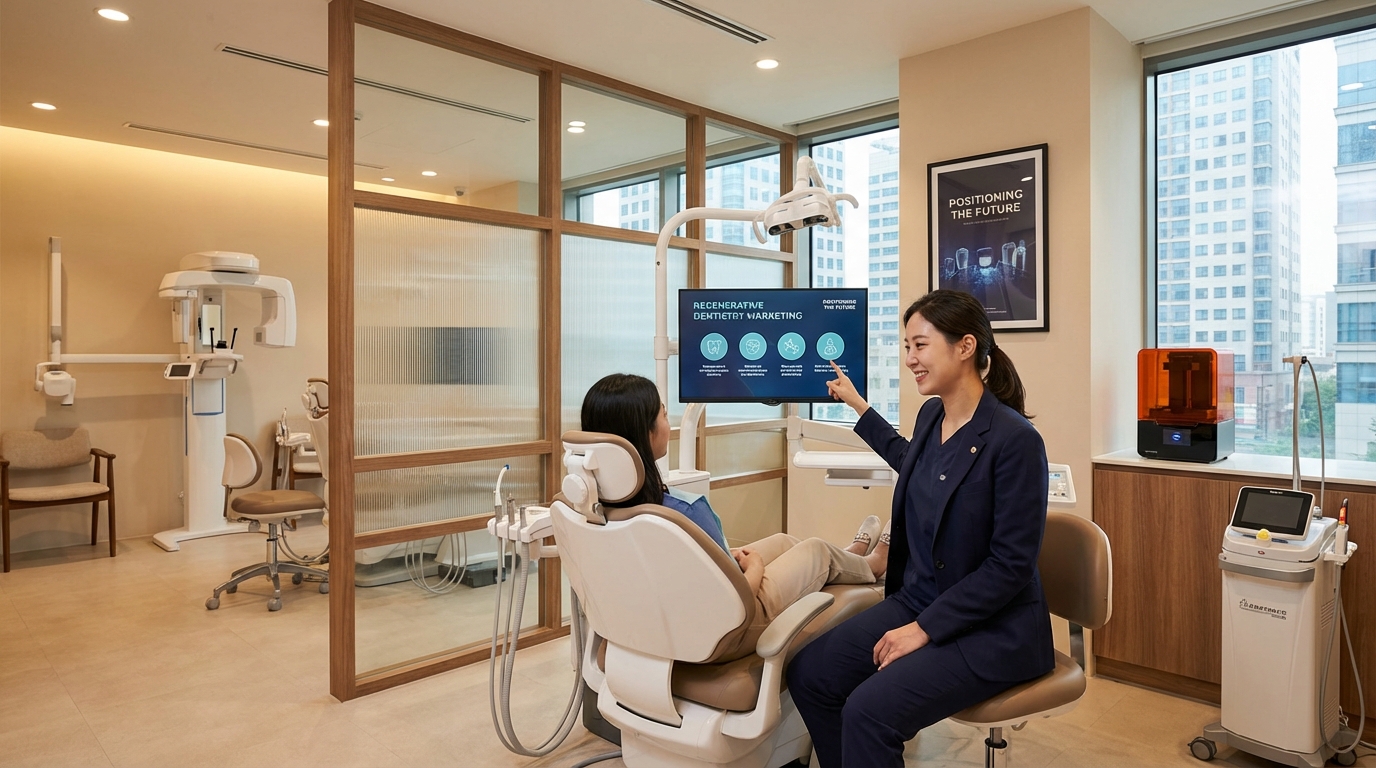
Regenerative Dentistry Marketing: Positioning the Future
By KamGeneral1,661 words8 min read
Introduction
Dental implantology is splitting into two camps:
Camp A: Traditional implants (extract, place implant, crown). Fast, standard, $4,500–$6,000.
Camp B: Regenerative implants (extract, grow bone, place implant with regenerative materials, crown). Slower, premium, $6,500–$10,000+.
Camp B is small today (5–10% of implant practices). By 2027, it'll be 40%+ of premium implant practices.
Why? Because regenerative dentistry works better. Bone grafting, PRF (platelet-rich fibrin), and other regenerative materials produce:
- Better long-term implant outcomes (fewer failures)
- Faster healing (reduced pain/recovery)
- Superior esthetics (better bone contours)
- Higher patient satisfaction
But here's the real opportunity: Patients don't know regenerative dentistry exists. The practice that positions itself as a regenerative implant leader in your market gets 30–50% premium pricing + attracts patients seeking "the best option," not "the cheap option."
This article shows you how to position regenerative dentistry and claim first-mover advantage in your market.

What Is Regenerative Dentistry (And Why It Matters)
The Three Pillars of Regenerative Implant Dentistry
Pillar 1: Bone Grafting & Regeneration When a tooth is extracted, the bone holding it resorbs (shrinks) over 6–12 months. Regenerative protocols use grafting materials (autograft, allograft, xenograft) to rebuild the bone structure.
Result: Stronger implant support, better esthetics, fewer future complications.
Pillar 2: Platelet-Rich Fibrin (PRF) PRF is extracted from the patient's own blood. It's spun in a centrifuge to concentrate growth factors and platelets. Then it's placed around the implant during surgery.
Result: Faster healing (7–10 days vs. 14–21 days standard), reduced inflammation, better soft tissue healing.
Pillar 3: Esthetic Bone Contouring Standard implants place bone around the implant to hold it. Regenerative protocols sculpt the bone to mimic natural tooth contours, creating superior esthetics (especially in the anterior region).
Result: Smile that looks completely natural, not "implant-y."
Why Patients Choose Regenerative (And Will Pay 30–50% More)
Regenerative patients are self-selected high-intent, premium patients. They ask:
✅ "What's the best option for long-term success?" (Not "what's cheapest?") ✅ "Can you do this in a way that looks most natural?" (Esthetic priority) ✅ "I've had implants fail before—can you prevent that?" (Safety priority)
These patients accept $7,000–$10,000 pricing because they're buying peace of mind, longevity, and esthetics—not just "tooth replacement."
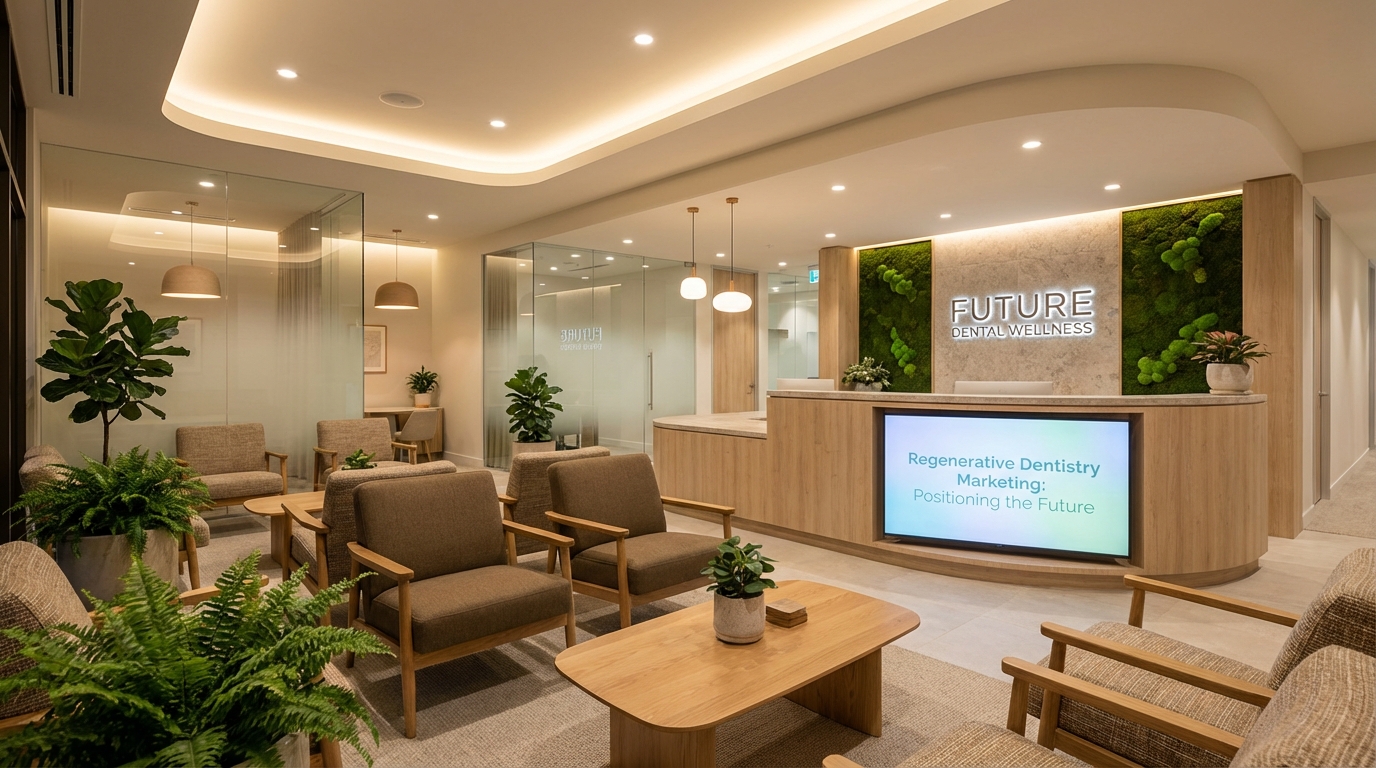
Positioning Your Practice as a Regenerative Implant Leader
Position 1: The Messaging Pillar
Current positioning (what most practices say): "We offer dental implants. Fast, reliable, affordable."
Regenerative positioning (what moves patients to premium): "We rebuild your smile with regenerative implants—using your body's own healing power to create results that look and feel like natural teeth."
The shift:
-
From: "Replace your tooth"
-
To: "Restore your health and smile"
-
From: "Standard implant option"
-
To: "Advanced regenerative implant technology"
-
From: "Tooth replacement"
-
To: "Smile rejuvenation"
This messaging attracts different patients (premium, health-conscious, esthetic-priority) than standard implant messaging.
Position 2: The Case Study & Testimonial Advantage
Regenerative cases produce superior before/afters because bone is rebuilt, soft tissue contours naturally, and esthetics are pristine.
Your highest-value assets:
- Anterior tooth replacement with regenerative bone grafting (most dramatic esthetic improvement)
- Failed implant + regenerative repair (comeback story)
- Multiple implants + full smile redesign using regenerative protocol (comprehensive transformation)
Document these case studies obsessively. You're building visual proof that regenerative = superior results.
Testimonial angle: "I've had implants before in another practice. This one [with regenerative protocol] looks and feels the most natural."
Position 3: The Clinical Narrative
Educate patients on why regenerative is better using a clear narrative:
The story:
- Extraction removes the tooth, but bone starts shrinking immediately
- Standard implant protocol: Place implant despite bone loss (results can look "implant-y")
- Regenerative protocol: Rebuild the bone first, then place implant (results look natural)
- Regenerative post-care: Use PRF and esthetic contouring to ensure healing and esthetics are optimal
- Result: Implant that lasts 20+ years and looks like a real tooth
This narrative positions regenerative as the "advanced option" patients don't know exists yet.
Implementing Regenerative Dentistry (The Execution)
Training & Certification
You don't need a specialty degree to offer regenerative dentistry, but you need training.
Recommended courses:
- Implant surgery with bone grafting (3–5 day intensive)
- PRF protocols (1–2 day hands-on)
- Esthetic implant dentistry (2–3 day course)
- Total investment: $4,000–$8,000 in continuing education
Sourcing materials:
- Bone graft materials: Suppliers like Zimmer Biomet, GEISTLICH (major brands)
- PRF centrifuge: $3,000–$5,000 (one-time investment)
- Regenerative supplies: ~$500–$1,000 per case (added to implant cost)
The Patient Consultation Framework
Step 1: Diagnosis & Digital Smile Design Show patient their bone loss and explain future complications if not regenerated. Use CBCT (3D x-ray) to visualize bone structure.
Step 2: The Three-Option Presentation
Option A: Standard Implant ($4,500)
- Fast (6 weeks to crown)
- Basic bone support
- "Functional implant"
Option B: Regenerative Implant ($7,000)
- Slower (3–4 months to crown)
- Rebuilt bone structure
- "Premium implant with lifetime durability"
Option C: Full Smile Regeneration with Multiple Implants ($12,000–$18,000)
- 4–6 months
- Comprehensive bone rebuilding + esthetic design
- "Complete smile restoration"
Patient psychology: When presented with three options, patients often choose the middle one (Option B). You've anchored to a higher-value position.
Step 3: The Close
"Sarah, based on your bone structure and smile goals, I'd recommend the regenerative protocol. Yes, it costs more upfront ($7,000 vs. $4,500), but you're investing in an implant that'll last 20+ years and always look natural. That's $350/year for a smile you'll love forever."
This reframes cost as a per-year value equation. Acceptance rates increase 20–30%.
Marketing Your Regenerative Position
Content Marketing (Own the Emerging Trend)
Blog posts to write:
- "Why Bone Grafting Is Better Than Standard Implants" (educational)
- "PRF: What It Is and Why You Might Need It" (emerging trend content)
- "Failed Implants? Regenerative Repair Might Save It" (pain point content)
- "The Esthetics Difference: Regenerative vs. Standard Implants" (comparison)
Ranking for these emerging keywords positions you as the expert before competitors catch on.
Case Study & Before/After Marketing
Create a dedicated "regenerative implant gallery" on your website:
- 15–20 before/afters of regenerative cases
- Organized by case complexity
- Patient testimonials describing their experience
- Time-lapse photography (if you have pre/post CBCT imaging)
This is your visual proof that regenerative works better.
Patient Education Workshops
Host a quarterly "Smile Restoration Seminar" for patients interested in implants:
- 45-minute talk on implant options (including regenerative)
- Q&A with your team
- Special offer: Free CBCT scan for seminar attendees
- Expected: 8–12 attendees per seminar, 2–4 converting to regenerative cases
Referral Partner Education
Train other dentists on regenerative implants:
- Host a 30-minute lunch-and-learn for referring dentists
- Show results with case studies
- Explain your referral process
- Position yourself as the "implant expert" in your area
Educated referral partners refer more and refer higher-value cases.
Pricing & Revenue Model
The Regenerative Pricing Ladder
| Case Type | Standard | Regenerative | Premium |
|---|---|---|---|
| Single anterior implant | $4,500 | $6,500 | $7,500 |
| Single posterior implant | $4,000 | $5,500 | $6,500 |
| Two implants + grafting | $8,500 | $12,000 | $14,000 |
| Multiple (3+) with full planning | $12,000+ | $18,000–$25,000 | $25,000–$35,000 |
Margin analysis:
- Standard implant: $4,500 revenue, ~$1,800 net profit (40% margin)
- Regenerative implant: $6,500 revenue, $3,000 net profit (46% margin)
Regenerative cases have higher margin and higher perceived value. Win-win.
Revenue Projection
Current state (no regenerative focus):
- 20 implant cases/year
- 90% standard ($4,500), 10% premium ($6,500)
- Annual implant revenue: $92,700
Regenerative-focused state:
- 30 implant cases/year (higher volume due to regenerative positioning as "premium" attracting more patients)
- 40% standard ($4,500), 50% regenerative ($6,500), 10% premium ($7,500)
- Annual implant revenue: $189,000
- Revenue increase: +$96,300/year
This assumes regenerative positioning attracts more premium patients + increases volume. Conservative estimate. Q: When should I add regenerative dentistry to my practice? A: If you're doing 15+ implants/year and feeling confident in basic implant surgery, add it. Less than 15/year? Master standard implants first.
Q: Does insurance cover regenerative implants? A: Rarely. Most regenerative charges are out-of-pocket (patient-funded). This is why positioning as premium works—you're not competing on insurance reimbursement.
Q: Can I offer both standard and regenerative? A: Yes, and you should. Not every patient wants or needs regenerative. But having the option attracts premium patients and increases your average case value.
Q: How long does regenerative treatment take vs. standard? A: Standard: 3–6 months (extraction to crown). Regenerative: 4–8 months (extraction, bone grafting, healing, implant, crown). Patient expectation-setting is crucial.
Q: What's the difference between bone graft materials (auto, allo, xeno)? A: Autograft = your own bone (best but harder to harvest). Allograft = human cadaver bone (good, ethically sound). Xenograft = animal-derived (good, convenient). Use allograft as standard; offer xenograft for simplicity.
Q: Can I do regenerative dentistry without being an implant specialist? A: Yes, with proper training. Many general practitioners offer bone grafting + implants. Take courses, start conservative, build skill over time. Regenerative dentistry is the future. Get ahead of it.
Book a free strategy call — Let's discuss how to position regenerative dentistry in your market before competitors do.
Book a free website audit — See if your website is positioned to attract premium implant patients willing to invest in regenerative solutions.
Frequently Asked Questions
Ready to Close More Cases?
Book a free strategy call and see how we help dental practices add 40+ new patients in 90 days.
Book Your Free Strategy CallRelated Articles
General6 min read
Asheville Dental Marketing Agency Playbook for High-Value Case Growth
Asheville Dental Marketing Agency Playbook for High-Value Case Growth
General7 min read
Atlanta Dental Marketing Agency Pricing: What It Takes to Buy Consistent Implant Cases
Atlanta Dental Marketing Agency Pricing: What It Takes to Buy Consistent Implant Cases
General6 min read
Back-to-School Revenue Reset for Dental Practices
Reset your practice for the back-to-school rush with scheduling, messaging, and financing systems that turn seasonal slumps into predictable consults.