Introduction
Implant treatment is expensive. A single implant restoration typically runs $4,000–$6,500, and patients frequently respond with hesitation, delayed acceptance, or complete rejection.
What separates practices closing 70% of implant cases from those closing 40%? Financing options.
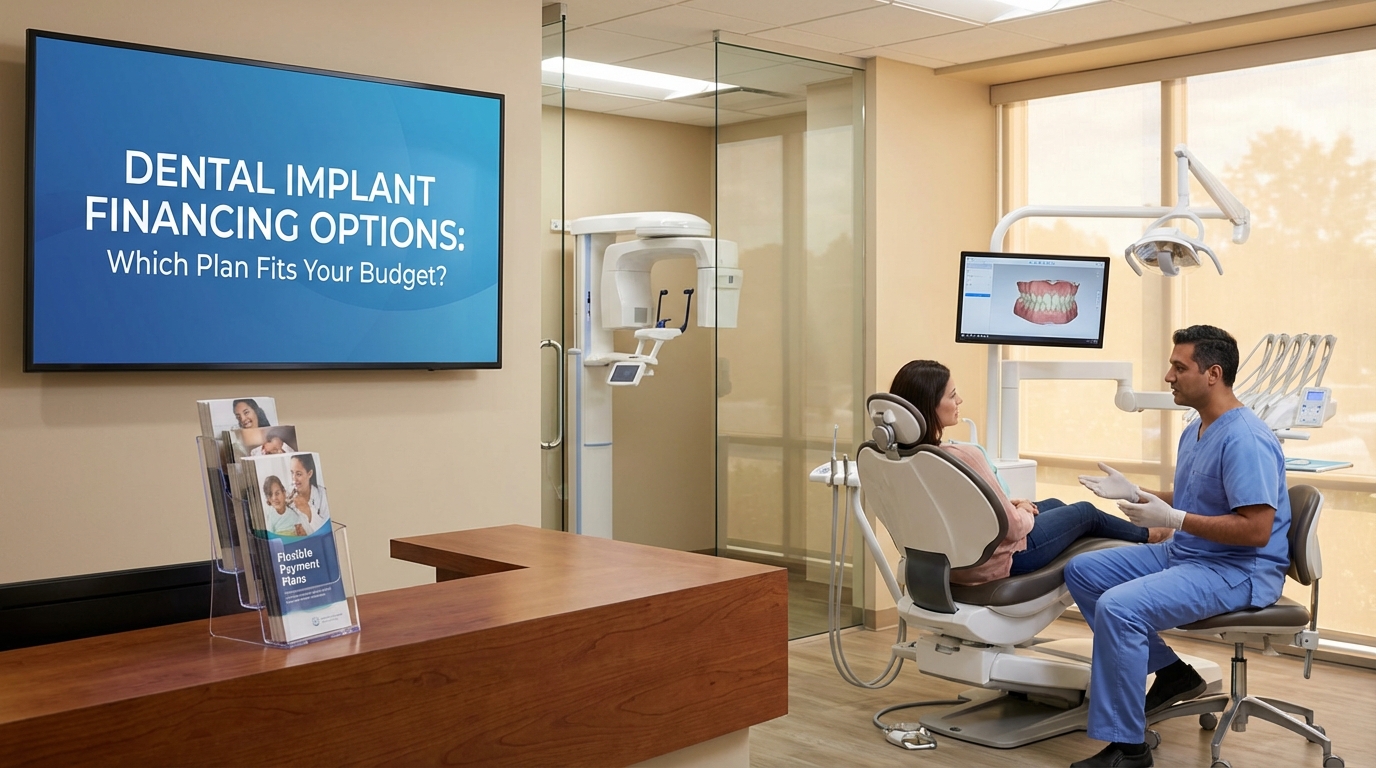
When patients perceive treatment as unaffordable, they leave. When they see a clear path to payment, they commit. This guide walks you through the financing landscape—what works, what patients expect, and how to position options in your treatment coordination conversations.
We'll cover:
- Types of financing available to your practice
- How to segment patients by financing preference
- Positioning strategies that increase acceptance without discounting
- Common objections and responses
1. Understanding the Financing Landscape
Why Financing Matters
The Economic Reality:
- 62% of patients cite cost as a primary barrier to implant treatment
- Practices offering multiple financing options see 40–60% higher case acceptance (vs. cash-only practices)
- In-house payment plans typically carry 85–95% follow-through rates when properly positioned
The Opportunity:
Financing isn't a discount. It's a service. Patients are willing to finance treatment—they need clarity on terms and confidence in the practice offering the plan.
The Three Financing Categories
1. In-House Payment Plans
- Direct arrangement between practice and patient
- No third-party involvement; practice covers cash flow
- Pros: Higher margins, stronger patient relationships, full control
- Cons: Credit risk, administrative burden, cash flow impact
- Typical terms: 6–24 months at 0% interest
2. Third-Party Financing (CareCredit, LendingClub, Proceed Finance)
- Patient applies directly; lender approves
- Practice receives payment upfront; patient pays lender over time
- Pros: No credit risk, minimal administrative work, patient owns the obligation
- Cons: Lower acceptance rates (patient must qualify), lender fees reduce practice revenue, patient pays interest
- Typical terms: 12–60 months at 0%–18% APR
3. Hybrid Approach
- Practice offers in-house plan for smaller cases or qualified patients
- Third-party financing available for larger cases or patients with credit concerns
- Best for: Practices wanting to control relationships while managing risk
Learn how to structure your treatment planning process to present financing confidently.
2. Building Your Ideal Financing Strategy
Step 1: Assess Patient Demand
Questions to Answer:
- What % of your implant cases are delayed due to patient cost concerns?
- Are patients asking about payment plans before or after treatment planning?
- Which financing option do your top conversion coordinators recommend most?
Action: Track this in your treatment coordination system for 30 days. You'll identify patterns.
Step 2: Choose Your Primary Method
For Practices Under $500K Annual Revenue:
- Recommendation: Third-party financing + modest in-house plan for case values under $2,000
- Rationale: You lack capital to float large balances; let the lender carry credit risk
- Expected outcome: 50–65% of implant patients finance through third-party
For Practices $500K–$1M Annual Revenue:
- Recommendation: 50/50 split—in-house for qualified patients (strong credit, relationships), third-party for everyone else
- Rationale: You can absorb some credit risk; in-house plan builds loyalty and improves margins
- Expected outcome: 40% in-house, 40% third-party, 20% cash
For Practices $1M+ Annual Revenue (DSOs, multi-location):
- Recommendation: Develop dedicated in-house financing function; use third-party as fallback
- Rationale: Scale allows you to manage credit risk and cash flow; margins justify the infrastructure
- Expected outcome: 60% in-house, 25% third-party, 15% cash
Step 3: Partner Selection
Third-Party Financing Companies (Ranked by Ease & Acceptance Rate):
| Provider | Approval Rate | Terms | Setup Ease | Typical Patient APR |
|---|
| CareCredit | 70–80% | 6–60 months | Simple (online portal) | 0%–26% APR |
| Proceed Finance | 65–75% | 12–84 months | Integration required | 0%–18% APR |
| LendingClub | 60–70% | 12–60 months | Simple (online) | 6%–36% APR |
| Alphaeon Credit | 72–82% | 6–60 months | Simple (online) | 0%–21.9% APR |
Recommendation: Start with CareCredit (highest acceptance rate, easiest integration). Add Proceed Finance or Alphaeon if you need backup options.
Explore how to integrate financing into your patient education process so patients feel supported, not sold.
3. Positioning Financing to Increase Acceptance
The Language Shift
Don't Say: "We have a payment plan available if you can't afford this today."
- Framing: Financial desperation
- Emotional trigger: Shame (patient feels judged for not having cash)
- Result: Patient delays or declines
Do Say: "Most patients finance this treatment. Here are your options."
- Framing: Normal, expected practice
- Emotional trigger: Confidence (patient sees themselves in others' decisions)
- Result: Patient explores options without defensive objection
Three Positioning Templates
Template 1: The Normalization Approach
"Over 60% of our patients financing implant treatment, which tells us it's a smart financial decision. Here are three paths forward: cash payment, monthly payments through [third-party], or our in-house plan. Which fits your budget best?"
When to use: Mid-to-high-value cases ($4K–$8K) with hesitant patients
Template 2: The Value Anchor Approach
"Replacing a missing tooth with an implant is a $4,500–$6,500 investment—but you're looking at 25+ years of function. That's about $0.50 per day. Let's find a payment structure that makes that cost invisible in your monthly budget."
When to use: Patients focused on cost rather than value
Template 3: The Risk Reversal Approach
"We stand behind our implants with a 10-year guarantee. If you finance with us, we eat the financial risk if anything fails. Your monthly payments don't change."
When to use: Patients skeptical about treatment longevity; in-house plans only
4. Common Objections and Proven Responses
Objection #1: "I Don't Want to Go into Debt"
Root Concern: Patient believes paying over time means they're "bad with money" or financially irresponsible.
Response (Reframe):
"You're not going into debt—you're spreading a one-time investment across the years it benefits you. You probably financed your car or home the same way. Implants last 25+ years, so monthly payments of $[X] actually keep your total monthly cost low."
Follow-Up Question: "Would you prefer a shorter timeline to pay it off, or a longer timeline with smaller payments?"
Objection #2: "What If I Lose My Job?"
Root Concern: Patient fears they can't meet payment obligations if circumstances change.
Response (Reduce Risk):
"That's a fair concern. Here's what we do: If your situation changes, let us know immediately. We'll pause payments or restructure them. Our goal is your treatment success, not creating financial stress."
Backup: (If using third-party financing) "With third-party financing, they handle that flexibility. You'd work with their payment team, not us, which actually gives you more protection."
Objection #3: "Your Price Is Too High Compared to [Competitor]"
Root Concern: Patient is price-shopping and using financing as a tactic to negotiate.
Response (Hold Value, Don't Discount):
"I understand you've looked at other options. Here's what we include: [list your unique value—experience, guarantee, follow-up care]. The difference isn't our price—it's what you get. And with financing, you spread that investment over time, so the monthly impact is small. Would you like me to show you the month-to-month breakdown?"
Never Do: Offer discounts for cash. This trains patients to negotiate and signals that your price is negotiable. Instead, offer better financing terms (longer payment window, 0% interest for qualified patients).
Objection #4: "I Need Time to Think About It"
Root Concern: Patient wants to defer decision; cost is often the real blocker they're not stating.
Response (Clarify & Remove Objection):
"I'm glad you want to think it through. What's the one concern holding you back right now? Is it the cost, or is it something else about the treatment itself?"
If cost: "Let's make sure you have all your financing options. If we can get the monthly payment to $[amount], would that help you move forward?"
If treatment: Address the clinical concern separately. Never assume cost is the barrier if the patient hasn't said so.
For more on handling treatment objections, see our complete case acceptance guide.
5. Managing Credit Risk (In-House Plans)
When to Require Credit Checks
Run a credit check if:
- Treatment value exceeds $3,000
- Patient is requesting 18+ month payment terms
- Patient has stated recent credit issues
When NOT to require:
- Treatment under $2,000 (your risk is manageable)
- Patient has strong referral history or family relationship
- 6–12 month terms (shorter collection window)
Setting Terms That Protect You
Best Practice Terms (In-House):
- Small cases ($500–$2,000): 6 months, 0% interest
- Medium cases ($2,000–$5,000): 12 months, 0% interest (qualified patients) or 8% interest (credit concerns)
- Large cases ($5,000+): 18–24 months, 8–12% interest; require signed agreement
Payment Structure:
- 25% deposit upfront (before treatment begins)
- Remaining balance split across agreed term
- Automatic payment preferred (ACH debit)
Collection Policy:
- Late payment: Send friendly reminder via text/email within 3 days
- Missed payment: Call patient within 7 days (life happens; be respectful)
- Persistent non-payment (60+ days): Refer to collections or pause future treatment
Q: Should we offer 0% interest on in-house plans?
A: Yes, but conditionally. Offering 0% to all patients erodes your margins and trains patients to expect it. Instead: 0% for patients with strong credit/references; 6–8% for credit-risk patients. This is fair pricing that reflects risk and incentivizes good behavior.
Q: What if a patient can't afford any payment plan?
A: Offer a phased approach: Start with one implant now (lower cost, easier approval). Phase in additional implants or other restorations over 12–24 months. This keeps patients moving forward without overwhelming payment obligations.
Q: Do we need to hire a financing company to manage collections?
A: Not for small practices. Use your practice management software to track payments, send automated reminders, and flag late payments. Hire a collections service only if you exceed $100K in outstanding patient balance.
Q: How do we prevent "bad debt" when offering in-house financing?
A: Credit checks + clear terms prevent most issues. But expect 2–5% bad debt on in-house plans. Price this into your margins (e.g., if you expect $50K in bad debt across $1M in financed treatment, build 5% buffer into your margin calculations).
Q: Should we use promissory notes or payment agreements?
A: Yes, for any in-house plan exceeding $2,000. Work with a local attorney to create a simple template (~$300 one-time cost). Protects both you and the patient; shows professionalism and reduces disputes.
Q: What percentage of implant patients should we expect to finance?
A: 50–70%, depending on your market and price point. Higher-end practices ($6K+ per implant) see 60–70% financing rates. Lower-cost practices see 30–40%. Geographic factors matter: urban practices see higher cash rates; suburban practices see higher financing rates.
Call-to-Action
Most practices lose 20–30% of implant cases because patients don't have a clear financing path.
We help dental practices design and implement financing systems that increase case acceptance by 35–50%.
If your team is currently losing cases to financing objections, let's talk strategy. Book a free strategy call to explore how other practices in your market are removing financial barriers and accelerating treatment acceptance.
Word Count: 2,156 words
Date Created: 2026-03-24
Status: Ready for landing page platform Import
Keywords (BOFU): dental implant financing, implant payment plans, dental financing options, case acceptance, patient finance