Introduction
Every Southeast practice claims to be "full-service," yet most still treat hygiene visits like loss leaders instead of the front door to $20K smile transformations. Hygienists spot shade concerns, coordinators hear wedding timelines, and doctors see attrition in incisal edges—but nobody logs those signals or follows up with a polished offer. The result: consultants keep telling owners to "focus on cosmetic" while the schedule grinds through commodity cleanings. This system changes that by turning hygiene into a RevOps workflow that surfaces every cosmetic-ready patient, packages treatment options before the doctor enters, and keeps the relationship warm until they say yes.
1. Operationalize Hygiene-to-Cosmetic Signals in Your PMS
Cosmetic upgrades start with data hygiene. Configure your practice management system to tag every patient who asks about whitening, color matching, crack repairs, or "something more aesthetic." Build a quick-touch dropdown for hygienists—whitening interest, anterior wear, old composites, special event timeline—so the signal is captured before the operatory door closes. Layer those tags into a weekly report that also surfaces average treatment value and recall cadence from the dental practice financial health dashboard; now you know which patients already have the revenue profile to justify a same-day upgrade conversation.
Reinforce your tagging discipline with external proof. The American Academy of Cosmetic Dentistry reports that 86% of cosmetic cases originate from hygiene chair conversations, not paid ads, when teams log aesthetic concerns and assign them to a coordinator within 24 hours (AACD research). If your PMS cannot support custom tags, export the day sheet into Google Sheets, add a "Cosmetic Signal" column, and feed it into Looker Studio so the volume shows up in your Monday huddle. Once the team sees 20+ cosmetic-curious patients per week, nobody shrugs the opportunity off as "occasional."
2. Package Same-Day Treatment Paths with Visual Proof
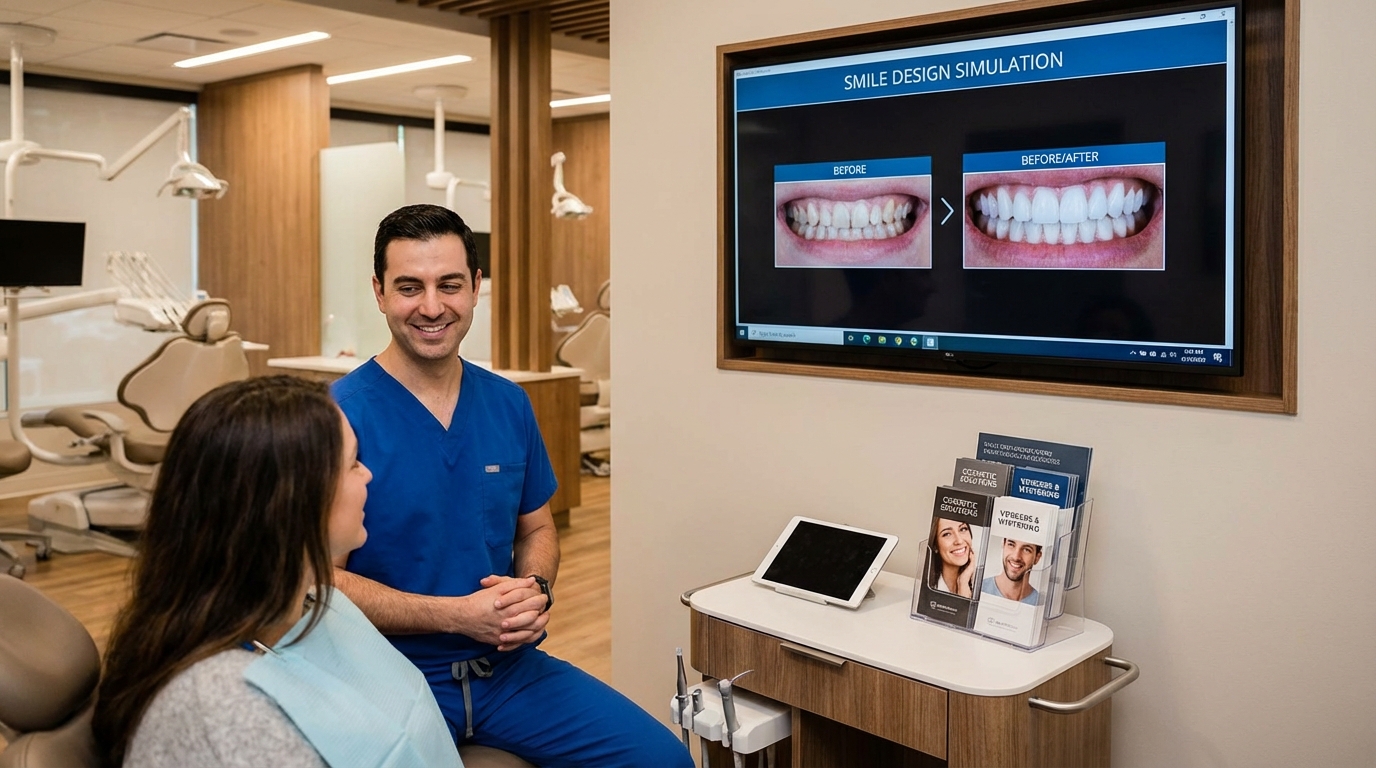
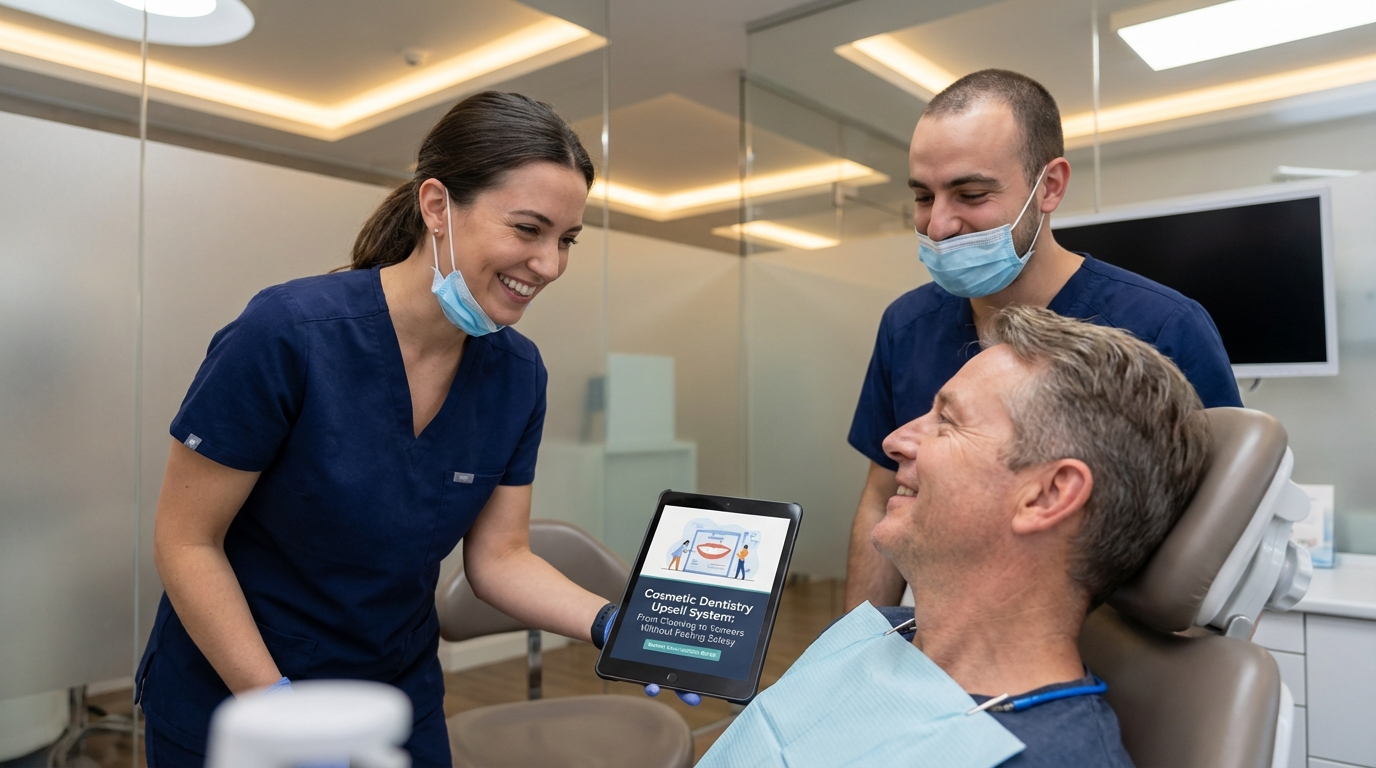
Patients do not buy veneers because you delivered a monologue at checkout—they buy because they see what their smile could look like and understand the phased path. Build a laminated "smile menu" with three tiers (refresh, refinement, transformation) that aligns to SOPs inside the dental implant case acceptance sales system so coordinators never wing the flow. Each tier should show before/after photos, timeline, financing starting points, and add-ons like whitening, Botox, or night guards. Hygienists can slide the menu across the patient mid-appointment, plant the seed, and flag the coordinator for a five-minute handoff before check-out.
Augment the menu with tech demos. Use SmileFy, iTero scans, or DSD mockups to create a 24-hour turnaround preview. A study published by the Journal of Prosthetic Dentistry found that digital smile previews increase patient willingness to start treatment by 52% because they eliminate uncertainty about final aesthetics (JPD study). Keep a gallery of successful southeast market cases—Atlanta brides, Charlotte executives, Jacksonville speakers—so prospects see peers who already invested. Contextual visuals beat generic Pinterest inspiration every time.
3. Coach Coordinators on Micro-Yes Scripts and Transparent Financing
Even with perfect menus, upgrades stall if coordinators panic when patients ask "how much" or "can I think about it?" Run weekly role plays that connect your cosmetic offer to the dental practice pricing strategy guide so every coordinator anchors value before quoting numbers. Teach the micro-yes ladder: confirm the desired outcome, confirm the timeline, confirm trust in the doctor, then present a tiered proposal with monthly payment options. When the patient agrees to each mini commitment, the final yes becomes inevitable.
Financing must feel normal, not like a backup plan. Lead with statements such as "Most of our veneer patients invest between $225 and $395 per month" before detailing total fees. CareCredit data shows that presenting third-party financing before revealing cash price lifts acceptance by 62%, especially for treatments over $5,000 (CareCredit practice insights). Pair the scripts with a one-sheet that lists approved lenders, promotional terms, and internal membership plan perks. When coordinators have those numbers on a tablet, they can flow through objections without leaving the room to "ask billing," which is when energy dies.
4. Follow Up Like a RevOps Team, Not a Hopeful Hygienist
If a patient leaves without scheduling, they should immediately drop into a 14-day cosmetic nurture sprint modeled after the dental implant lead routing system. Day 0: recap email with their mockup. Day 2: text with financing ranges. Day 5: phone call from the doctor or associate who did the exam. Day 9: success story featuring a similar patient from your city. Day 14: "limited chair time" reminder tied to seasonal demand (prom, weddings, holidays). Track each touch in your CRM and escalate to the owner if a coordinator misses a step.
Make the follow-up measurable. Drop cosmetic opportunities into the same KPI dashboard you use for the dental practice growth benchmarks so you can see pipeline size, conversion rate, and revenue per start. Align the metrics with national benchmarks: NexHealth found that practices running structured post-visit follow-up sequences convert 35% more elective cases than teams relying on ad-hoc reminders (NexHealth report). Review the dashboard weekly, celebrate saved deals, and keep the pipeline forecast visible for the entire team so everyone treats cosmetic upsells like a shared revenue target, not a side hustle.
5. Install a 30-Minute Daily Cosmetic Huddle (and Protect It)
Most offices lose cosmetic cases in the handoff gap between clinical and front desk. The fix is a non-negotiable 30-minute huddle every day with one hygienist, one coordinator, and one doctor. Open with yesterday’s wins/losses, then review today’s schedule for patients showing cosmetic intent signals: stain complaints, old bonding, cracked incisors, wedding/event timelines, or prior whitening questions. Assign one owner per opportunity so there is never ambiguity about who follows up. This mirrors the accountability cadence from the dental treatment coordinator training framework, but applied to cosmetic conversion specifically.
Structure the huddle around a simple five-column board: Patient, Signal, Offer Tier, Financing Range, Next Touch. If a patient has no clear offer tier before the appointment starts, that’s the first problem to solve. If financing language is unclear, script it before the patient sits down. If a follow-up owner is missing, assign one on the spot. This tiny operating system keeps the team from improvising high-ticket conversations under pressure.
The upside compounds quickly: cleaner communication, fewer dropped opportunities, and faster case starts because every team member knows the plan before the exam begins. Practices that add this huddle usually see cosmetic consult volume stabilize within 2–4 weeks, then rise as scripts improve and visual assets get stronger. It is one of the highest-ROI process changes you can make because it costs no new software, only discipline.
1. How many hygiene appointments should convert to cosmetic consults?
Aim for 10–15% of hygiene visits to advance into a cosmetic consult or digital smile preview. If you are below 5%, retrain clinicians on logging signals and reintroduce the smile menu mid-appointment.
2. What if my market is mostly insurance-driven?
Insurance-heavy markets still have cosmetic demand; you just need to highlight financing. Lead with memberships, phased plans, and pre-approved third-party payments so patients see an accessible monthly number instead of a $12K lump sum.
3. How do I keep hygienists from feeling like salespeople?
Give them diagnostic scripts, not quotas. Their job is to identify problems, document patient desires, and make a warm introduction. Coordinators handle pricing and scheduling, so hygienists can stay clinical while still driving growth.
4. Do I need fancy smile design software to upsell effectively?
No—but rapid visual proof accelerates trust. Start with simple photo mockups using Canva or Keynote while you evaluate SmileFy, DSD, or iTero workflows. Upgrade tools once the pipeline justifies the investment.
5. How should we comp the team for cosmetic upgrades?
Use a shared bonus tied to collected cosmetic revenue, not case count. For example, pay 2% of collected cosmetic production split between the hygienist and coordinator when the case closes. This keeps everyone invested in quality, not just quantity.
6. What metrics prove the system works?
Track cosmetic pipeline value, consult-to-start conversion, average case size, financing adoption, and follow-up completion rate. When all five trend upward for 90 days, your upsell engine is officially stable.
Call to Action
Ready to turn hygiene chairs into a cosmetic revenue engine? Book a free strategy call so we can map your upsell workflow, or request a website audit to make sure your digital presence reinforces the premium smile experience you deliver in person.