Introduction
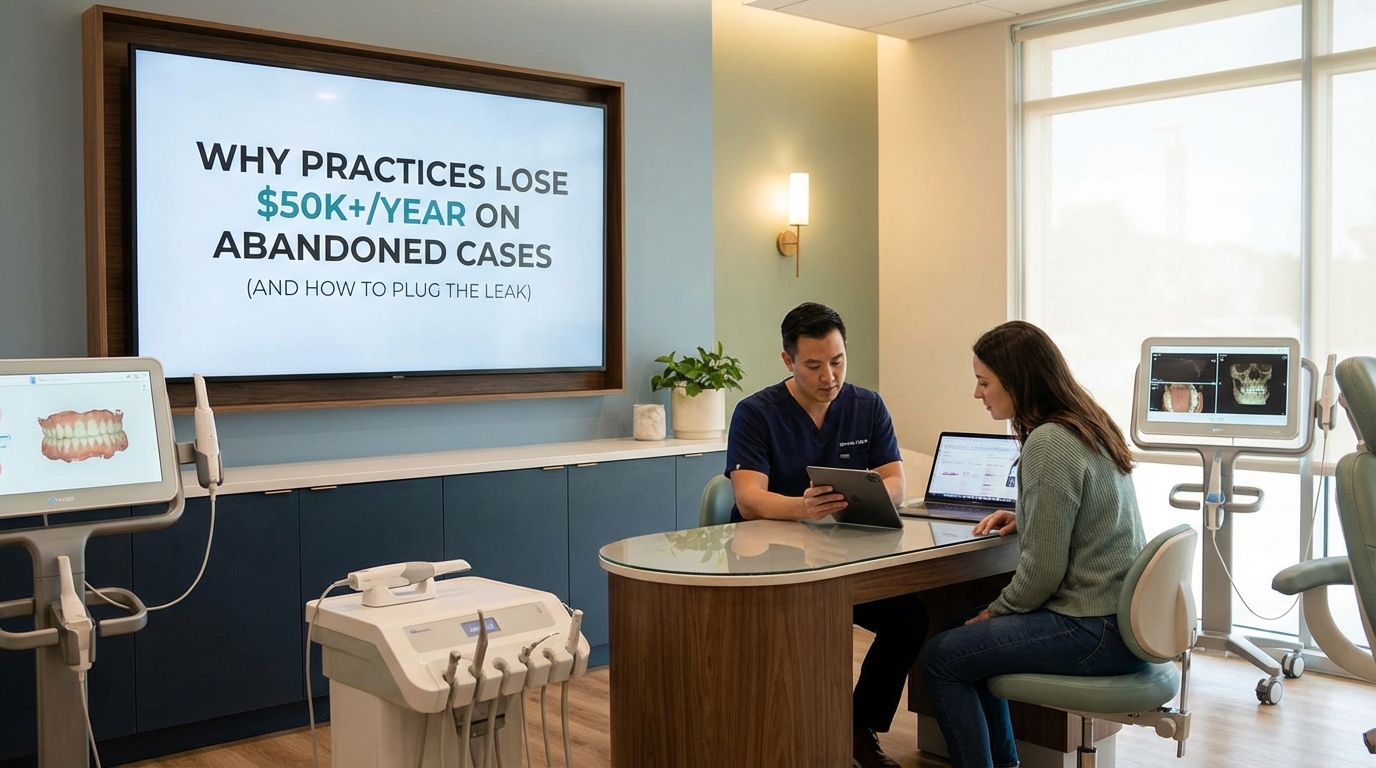
Ask any practice owner in Atlanta, Charlotte, or Jacksonville where revenue disappears fastest and they’ll point to abandoned cases—the patients who nod through a treatment plan, leave without paying, and never return a call. Between expired pre-approvals, shaky insurance assumptions, and coordinators juggling too many tasks, even well-run offices watch $50K–$120K slip away every year. The fix isn’t a pep talk; it’s a RevOps system that treats stalled cases like overdue invoices with owners, deadlines, and escalation paths. This playbook shows you how to stop the leak fast.
1. Quantify the Leak Before You Prescribe a Fix
If you can’t measure abandoned production, you can’t improve it. Pull the last 90 days of proposed treatment value from your practice management system, segment by status, and flag every plan older than 14 days without a deposit. Track three numbers weekly: total dollars stalled, abandonment percentage, and average plan size. Pipe those into a simple Looker Studio dashboard or the dental practice growth benchmarks workbook so the number shows up in every Monday huddle.
External benchmarks reinforce the urgency: the ADA’s Health Policy Institute estimates unresolved treatment plans cost the average practice $54K per year because coordinators never receive clear follow-up triggers (ADA research). Once you quantify abandoned revenue inside a live dashboard, the number stops being a vague annoyance and becomes a KPI that drives staffing, marketing spend, and bonus plans. High-performing teams keep abandoned cases below 8% of proposed production; anything higher signals a systemic gap.
2. Stabilize Diagnostics, Financing, and Expectations Before Consult Day
Most abandonment starts before the patient arrives. If diagnostics, insurance estimates, and financing options aren’t dialed, coordinators end up calling patients back with corrections—giving them permission to ghost. Create a pre-consult packet that bundles CBCT scans, perio charting, verified insurance benefits, and approved payment pathways. When every patient receives a written range plus financing guardrails up front, sticker shock disappears and coordinators can stay in “assume the close” mode.
Sync clinical and financial teams using shared notes inside your dental implant consultation conversion rate playbook. Surgeons flag red-line findings, coordinators see the treatment priority before they sit down, and nobody is surprised mid-consult. Back it up with data: CareCredit reports that discussing financing before the clinical exam increases acceptance by 63% because patients know there’s a path forward (CareCredit insights). The goal is one consult where diagnostics, pricing, and payment scripts align—no follow-up calls required just to “confirm the number.”
3. Engineer Relentless Follow-Up Guardrails (and Automate the Boring Parts)
Even with perfect consults, life happens. That’s why abandonment prevention hinges on tight follow-up sequencing. Build a 14-day sprint inside the dental implant lead routing system: Day 1 recap email, Day 2 text with financing link, Day 4 phone call, Day 7 doctor video check-in, Day 10 urgency reminder, Day 14 “assume the close” script. Timestamp every touch, escalate stalled cases to the practice owner after Day 7, and reassign if a coordinator misses a step.
Automation should handle logistics, not humanity. Use your CRM or Klaviyo flows to queue reminders while coordinators layer Loom videos, patient-specific before/afters, or screenshots of available chair time. HubSpot’s follow-up data shows win rates drop 80% when reps stop after two touches (HubSpot study), so baking six-plus touches into your cadence is non-negotiable. If a patient still stalls after Day 14, drop them into a monthly nurture sequence with seasonal offers and success stories, but keep the live tracker visible so the team knows exactly who is aging out.
4. Make Money Conversations Coachable, Not Optional
Abandoned cases spike when coordinators improvise pricing language or freeze at the first objection. Build a playbook that defines anchor pricing, tiered options, and objection-response trees aligned to your dental practice pricing strategy guide. Role-play weekly using clips from actual calls and score coordinators on clarity, confidence, and ability to connect value back to long-term outcomes. Track close rate, average plan value, and outstanding follow-ups per coordinator inside your RevOps dashboard.
Reinforce the scripts with external proof. Spear Education’s treatment acceptance research shows scripted value statements increase acceptance by up to 30% because patients trust confident, repeatable messaging (Spear Education). Pair that insight with monthly calibration sessions where coordinators, associates, and the doctor review one “save” call that turned a stalled case into a paid plan. When everyone treats money conversations like a clinical skill—not an afterthought—patients stop vanishing between consult and checkout.
1. What abandonment rate should a high-value dentistry practice target?
Elite operators keep abandoned treatment plans under 8% of proposed production. If you’re sitting at 15–20%, you’re likely leaving $50K–$100K on the table every quarter and need better diagnostics plus follow-up discipline.
2. Which KPIs belong on the abandoned-case dashboard?
Track count of open treatment plans, total stalled dollars, days since last touch, financing approval rate, and coordinator-specific close rates. Reviewing those in every Monday meeting keeps the team accountable.
3. Do automated reminders feel impersonal for six-figure cases?
Automation should handle logistics (appointment reminders, payment links, document uploads) while humans deliver empathy and authority. Pair templated reminders with personalized Loom videos or doctor check-ins to keep the experience high-touch.
4. How do we keep associates aligned with the financial script?
Use a shared pre-consult checklist. Associates record the value statement and primary outcome in the EHR, which feeds directly into the coordinator’s script. Hold a five-minute post-consult debrief to keep clinical and financial teams synchronized.
5. What if patients cite timing rather than price as the delay?
Translate timing into quantified risk: show how delaying an implant adds bone graft costs or how waiting until year-end caps insurance benefits. Then present phased treatment options so the patient can move forward without feeling cornered.
6. How long should we sprint before moving a case into long-term nurture?
Run the 14-day intensive cadence first. If the patient still stalls, shift them into a monthly nurture campaign that features fresh social proof, treatment spotlights, and seasonal offers. Review that list quarterly for reactivation opportunities.
Call to Action
If abandoned cases are your silent profit killer, let us build the RevOps dashboard, follow-up cadences, and coordinator scripts for you. Book a free strategy call to audit your stalled pipeline, or request a free website audit if you want to see where leads are leaking before they reach the consult chair.
Word Count: ~1,480 words
Status: Ready for content import and June publishing calendar