Introduction
Cosmetic dentistry is rarely sold in a single visit. It unfolds across cleanings, consults, and financing conversations. The brands that win this space build a funnel that feels natural, not pushy—one where every hygiene appointment is a gentle invitation to come back for veneers, bonding, or a full smile makeover.
This playbook walks through how to design that funnel. You'll see how to map the journey, craft consistent messaging, automate the steps that normally bog down your team, and measure uplift so you can keep iterating. Along the way, we link to our scheduling, pricing, and treatment acceptance resources so the funnel stays aligned with the broader dental marketing engine.
1. Map the Upsell Journey from Cleanings to Veneers
Upselling cosmetic dentistry starts with compassion—not pressure. Your hygiene team is the first touchpoint, so map the patient experience from the second they check in to the moment they leave the room. The goal: move the conversation from "You need a cleaning" to "Imagine the smile you can have with veneers, bonding, or a smile makeover plan."
Start by auditing which cleanings already include a cosmetic opportunity. Are you flagging patients with worn dentition, stained enamel, or bite collapse? Use the data in our Dental Appointment Setting Service Guide to align consult availability with high-intent patients. The guide walks through how to hybridize phone, text, and online scheduling so your team can instantly book patients who are ready to talk veneers.
Next, evaluate your pricing scripts. The post on dental practice pricing strategy explains how to frame premium care as a strategic investment, not a gimmick. Pair that scripting with patient segmentation: flag anyone who has spent $600+ per year or has a history of cosmetic interest, and treat them as a high-value prospect in the funnel.
External credibility matters too. The American Academy of Cosmetic Dentistry reports that more than 70% of adults say they would undergo a cosmetic procedure if they knew it would help them feel more confident (https://www.aacd.com/cosmetic-dentistry). Use that stat in your consult scripts to normalize the desire and justify the upsell. When patients know others are choosing cosmetic upgrades, the risk drops.
Key moves:
- Build a tagging system in your PMS to identify cosmetic potential right after the hygiene visit.
- Reserve a few cosmetic consult slots per week that can be filled by these flagged patients.
- Create a "gentle invitation" follow-up card that hygienists hand to the patient before they leave, reiterating the premium options.
2. Build Messaging & Funnel Steps That Feel Personal
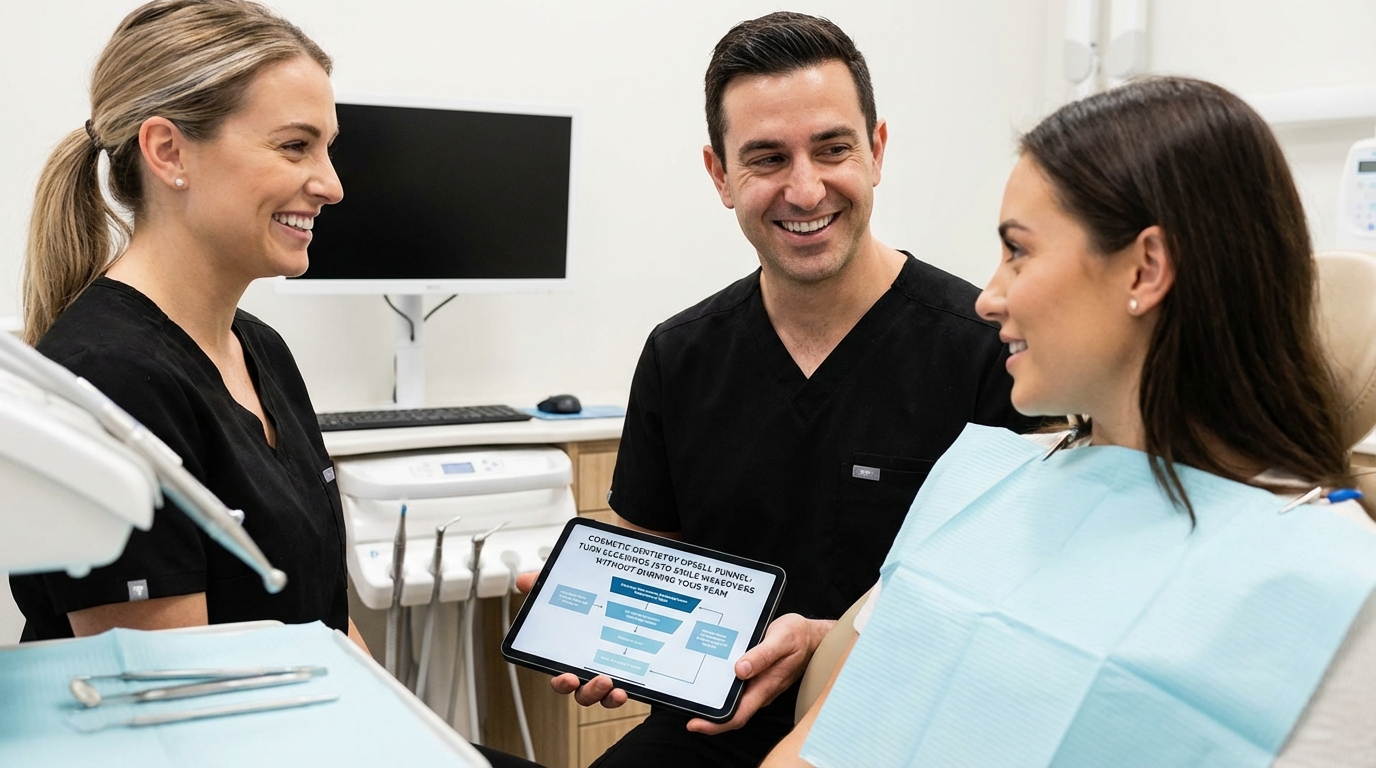
An upsell funnel breaks when your team speaks in different voices. One hygienist says, "Talk to the doctor," while the coordinator quotes a price without context. Standardize the voice by walking everyone through the same narrative: hygiene → cosmetic interest → financing/retainer → smile makeover plan.
Use the scripts from dental implant consultation playbooks to anchor your approach. Even though implants and cosmetics differ, the psychology of transition is the same: celebrate the result, explain the path, and eliminate friction. In this funnel, the hygienist sets the groundwork, the treatment coordinator walks through options, and the dentist seals the clinical confidence.
Sequence steps look like this:
- Hygiene opportunity: Flag the patient, log the concern, and mention that a cosmetic consult slot is available.
- Text + email nudge: Within 24 hours, send a personalized note with a smile makeover story, a short video of before/after cases, and a link to the booking page.
- Financing breakdown: Once they book, send a second message summarizing the financing options. Instead of a price list, present "Smile Investment Plans" that include veneers, whitening, and maintenance.
- High-converting consult: Use a script that keeps the conversation about the patient's goals—not the price. Share the vision, the timeline, and the retention plan.
For external validation, Harvard Business Review highlights that consistent customer journey scripts reduce friction and increase lifetime value (https://hbr.org/2016/10/the-most-successful-types-of-customer-journey-maps). Treat the cosmetic funnel as a customer journey map. Every handoff should feel like a seamless chapter rather than a sales pitch stuck inside software.
Add referral incentives as part of the messaging. Mention the cosmetic dentistry upsell funnel internal referral program by pointing to how you reward patients who bring friends for smile maker consultations. When your existing patients feel like insiders, the funnel grows organically.
3. Automate Touchpoints Without Diluting the Experience
Automation keeps the funnel running even when staff focus on the clinical side. Use your practice management system plus a lightweight automation engine (like SimpleTexting, Podium, or practice-built sequences) to trigger reminders, videos, and financing links automatically. The goal is to sound human without actually calling every patient.
Design automations for each stage:
- Hygiene wrap-up: Trigger after the hygiene note is signed. Send a text with a short "Did you know?" tutorial about veneer benefits and a CTA to book a cosmetic consult.
- Post-booking: Immediately send a link to a short questionnaire so the cosmetically interested patient can describe their dream smile.
- Financing follow-up: Send a finance breakdown plus a short video of your team explaining the payment plan. Link back to the dental implant financing playbook because the financing principles are identical.
- Missed consult: If the patient ghosted the consult, send a warm "We still have a spot for you" message and highlight how veneers can boost both confidence and practice profitability.
Make sure your automation folder links to the dental marketing agency pillar page so the team knows this funnel is part of the larger revenue engine. That pillar page contains the BOFU messaging and case studies you can recycle in patient touchpoints.
Automation doesn't mean "set it and forget it". Forbes Tech Council explains how healthcare automation works best when humans stay in the loop (https://www.forbes.com/sites/forbestechcouncil/2022/05/19/how-healthcare-practices-benefit-from-automation/). Schedule weekly reviews where the cosmetic coordinator checks the automated messages, updates the tone, and tags prospective patients who might need a phone call. Blend AI prompts (if used) with human touch so patients still feel known.
4. Track Lift, Measure Revenue, and Celebrate Wins
If you can't measure the uplift from the cosmetic funnel, you won't be able to justify more seats, financing partnerships, or PPC spend. Track at least three metrics:
- Conversion rate from flag → consult booking.
- Treatment acceptance percentage for veneers or smile makeovers after consult.
- Average revenue per cosmetic plan including add-ons like whitening or maintenance memberships.
Tag each patient in your CRM with the funnel stage they are in. This data feeds your weekly dashboard, which should include both the cosmetic funnel and your broader revenue metrics from the dental practice pricing strategy framework. See whether the funnel lifts your average ticket and if financing reduces friction.
External research supports this approach. Harvard Business Review argues that teams who regularly review conversion data outperform those who rely on intuition (https://hbr.org/2016/01/the-clear-line-between-marketing-and-sales-roi). Use that to push for data sessions every Monday, and make the cosmetic funnel a standing agenda item.
When the data shows progress, celebrate it internally: highlight how many cleaning patients moved into smile makeovers, share before/after photos (with permissions), and spotlight team members who made it happen. This keeps the funnel front of mind plus encourages your team to recommend it proactively.
Q: Who should own the cosmetic upsell funnel?
A: The highest-leverage split is between the hygienist (who identifies the opportunity) and the treatment coordinator (who runs the consult path). The dentist or clinical director should review scripts weekly and celebrate wins so everyone stays aligned.
Q: How do we keep the funnel from feeling pushy?
A: Frame the conversation around transformation, not price. Highlight that cosmetic upgrades are investments in confidence, retention, and their professional image. Use empathy-based language from the dental implant consult scripts and avoid high-pressure deadlines.
Q: What automation tools work best?
A: Any practice management tool that can trigger texts/emails based on flags works. We often pair Dentrix/Eaglesoft/Curve Dental with SimpleTexting or Twilio sequences. Keep a human in the loop to review copy and respond to replies quickly.
Q: How do we prove ROI internally?
A: Track revenue per cosmetic plan, the funnel conversion lift, and the financing increase. Present the numbers with your pricing strategy framework and show how a 5% lift in conversion adds tens of thousands to the bottom line in less than a quarter.
Q: What financing story should we tell patients?
A: Focus on the lifestyle outcome. Explain how a veneer or smile makeover plan can fit into their budget via monthly payments, and highlight the long-term value (fewer repairs, more confidence). Link to third-party partners or in-house financing that align with your brand.