title: High-Value Treatment Plan Rescue System for Dental Practices
slug: high-value-treatment-plan-rescue-system
meta_description: Resist losing premium cases by wiring consult, financing, and team accountability into one rescue system that closes treatment plans faster.
TL;DR
- High-value treatment plans stall when consults, financing, and follow-up live in different silos—map the rescue system before moving on to automation.
- Automating financing offers, reminders, and CRM handoffs keeps momentum while the care team stays accountable for every patient touch.
- Measure the acceptance funnel with revenue-focused KPIs so you know exactly when to escalate a stalled case instead of hoping the patient reappears.
Introduction
Every high-value treatment plan has a moment when it can still be won: the consult just happened, the patient wants to solve a big problem, and your team is still at the top of mind. Yet most practices watch those cases cool off because paperwork, financing, and follow-up live in different systems and rely on human memory. A rescue system threads those pieces together, so you can save premium revenue without always needing an extra hire.
This guide outlines how to build a true high-value treatment plan rescue system. We start with hardcoding the consult signals you need, then layer automation for financing and follow-up, align your teams inside a CRM dashboard, and finally measure acceptance with real revenue KPIs. When every case feels important and nothing slips through the cracks, you stop losing plans and start converting more of the cases you already booked.
Lock in the consult win the second it happens
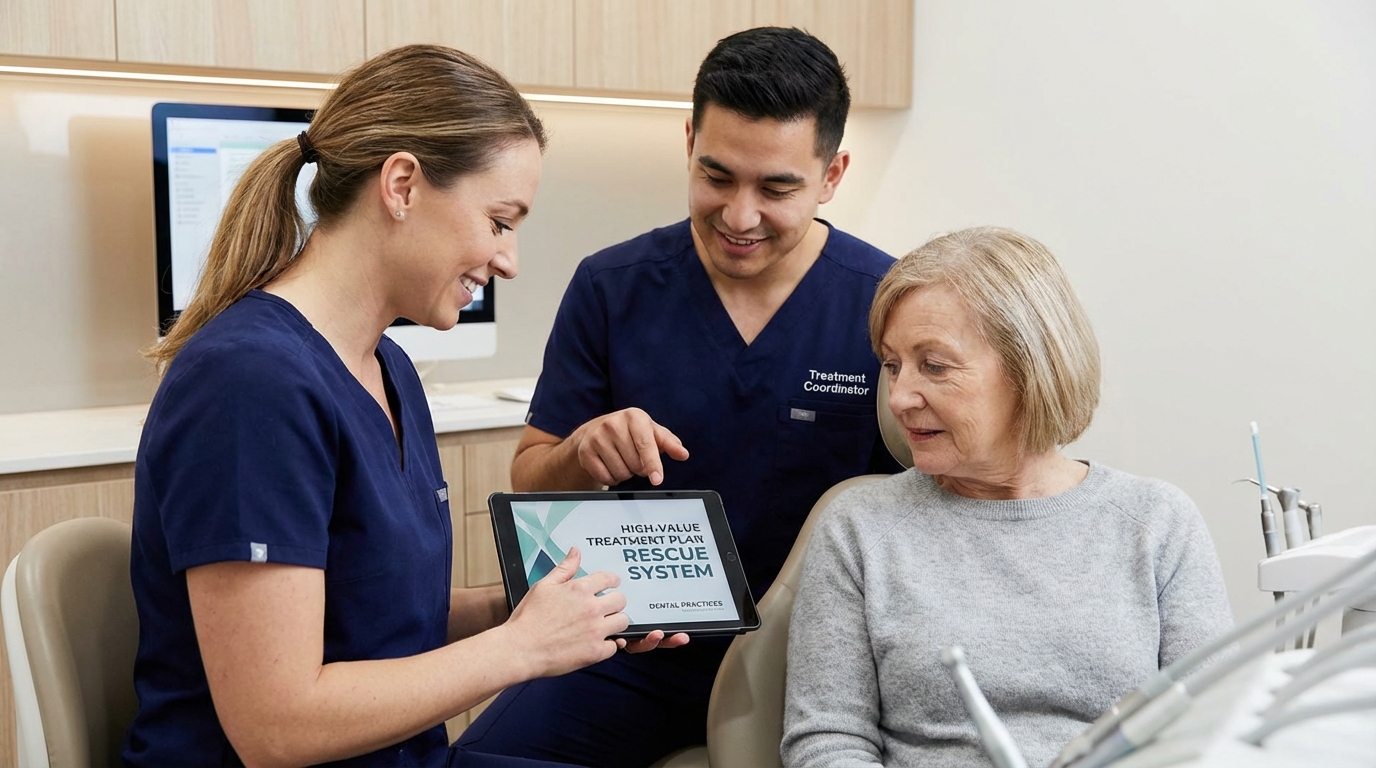
High-value patients make decisions when they trust your team, not when they hear from you six hours later. Train your coordinators to capture consult signals inside the CRM—diagnosis, treatment scope, objections, and financing intent—and trigger the rescue workflow before the patient leaves.
Immediately after the consult, populate a templated treatment plan PDF, price breakdown, and payment comparison so the patient can see the investment in clear dollars and outcomes. Send those assets automatically via SMS or email alongside a short video from the doctor. If you pair this with a consult debrief checklist, the patient feels heard and your team stays aligned.
Use existing blueprints like the High-Value Treatment Plan Automation Playbook to standardize those consult outputs. If the patient needs financing, the rescue system should already know which vendors to contact and which scenarios merit a human call. That’s how you build momentum in the first 30 minutes, not after you realize a coordinator forgot to hit “send.”
Automate financing, reminders, and human escalation loops
Financing is the final bridge between a consult and a signed plan. Instead of waiting for a patient to finish a PDF or bounce back from an email, automate the financing concierge. Once a consult outcome marks the case as “high-value,” your rescue workflow should send a pre-filled credit application to the patient, text them a link to upload documents, and email a summary of the benefits. No juggling spreadsheets.
If the patient pauses, trigger follow-up reminders at 24, 48, and 72 hours with value-based messaging. Each reminder should escalate urgency while reinforcing the transformation (e.g., “Your implant treatment can restore chewing comfort in time for your vacation”). If a patient still doesn’t respond, notify the coordinator via CRM, so they can reengage personally. That’s the hybrid automation + human combo that wins consistent deals.
Link this to Automated Dental Implant Financing System logic so the workflow knows which lender to ping, which disclosures to include, and which approvals slide into your dashboard. An automation that feels like a concierge also maintains compliance with finance partners like https://www.ada.org/resources/practice/practice-management/financing-dental-care and preserves the premium experience. Focus on BOFU keywords—financing approvals, high-value cases, treatment plan acceptance—inside every message so the patient never doubts your expertise.
Align the team around accountability dashboards
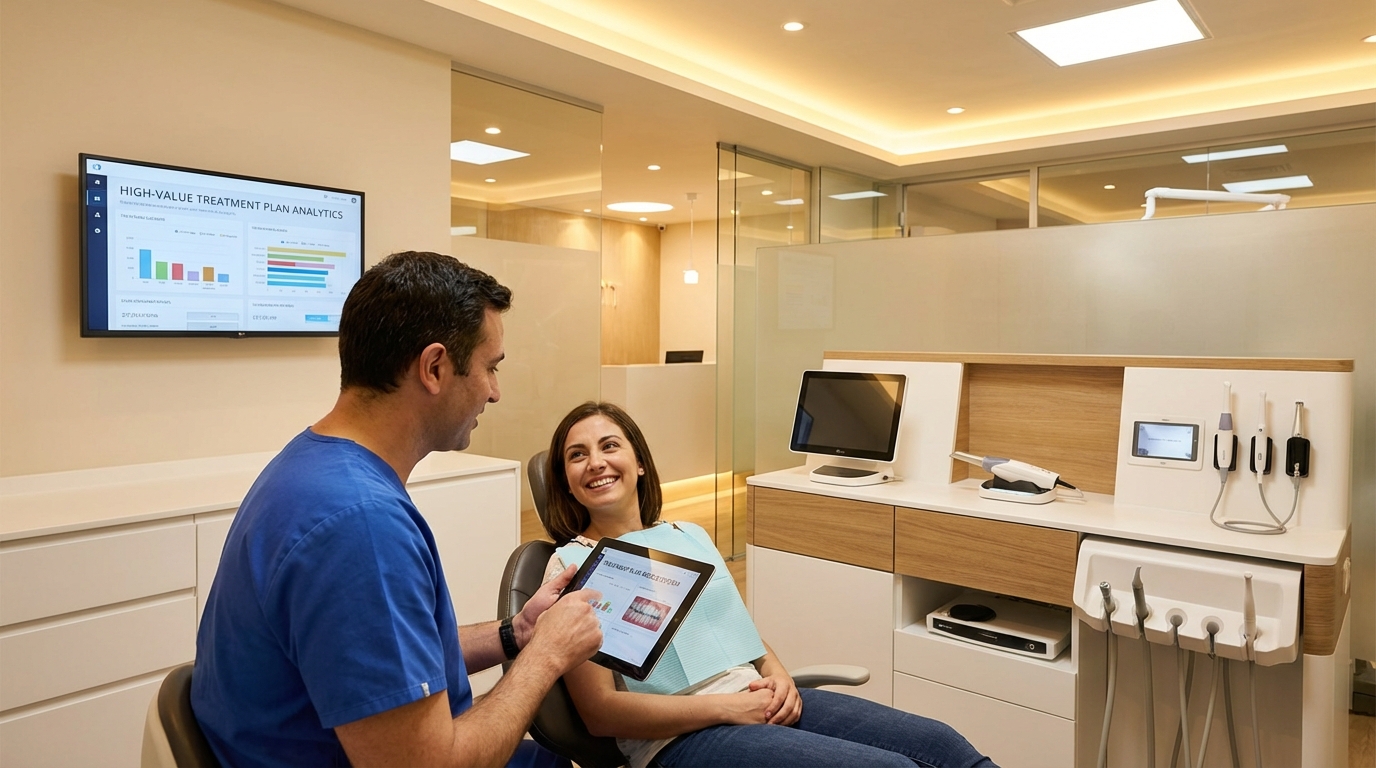
Automation is only as strong as the humans watching it. Your rescue system needs a dashboard that shows every case in flight, the next scheduled touch, and the revenue at stake. Feed your CRM with tags for “financing sent,” “reminder 1 pending,” and “administrator follow-up required,” so anyone can open the board and pick up a case instantly.
Daily standups should include a quick scan of the dashboard to identify cases that have been stuck at the same stage longer than 48 hours. Build alerts into your CRM: if a treatment plan sits untouched after sending, auto-assign the coordinator to call the patient and log the outcome. Pair these workflows with the Automated Treatment Plan Acceptance playbook to reduce manual tracking.
When teams see which cases are about to cool off, they stop waiting for “the system” and start owning outcomes. Add accountability by listing the revenue tied to each case on the dashboard (e.g., “$18,500 full-mouth implant plan pending financing”). That puts the stakes in plain sight and keeps everyone aligned around closing high-value work.
Measure acceptance momentum before it stalls
If you’re not measuring, you’re guessing. Track conversion rates at every checkpoint: consult → treatment plan send, treatment plan send → financing approval, financing approval → delivery scheduled. Use CRM reports to show which stage loses the most deals so you can throw resources at the bottleneck immediately.
Set KPIs that tie to BOFU keywords like “treatment plan acceptance rate,” “high-value case revenue,” and “financing approval velocity.” Compare week-over-week performance to know when automation tweaks actually move dollars. For example, if financing reminders lifted approvals by 12% in a week, double down on the messaging cadence. If you notice consults stalling before financing, reexamine your consult debrief scripts and follow the Consultation Conversion Rate benchmarks.
Also track the qualitative signals: which coordinators are hitting follow-up SLAs? Are any financing partners lagging on approvals? Use these insights to coach the team and update automation sequences. When the rescue system has measurable momentum, you’ll convert more cases without sacrificing patient experience.
Summary & Next Steps
Rescuing high-value treatment plans means wiring consult, financing, and team accountability into a single system that can act faster than you can remember every detail. Start by capturing the consult signals, then add automation for financing and human escalation with dashboards that highlight the revenue at stake. Finally, measure the funnel with BOFU-focused KPIs so you can intervene before any case cools off.
Want help building a rescue system that fits your practice? Book a free strategy call at https://www.closingmorecases.com/contact-us and we will map the automation, financing, and team playbooks that keep premium cases moving toward signature.
How fast can we start rescuing treatment plans?
Within a week you can map the consult signals, automate the financing nudges, and activate dashboard alerts. Most practices see a lift in acceptance within 30 days once the rescue system is in place.
Will automation feel impersonal?
No—keep automation warm by mirroring the doctor’s voice, personalizing reminders with consult details, and triggering human calls for every lagging case. Patients still feel taken care of because you respond before they have to follow up.
What integrations do we need?
Connect your CRM, financing partner, and automation tool (Zapier, Make, or your PMS native workflow). Feed these systems into a shared dashboard so coordinators get the next-step prompts and nothing relies on memory alone.
How do we prevent cases from being spammed?
Limit reminders to three touches, tailor each message to the patient’s goals, and always include opt-out instructions. Escalate to a human call if a patient ignores the third nudge.
What if a workflow breaks?
Your dashboard should flag failure states—e.g., financing partner hasn’t approved within 48 hours—and notify the coordinator immediately. That way a human can step in while automation is corrected.
Can multi-location teams share one rescue system?
Yes. Use location tags and role-based dashboards so each office sees only their patients while leadership views aggregated revenue and bottlenecks.
Ready to stop losing high-value cases?
Book a free strategy call at https://www.closingmorecases.com/contact-us or schedule a website audit to see how your rescue system can plug into your revenue engine.