There is a silent revenue stream inside every practice: patients who raised their hands for implants, full-mouth reconstruction, or cosmetic dentistry and then vanished before booking. Marketing teams call them "abandoned treatment plans," but the distinction from a qualified consult is small. They already trust your brand, they already visited the landing page, and they just need a reliable nudge that respects their time and finances. This article lays out how to detect the abandonment signals, orchestrate multi-channel recall, educate prospects on financing, and close the loop without buying another cold lead.
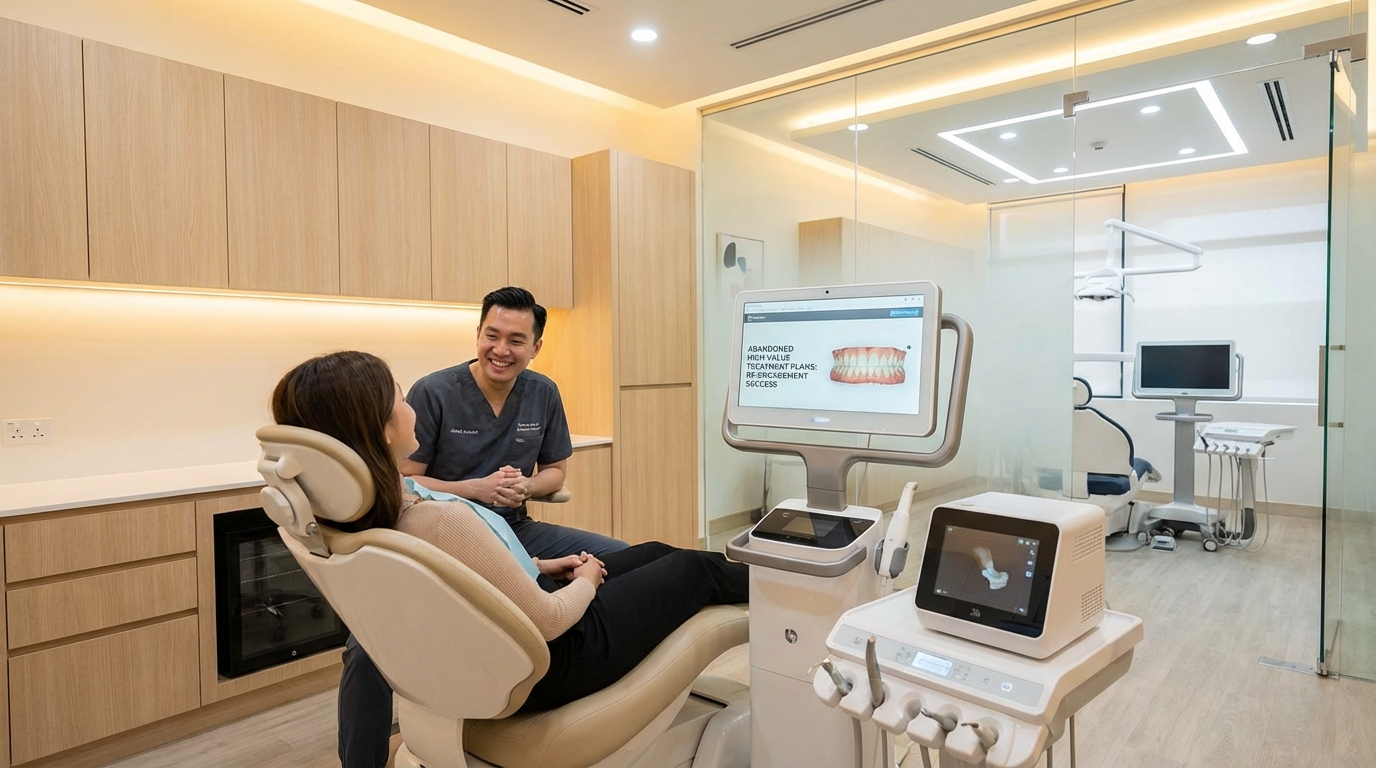
Fill Abandoned High-Value Treatment Plans Without More Cold Leads
By KamGeneral1,484 words7 min read
Track the abandonment signals that matter for high-value plans
High-value treatment plans almost always go quiet between consult and booking, which means the first priority is knowing who slipped away and why. Flag any appointment with a high-value tag (implant, sedation, cosmetic smile) in your practice management software, then monitor three abandonment signals: no-shows to the second SMS confirmation, unanswered financing disclosures, and no engagement with the post-consult video summary. Each of these tracks the momentum drop and gives your marketing ops team an exact date and touchpoint to restart the conversation.
Document a simple dashboard that pulls from your CRM and practice management software. Count how many consults in the last 30 days ended with a treatment plan and no booking, how long it has been since their last touch, and whether financing was discussed. Internally link those consults to the Dental Implant Consultation Conversion Rate resource so every front desk person sees the stakes—each abandoned implant consult is a potential $25K–$40K case that never matures.
External research backs this method. The American Dental Association notes that nearly half of patients on the fence about a premium treatment never receive a second proactive follow-up (https://www.ada.org/resources/research). When your team pairs that stat with your own conversion data, the inertia goes away—teams start treating abandonment as an operational failure instead of a patient problem. Track those metrics weekly and tie them to revenue so your team stops chasing new, cold leads and instead reactivates the intent sitting inside your existing marketing funnel.

Automate recall from multi-channel triggers before interest fades
Once abandonment signatures are tracked, automate the recall budget around them. Start with a concierge-style SMS sequence that fires 10 minutes after a missed financing disclosure call, followed by an email with a short video recap of the consult and a friendly reminder of next steps. If there is still radio silence after 48 hours, have your care coordinator trigger a personal voicemail and a handwritten thank-you card that invites the patient to reply. Use automation tools to log each attempt automatically so you know exactly when to escalate to a live outreach.
Text messaging has the highest read rate, but email can carry more strategy. Include links to internal resources like the Dental Marketing Agency Pillar Outline that explain how your team coordinates consult follow-up and financing. This keeps the narrative consistent—patients see that the same team that generated the content is also managing their path back to the chair.
Add behavioral triggers to the sequence. If the patient opens the financing breakdown but hesitates, fire a short case study showing a practice that solved the same concern last quarter. This could be a templated case study slide or a one-minute testimonial about the custom financing solution. Since patients often abandon due to payment anxiety, a targeted reminder that says "We still have your preferred treatment chair reserved for one more week" keeps the psychological urgency alive, especially when coordinated with a special financing window.
Educate and finance so the value matches the price before you ask them to book
Abandoned treatment plans tend to be value conversations left unfinished. To close them, educate and finance together. Deliver an automated education bundle via email that includes a short explainer video, a financing calculator, and a comparison of sedation options or smile design technology, depending on the case type. Embed both internal and external links: cite how your practice leverages digital planning, and point to an external authority like McKinsey on why transparency in pricing outweighs hard selling (https://www.mckinsey.com/business-functions/marketing-and-sales/our-insights). That external credibility reinforces your messaging without sounding like an ad.
Explain financing openly. Outline your three preferred payment options—CareCredit, in-house plans, and production-backed lending—and provide a quick comparison chart in the email. End the section with a CTA like, "If you want us to reserve that same surgical day, reply with your preferred payment plan and we will confirm it in 24 hours." When prospects see the logistics spelled out, their anxiety drops and momentum returns.
Pair education with social proof that mimics their concern. For example, if you are marketing full-mouth reconstruction, include a quote from a patient who appreciated the transparent financing and sedation care. Add an internal micro-CTA linking to a relevant service page (https://www.closingmorecases.com/services/dental-marketing) to keep readers in your ecosystem and illustrate how you support premium cases across marketing, consult, and financing operations.
Make the next step frictionless with concierge follow-up and micro-commitments
After re-engaging the patient, make it easy for them to say yes. Replace generic "Call us" messaging with a scheduling link that only shows the slots pre-authorized for their case type. If the patient has been ghosting for more than a week, offer a "Strategy Call Catch-Up"—a 15-minute conversation specifically about financing options and sedation details. Label it that way so the patient understands is not a pushy sales call but a realignment conversation.
Inside the follow-up, mention the value of smaller micro-commitments: a pre-visit questionnaire, a shared treatment plan document, or a financing form they can complete online. Encourage them to complete one quick task by saying, "Complete the 3-question planning worksheet and we will reserve your consult seat for Tuesday at 2 p.m." Each tiny step brings the case closer to acceptance without overwhelming the patient.
Consistently highlight the CTA: Book a free strategy call (https://www.closingmorecases.com/contact-us) to review your high-value case recovery system. This anchors every reminder in a clear action and tells your team exactly where to direct the conversation when the patient responds. Document every reply inside your CRM so your clinical team sees the history and can personalize future touches without guessing what happened earlier.
Summary: reclaim revenue by nurturing the cases you already attracted
Abandoned high-value treatment plans don’t need more marketing dollars; they need structured recall, financing transparency, and concierge follow-up. Use the data dashboard to track who slipped away, automate multi-channel recall, educate on financing with proofs and calculators, and make the next step feel effortless with micro-commitments. If you want help implementing this recovery system, book a free strategy call (https://www.closingmorecases.com/contact-us) and we will blueprint the exact touchpoints your practice needs to stop leaking deals.
Q: What is the first step when a high-value treatment plan goes quiet? A: Flag it inside your CRM with a "high-value abandoned" tag, note the last touchpoint, and trigger an automated SMS reminder plus email within 30 minutes—momentum is lost fast, so speed matters.
Q: How many touches should the recall sequence include before a live team member takes over? A: Start with two automated touches (text + email) in the first 48 hours, then escalate to a care coordinator call and voicemail if there’s no response; keep the total under five touches before handing it to the clinical team to avoid annoyance.
Q: Do financing education emails really work for treatment plans stuck in limbo? A: Yes—patients need to understand their options, and studies show transparency increases conversion. Pair a financing breakdown with a short case study to make the choice feel safe.
Q: What internal resources can help protect these recall systems? A: Use playbooks like your Dental Marketing Agency Pillar Outline and your dental implant consultation conversion rate tracker so every team member follows the same checklist when re-engaging a patient.
Q: Should the recall messaging feel different depending on the treatment type? A: Absolutely—implant, cosmetic, and sedation cases each have unique fears and values; customize the copy and proof points so the patient feels understood, not mass-mailed.
Q: How do you measure success for this recovery effort? A: Track the number of abandoned consults that rebook, the revenue closed from those cases, and the drop in missing financing disclosures; even a 15% recovery lifts your monthly revenue by tens of thousands.
Frequently Asked Questions
Ready to Close More Cases?
Book a free strategy call and see how we help dental practices add 40+ new patients in 90 days.
Book Your Free Strategy CallRelated Articles

General6 min read
Asheville Dental Marketing Agency Playbook for High-Value Case Growth
Asheville Dental Marketing Agency Playbook for High-Value Case Growth
General7 min read
Atlanta Dental Marketing Agency Pricing: What It Takes to Buy Consistent Implant Cases
Atlanta Dental Marketing Agency Pricing: What It Takes to Buy Consistent Implant Cases
General6 min read
Back-to-School Revenue Reset for Dental Practices
Reset your practice for the back-to-school rush with scheduling, messaging, and financing systems that turn seasonal slumps into predictable consults.