Publish Date: April 14, 2026 CTA: Book a free strategy call → https://www.closingmorecases.com/contact-us Target Keywords: dental practice burnout prevention, dental practice systems, treatment coordinator automation, practice owner guardrails, dental caseload management
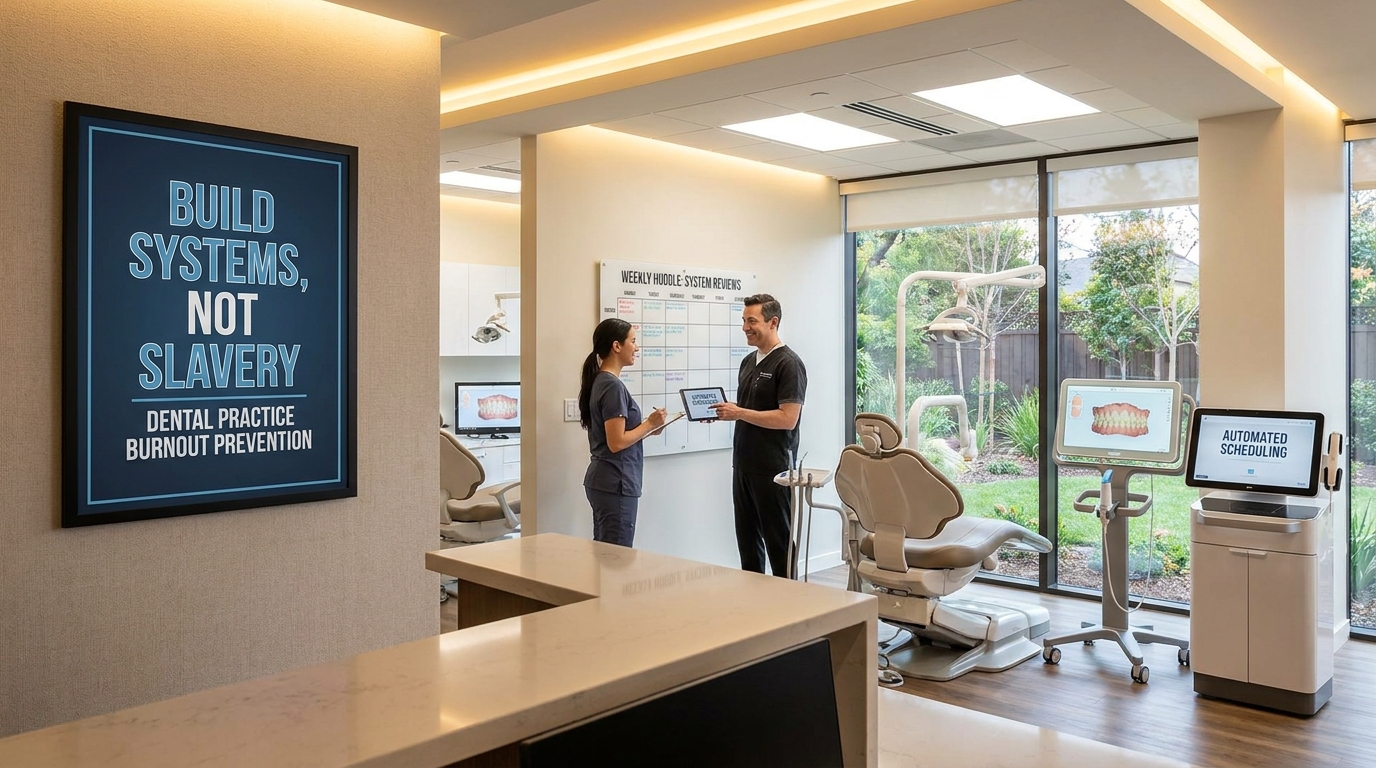
Dental Practice Burnout Prevention: Build Systems, Not Slavery
By KamGeneral1,903 words10 min read
TL;DR
Burnout is a revenue leak in disguise—quiet resignations, sagging acceptance rates, and anecdotal “staff fatigue” emails are symptoms, not causes. By mapping the real signals, redesigning your calendar rhythms, and giving your coordinators the automation they need, you can run the same monthly volume with fewer crises. Hold yourself accountable like a COO: review contribution margins, align staffing to demand, and book focused strategy sessions before you lose another implant consult to overwhelm.

Introduction
A five-day workweek and a calm front desk used to feel aspirational for practices, but by the time the team hits Friday afternoon your operatory board looks like rush hour in New York. Consults were supposed to be the wow moment, not the source of shame. Yet the same dentists who preach premium, concierge care end up apologizing to patients for their own exhaustion.
Burnout is not the result of passion fading—it is the result of systems failing. High-ticket dentistry still scales when the demand engine is strong, but only if the internal operations can keep pace. You can’t hope for a stretch of calm while every case requires heroic effort. Instead, build predictable systems so your team hits capacity without collapsing.
This playbook outlines how to catch the symptoms early, design scheduling rhythms that respect staff energy, automate the repetitive tasks that sap joy, and give the owners the guardrails needed to lead without lighting themselves on fire. If you want more than a quick fix, treat burnout like an operations problem, not a morale one.

1. Spot the burnout signals before they become resignations
The loudest indicators of burnout rarely come from the grateful email you get after a successful consult. They hide in the silent metrics: a constant stream of fill-in coordinators, consults rescheduled multiple times, or team members arriving earlier but leaving later just to keep up. You need a signal set that tells you when the team is “hanging on” before sparks fly.
- Calendar creep: Track how many times an implant consult slips off the board. If your case acceptance rate dips while marketing volume stays flat, the problem is downstream, not with the ad copy. A steady cancellation/waitlist ratio above 12% means the schedulers are overloaded.
- Workload mapping: Log daily doctor + assistant hours per operatory. Use a simple spreadsheet to add triage consultations, hygiene overflow, and implant blocks. Once you understand the true capacity, you can stop overbooking and protect the team’s white space.
- Sentiment data: Use short, anonymous pulse surveys (one question, once per week) instead of waiting for drama. Ask, “Did I feel supported carrying my consult load?” Rate the answer 1–5, and when the average drops below 4, initiate a reset.
Pair these human metrics with the data provided by Closing More Cases Dental Marketing Agency so you know how much demand is flowing in and where the pinch points appear. When marketing says “send more leads,” your operations dashboard should say “we can absorb X new consults before we need another coordinator.” That alignment keeps the emotional burden from ballooning.
External reference: The American Dental Association’s practice management resources make the case that burnout prevention is about systems, not motivation. Those resources reiterate what high-performing teams already know: sustainable surgery blocks require clarity, consistency, and accountability.
Catch the signals early and you can protect the front desk before a resignation or a missed consult turns into a revenue hole.
2. Design predictable rhythms so staffing and schedules breathe
Chaos is the easiest way to wear out a practice team. If every week feels like triage, everyone—even the happiest coordinators—starts dreading Monday mornings. The antidote is a rhythm that repeats: predictable blocks, strategic rest, and data reviews that tell you when to add or subtract hours.
- Block scheduling with intent: Reserve three “focus blocks” per week for large consults, then protect two “deep work” hours for coordinators to do follow-up without interruption. Avoid mixing high-intensity consults with urgent production days unless you have a buffer person.
- Capacity planning: Use a visual board (digital or physical) that shows capacity, not just bookings. When a weekend consult is scheduled, instantly see whether it pushes staff beyond their sustainable limits. If it does, move an elective case or add a float coordinator rather than forcing staff to stretch.
- Operational retrospectives: Every Friday, meet for fifteen minutes to review what drained energy, what ran smoothly, and what needs adjusting. Keep the meeting under 15 minutes to respect the team’s bandwidth.
- Week-ahead transparency: Publish a short Monday memo that lists the week’s “protected hours,” the focus cases, and any “staff recovery” touches (massage chairs, extended lunches). When the team sees that you plan for them, they mentally relax.
While you rebuild those rhythms, keep the top of the funnel steady. Your Dental SEO services should continue feeding consults so the momentum doesn’t stall while you restructure. When marketing and operations understand each other, you can throttle inbound demand or open up new consult slots without leaving anyone behind.
Pacing matters more than volume. Practices that respect their team’s energy budgets can hold the same monthly revenue with fewer emotional and cognitive costs.
3. Automate the tedious follow-up and approvals that suck time
The biggest drain on coordinators is not the consulting itself—it’s the hamster wheel of follow-up, approvals, and patient education. Every time they chase paperwork or repeat the same explanation, another bit of joy evaporates. Automation removes the friction and rebuilds trust with both patients and staff.
- Automated follow-ups: Use your practice management system to send templated text and email nudges after consults. Include a short video recap (60 seconds) that summarizes the recommended plan, financing options, and next steps. Coordinators can build on that automation instead of retyping the same message.
- Decision dashboards: Build a simple hub (even a shared Google Sheet) that shows where each consult lives: financing approval pending, lab timeline, sedation clearance, etc. When every stakeholder can see the status, your team stops pinging each other in group chats.
- Approval workflows: Define what constitutes a “complex case” and assign a fast lane. For example, if a full-arch case needs a surgeon review, route it to the clinical director within 30 minutes. Automation via your EMR or task system prevents backlog.
- Patient education libraries: Instead of forcing coordinators to become videographers, curate two-minute education clips, financing explainers, and treatment plan highlights. Automate the delivery post-consult so that the first reminder arrives while the excitement is still high.
Automated systems are not about removing the human touch. They are about freeing the human to be strategic. Your team can spend more time coaching patients and less time repeating instructions.
Use automation to defend your team’s mental energy. As a bonus, it makes it easier to scale because you know what every automation handles, and you can plug a new coordinator into that system without dragging them through trial and error.
4. Owner guardrails: data, rest, and the courage to pause
Practice owners burn out fast because they never create spaces for reflection. The calendar stays packed because the owner hasn’t scheduled a “reset day.” Yet leaders who take one day off every five workdays actually make better decisions—they see the leaks before they blow up.
- Monthly KPI reviews: Run a short dashboard meeting once per month. Track treatment plan acceptance rate, average case value, days to collect, and financing approvals. If acceptance drops more than two points while case value increases, your team might be pushing too hard without adjusting the script.
- Cash buffers: Keep an “operations buffer” equal to two weeks of payroll. When you know you have runway, you are more likely to say no to a case that would overload the team.
- Personal reset rituals: Book one personal no-meeting day per week. Use it to review dashboards, read one industry article, or just breathe. Leaders who stop to look up reap better company culture.
- Strategy check-ins: Once per quarter, evaluate what is working (scheduling, marketing, automation) and what needs a reset. Use that time to reallocate budgets, approve training, or hire a fractional COO.
When you pair guardrails with the operations systems above, the practice becomes resilient. Burnout no longer sneaks up because you have predetermined breaks, clarity on capacity, and a culture that values rest.
Summary & Next Steps
Burnout is preventable when you treat the practice like a system, not a series of crises. Start by measuring the real fatigue signals, redesigning your schedule with protected time, automating the follow-up work, and giving yourself the guardrails to lead calmly. As you rebuild, keep your demand engine active—but never at the cost of your team’s well-being.
Book a free strategy call (https://www.closingmorecases.com/contact-us) to audit your staffing plan, automation layers, and pricing guardrails so you can keep winning high-value cases without burning out the people who make it possible.
How quickly can we see relief once we start tracking burnout signals?
You can usually see a difference in 30–45 days. Identify the top three red flags (calendar creep, consult slack, and emotional tone), take immediate action, and then protect one “recovery zone” per team member each week. The combination of data and intentional rest creates momentum fast.
What if we don’t have a full-time operations manager?
Use the owner + coordinator combo as the short-term solution. Embed a 15-minute end-of-day wrap-up where you review the KPIs together. When budgets allow, consider a part-time CO or operations consultant so the owner can focus on strategy instead of chasing spreadsheets.
Do automation tools require expensive software?
No. Start with what you have. Most practice management systems already send appointment reminders and allow templated messages. Use shared documents for dashboards and add simple automations via Zapier or Workflow tools to route urgent chats. The key is consistency, not complexity.
How do we keep marketing aligned while we rebuild internal systems?
Keep feeding the top of the funnel but tag every consult with its energy cost (complex, simple, sedation). Use that data to throttle marketing spend on heavy cases while you shore up staffing. When you are ready to scale again, align every lead with the systems you just put in place so the demand doesn’t overwhelm the team.
Can we still scale if I keep some consults for weekend hours?
Yes, but do it strategically. Block one weekend per month for “high-ticket consult labs” and staff it with coordinators who have approved overtime. Protect the rest of the team by rotating weekends and giving them compensatory time off. That way you capture demand without blowing up recharge time.
Is burnout a symptom of more than just overbooking?
Absolutely. Burnout also occurs when teams lack clarity, when leadership flips priorities every week, or when the owner lets tension linger without resetting. Treat those cultural habits like a process to be improved rather than a personality flaw.
Frequently Asked Questions
Ready to Close More Cases?
Book a free strategy call and see how we help dental practices add 40+ new patients in 90 days.
Book Your Free Strategy CallRelated Articles

General6 min read
Asheville Dental Marketing Agency Playbook for High-Value Case Growth
Asheville Dental Marketing Agency Playbook for High-Value Case Growth
General7 min read
Atlanta Dental Marketing Agency Pricing: What It Takes to Buy Consistent Implant Cases
Atlanta Dental Marketing Agency Pricing: What It Takes to Buy Consistent Implant Cases

General6 min read
Back-to-School Revenue Reset for Dental Practices
Reset your practice for the back-to-school rush with scheduling, messaging, and financing systems that turn seasonal slumps into predictable consults.