Introduction
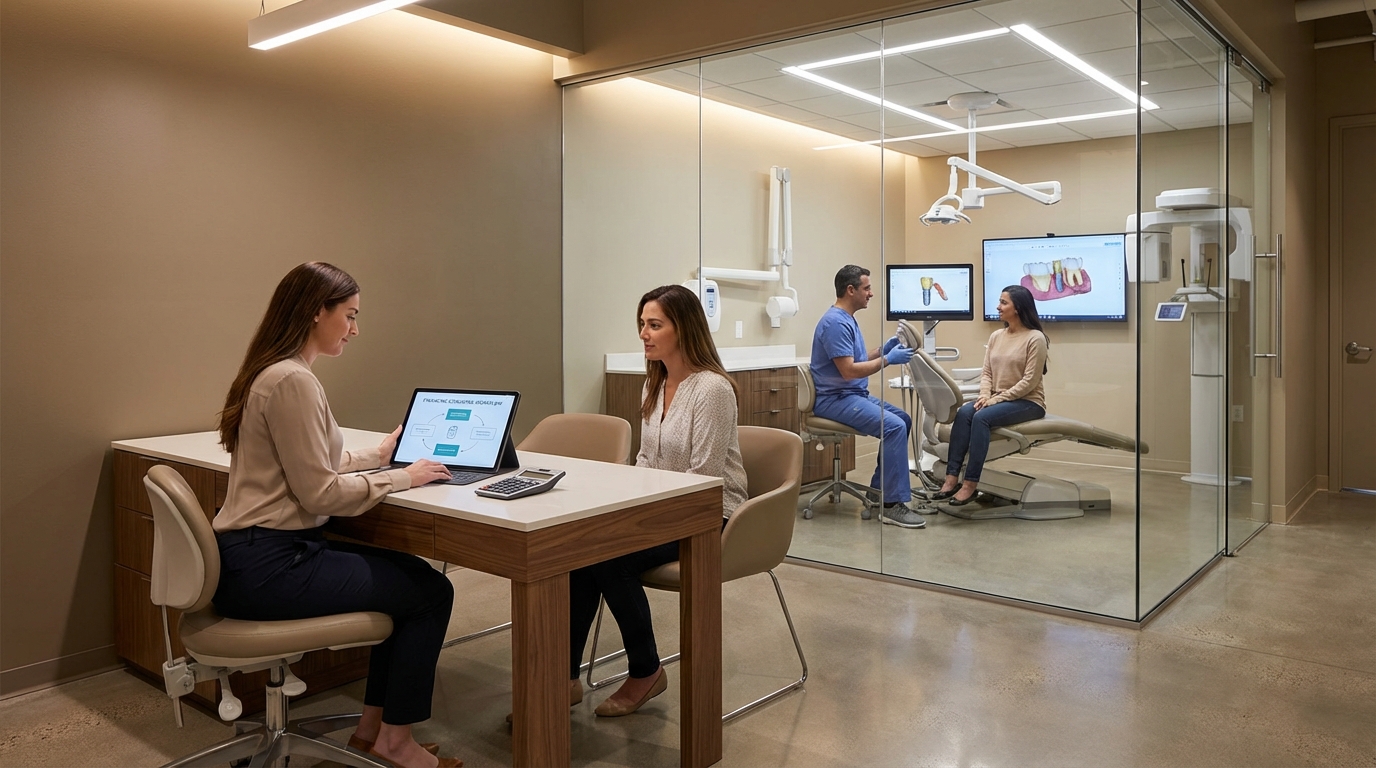
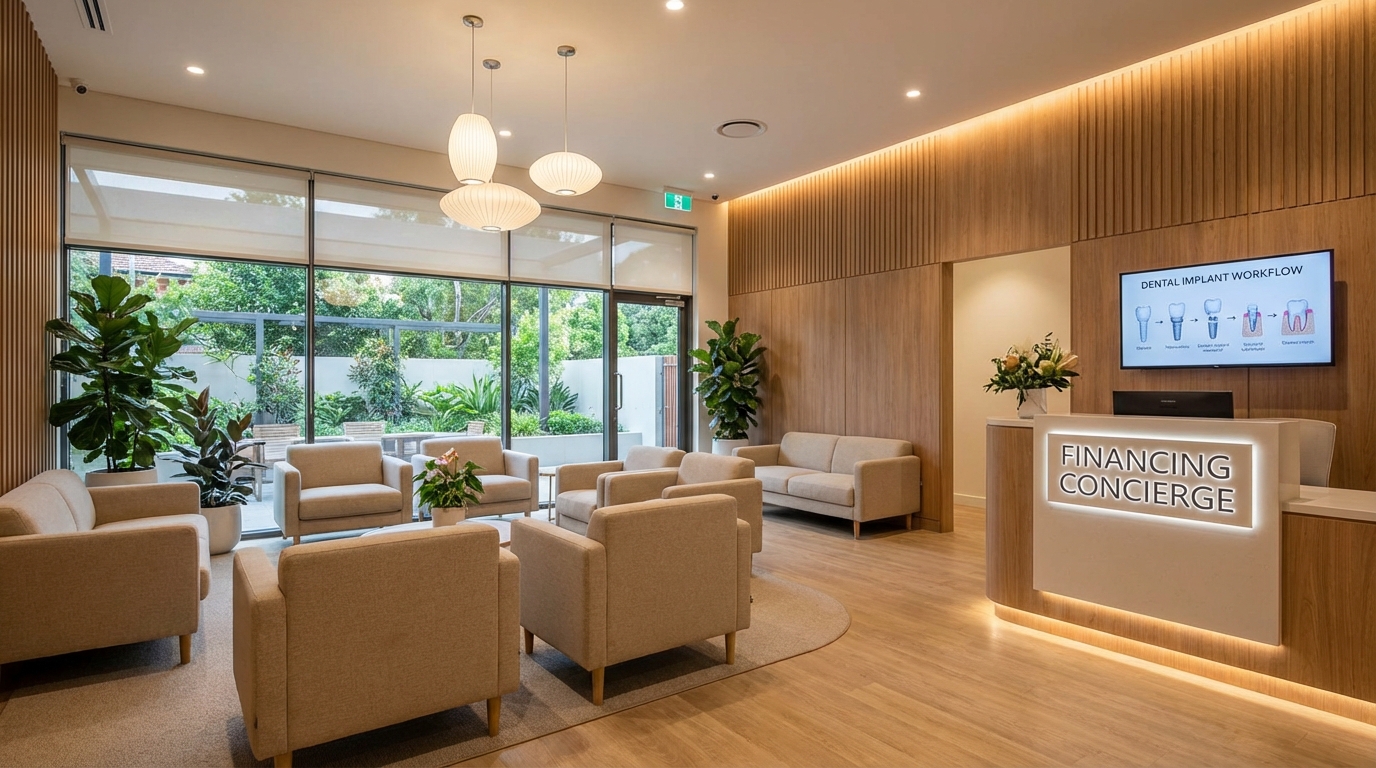
High-value dental implant consults collapse whenever a patient hears a price tag that feels unanchored. The practices that close the most cases solve that problem by assigning a financing concierge—someone or something that turns the consultation into a guided, educational, and emotionally safe experience. A concierge workflow looks beyond the financing form; it orchestrates the narrative, the follow-up, and the KPI tracking so patients never feel abandoned in the middle of a multi-thousand-dollar decision. This article shows how the concierge approach prevents hesitation, keeps internal teams aligned, and lets your practice wield the premium positioning you deserve without lowering fees.
Why a financing concierge signals confidence before the consult even starts
Position financing as part of the clinical story
Patients judge every part of their implant journey, including how you explain money. When your concierge starts with the consult script that appears in the dental-implant-financing-playbook, you can frame the investment as a predictable outcome rather than an open-ended fear. That script introduces treatment expectations, shares the cost mid-conversation, and immediately illustrates the financing paths available—lending partners, medical credit, or internal payment plans. Supplementing that script with guidance from the ADA’s financing best practices (https://www.ada.org/resources/practice/practice-management/finance) proves you are not inventing a pitch; you are following the same ethical standards that every reputable office already knows how to follow.
Give every teammate a concierge promise
A concierge workflow is only as consistent as its weakest teammate. That’s why you document the promise in a shared playbook—what we call the concierge charter—so treatment coordinators, front desk staff, and dentists know the sequence of education, financing options, and follow-up. Tie the charter to your dental-marketing-agency-pricing positioning so every person reaffirms the value claims your marketing makes. When the education, pricing, and financing cues stay aligned, patients instinctively feel like they are in competent hands, and the conversation never drifts toward competitors or discounting.
Mapping the concierge workflow across the patient journey
Visualize the journey before the consult happens
The concierge workflow begins before the patient walks in. Map each touchpoint using your consult follow-up plan from dental-implant-consult-follow-up-cadence and layer in the concierge milestones: confirmation email, “what to expect” video, financing teaser, and consult-day walkthrough. Visual references from Forbes on journey mapping (https://www.forbes.com/sites/forbestechcouncil/2023/07/13/map-your-customer-journey-to-keep-customers-coming-back/) remind teams to chart not only the appointment but also the emotional state before and after it. When you have that path documented, you can predict every moment a patient will hesitate and design a concierge touch that nudges the decision forward.
Embed decision checkpoints so automation stays in sync
Create branching gates inside your journey map that ask: “Did the patient complete the consult?”, “Did we send a financing summary?”, “Did they ask about affordability?” Each gate triggers a concierge action—an internal note, a pre-defined script, or a follow-up asset. By linking the branch logic to assets like automated-dental-implant-financing-system, the concierge can drop the appropriate resource without losing momentum. This visibility also informs marketing because you can point to the exact moment patients convert, then reuse that messaging in paid ads or emails with the same language, making the journey feel seamless rather than disjointed.
Automating high-trust touchpoints without sounding robotic
Keep the concierge human with scripted automation
Automation should feel like a concierge checking in, not a robotic autoresponder. Use the messaging templates inside the dental-crm-follow-up-guide to craft copy that references the consult, restates the transformation, and personalizes the financing options. Each automated message should include a clear ask—“Which of these three payment plans best fits your timeline?”—and offer a quick path to reply. External best practices from Salesforce on empathetic automation (https://www.salesforce.com/blog/customer-service-for-small-business/) affirm that people respond to clarity plus kindness, even when the communication is auto-triggered.
Deliver the right media at the right time
A concierge automation engine doesn’t just send words; it delivers proof. Schedule a consult-day video, a financing calculator, and a testimonial in pre-set cadences. When the automation fires, include an internal link to the same follow-up playbook or case study you reviewed during the concierge training so the consultant can reference it quickly. External validation from Dental Economics (https://www.dentaleconomics.com/) or a similar authority helps patients see that others like them completed treatment confidently, which reduces resistance and accelerates their decision.
Measuring concierge metrics to protect revenue
Tie every KPI back to the concierge workflow
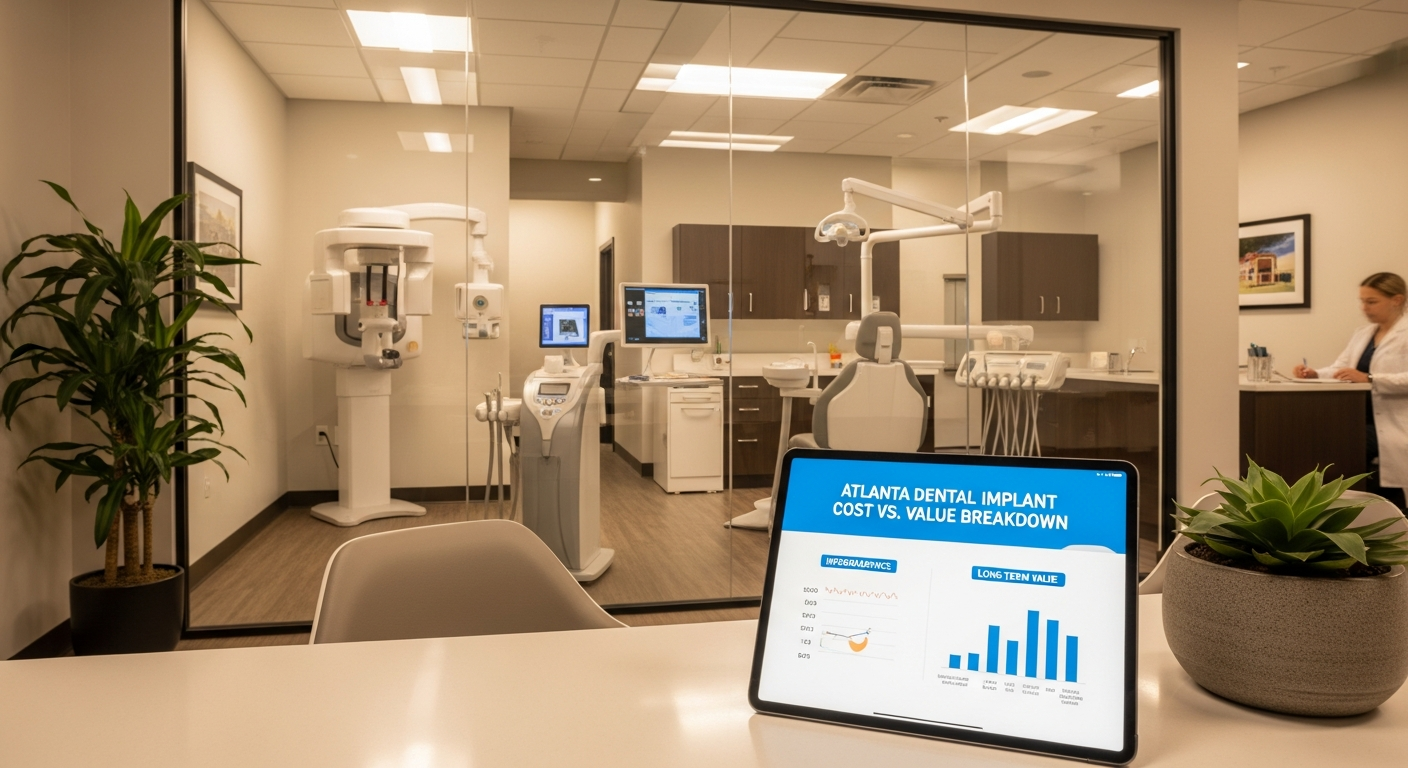
If you cannot measure the revenue lift, the concierge workflow becomes anecdotal. Track consult-to-treatment acceptance rate, average treatment value, days to signed plan, and which financing option the patient selects. Feed those numbers into your dental-practice-patient-lifetime-value-calculator so you understand the revenue impact of each concierge tweak. McKinsey’s research on consistent customer experience (https://www.mckinsey.com/business-functions/marketing-and-sales/our-insights/the-three-cs-of-customer-satisfaction-consistency-consistency-consistency) reinforces that consistent messaging and measurement drive higher loyalty and revenue across industries, dentistry included.
Use anomalies to inform the next sprint
Concierge metrics also expose friction. If one financing option repeatedly drops off after the consult, the concierge team records the feedback, updates the script, and reroutes that patient to an alternate plan. Track these adjustments in a shared board so your marketing team can highlight the winning stories in emails and ads. This feedback loop keeps the concierge workflow current, prevents revenue leakage, and makes it easy to show leadership that your automation is a measurable revenue driver rather than an untracked experiment.
If you are ready to staff a financing concierge for every implant consult and keep the revenue flowing in predictable lanes, let’s make it happen: Book a free strategy call (https://www.closingmorecases.com/contact-us) or Book a free website audit (https://www.closingmorecases.com/contact-us).
Q: How does a concierge workflow differ from a standard treatment coordinator script?
A: A standard script recites facts; a concierge workflow orchestrates narrative, automation, and measurement so each consult becomes a guided, multi-touch experience that ends with a signed plan. The concierge proactively educates, follows up, and tracks who needs what next.
Q: What systems do I need before launching a concierge workflow?
A: You need consult documentation, financing assets (videos, calculators, testimonials), a CRM with automation loops, and a measurement dashboard. The sooner you align these pieces, the faster the concierge can re-route objections into commitments.
Q: Can the concierge workflow scale beyond dental implants?
A: Absolutely. Any high-ticket treatment—full-arch, sleep apnea, or cosmetic makeovers—benefits by slotting into the same concierge workflow. Swap the assets but keep the automation, language, and KPIs consistent.
Q: How do I keep the concierge human if automation handles follow-up?
A: Script empathetic copy, include personalized references to the consult, and always leave an easy reply path. Pair automation with human check-ins when the patient opens the message but doesn’t respond.
Q: Which KPIs prove the concierge is working?
A: Consult-to-treatment acceptance, average revenue per treatment, days-to-signed-plan, and financing option adoption show the workflow’s lift. Share those metrics in weekly leadership huddles.