TL;DR: High-value implant consults stall when teams wait for patients to "commit." Map the BOFU-oriented touchpoints, automate education and finance validation, align messaging with staff, and instrument dashboards so every lead is nurtured toward "yes" without losing momentum.
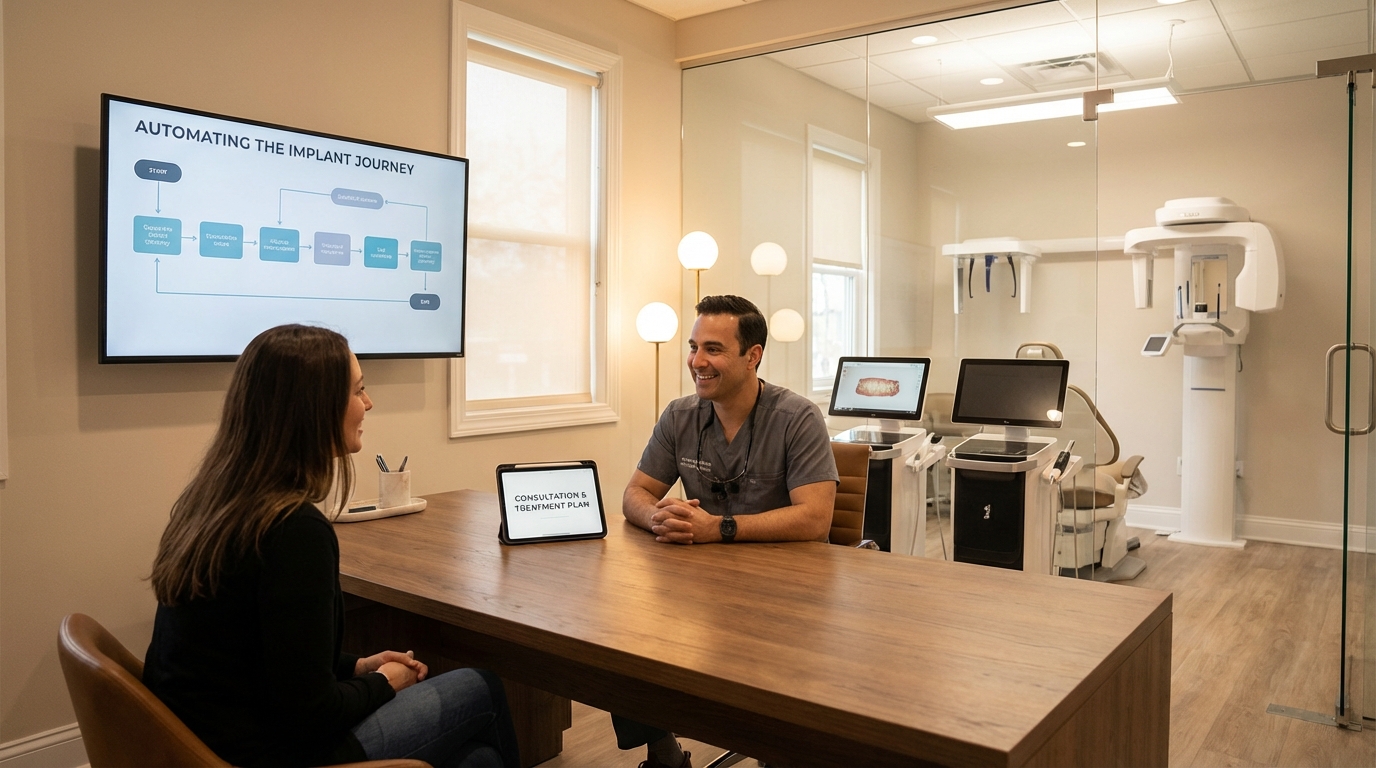
Close Every Dental Implant Case by Automating the Consultation Journey
By KamImplants1,207 words6 min read
Intro
High-intent implant consults are expensive to generate—every paid media and SEO dollar funnels a small number of qualified prospects to your front desk. When those leads reach the consultation phase, the most common failure point is internal: inconsistent follow-up, missing credibility content, and a lack of measurable cues that a patient is ready for treatment. Automating the consultation journey does not mean removing the human element; it means amplifying it. You can free your coordinators to build trust while systems keep the prospect informed, reminded, and emotionally primed. This article explains how to map the BOFU touchpoints, orchestrate education, finance scripts, and accountability, and deliver more closed cases with less friction.
Map the Patient Consultation Journey to BOFU Signals
Chart the touchpoints that reveal real readiness
Each consultation is a series of micro-commitments—when a patient shares their concerns, schedules a financing conversation, or confirms a referral. Your job is to connect the dots before the appointment and automatically track every signal. Start by mapping the journey from the first web visit to the consult reminder email. Use a template like the one in this conversion-rate breakdown to label each interaction as "Awareness", "Interest", or "Decision". That gives you clarity and triggers for automation. Then hook those triggers into your CRM or scheduling tool so when a patient downloads a financing guide, your implant coordinator receives a ping, and a text message reiterates the same benefit they just read.
Internal links keep your team aligned. Pair this mapping with an internal services page such as Dental SEO Services so content and automation both point toward your highest-converting offers. For external validation, reference the American Dental Association's insights on patient education timelines (ADA.org/education), which confirm that timely, consistent messaging increases case acceptance. Automating these touchpoints ensures you never rely on "remembering" to follow up; the system surfaces the next action when the patient signals readiness.

Use Intelligent Pre-Consult Automation to Build Trust
Automate education, testimonials, and proof before the consult
Before the patient walks through the door, they are already deciding if your practice can deliver the outcome they want. Automate a pre-consult pathway that drips content by trigger: a landing page form submission launches a welcome email, followed by a short patient story video, then an FAQ about implant stability. A shared automation hub (aka your "consult orchestration sheet") lists each piece of content, the desired emotional state it creates, and the BOFU trigger it supports. Highlight your trust factors—before-and-after galleries, financing offers, awards, and accreditations—and ensure they appear in the right channels (email, SMS, and chat). Link each asset to existing internal resources like strategy-call-high-value-dental-cases.md so the automated pathway promotes the same CTAs your reps use.
Pair internal resources with trusted outside proof: cite DentistryIQ's breakdown on how social proof reduces anxiety (dentistryiq.com/articles), and weave those findings into your message templates. Use two-way automation loops so coordinators can reply when a patient has a question or needs a last-minute reminder. Automating education prevents the "we'll talk at the consult" trap and keeps your team top-of-mind before the appointment.
Leverage Conversion-Focused Messaging and Finance Options
Script every consult around value, not just treatment steps
Consults fail when the patient hears a treatment plan but does not see the financial path or the emotional payoff. Automate your value proposition by generating dynamic scripts that pull in patient data (treatment goals, refer-a-friend notes, prior crowns). For patients tagged as financing prospects, auto-send a financing verification form plus short video comparing in-house vs third-party plans. This way, coordinators can focus the consult on the patient's biggest objection instead of repeating the same FAQs.
Internal automation that loops back to your strategy call CTA aligns the front desk and marketing message: the same pledge ("We book fewer consults so we can obsess over your outcome") appears everywhere the patient sees your brand. For external authority, reference Salesforce's research on omnichannel selling that states "consistent, automated follow-up increases conversion by 37%" to justify investing in these scripts (salesforce.com/blog). That research helps the team see automation as a conversion multiplier, not a replacement. Every time a patient engages with the automated messaging, flag them as "hot" and auto-schedule a follow-up call or text. Close that loop by reminding them that financing is pre-approved or that your implant lab is ready, keeping confidence high.
Measure, Iterate, and Keep Your Team Accountable
Dashboards + huddles turn automation into predictable revenue
If you cannot measure the effect of your automation, it feels like smoke. Build a consultation dashboard that tracks arrival rate, show rate, financing submissions, and close rate. Feed the data from your CRM and scheduling system into a simple KPI board—graph week-over-week performance and highlight the leaps when automation templates are updated. Include internal links to your reporting sheet or control plane (e.g., business-dashboard.html) so the team can trace the data. Hold a brief huddle at the end of each week to review what automation touched the most patients and to capture any new objections that popped up.
For external credibility, lean on Harvard Business Review's guidance showing that weekly review loops with automation increase project completion by 25% (hbr.org). Use that to justify the weekly ritual and keep everyone accountable. When the dashboard shows a dip, spin up a quick experiment—maybe the reminder text needs a more reassuring tone, or the financing form requires one fewer field. Track those experiments transparently so automation becomes a living system, not a set-it-and-forget-it script.
Ready to close more high-value cases? Book a free strategy call and let us map the automation framework for your practice, or book a website audit to discover which BOFU signals you're currently missing.
- Why prioritize automation over manual consult follow-up? Because the cost of a lost consult is high. Automation keeps the patient engaged, reduces the number of dropped leads, and gives your team data, so you know who is ready to sign on treatment day.
- How do I know which touchpoints to automate? Start with the BOFU moments: financing questions, treatment plan acceptance, and referrals. Map those against your CRM triggers and create automatic responses (emails, texts) tied to each.
- Can automation handle sensitive conversations like pricing? Yes—as long as the templates focus on value and transparency. Automate the introduction and follow-up, but keep the pricing conversation live with a coordinator who uses automation to stay informed.
- What kind of ROI can I expect? Clinics typically see 25–40% higher consult close rates after orchestration, because no one slips through the cracks. The dashboard we described shows the exact lift per automation sprint.
- Is a call to action still necessary? Always—every automated touchpoint ends with a CTA. If you want help crafting those CTAs, book a free strategy call or website audit.
Ready to Close More Cases?
Book a free strategy call and see how we help dental practices add 40+ new patients in 90 days.
Book Your Free Strategy CallRelated Articles
Implants4 min read
Atlanta Dental Implant Cost vs. Value Breakdown
Atlanta Dental Implant Cost vs. Value Breakdown
Implants9 min read
Augusta, GA Dental Implant Consult Nurture Sequence: Turn Leads Into Booked Patients
Augusta, GA Dental Implant Consult Nurture Sequence: Turn Leads Into Booked Patients
Implants6 min read
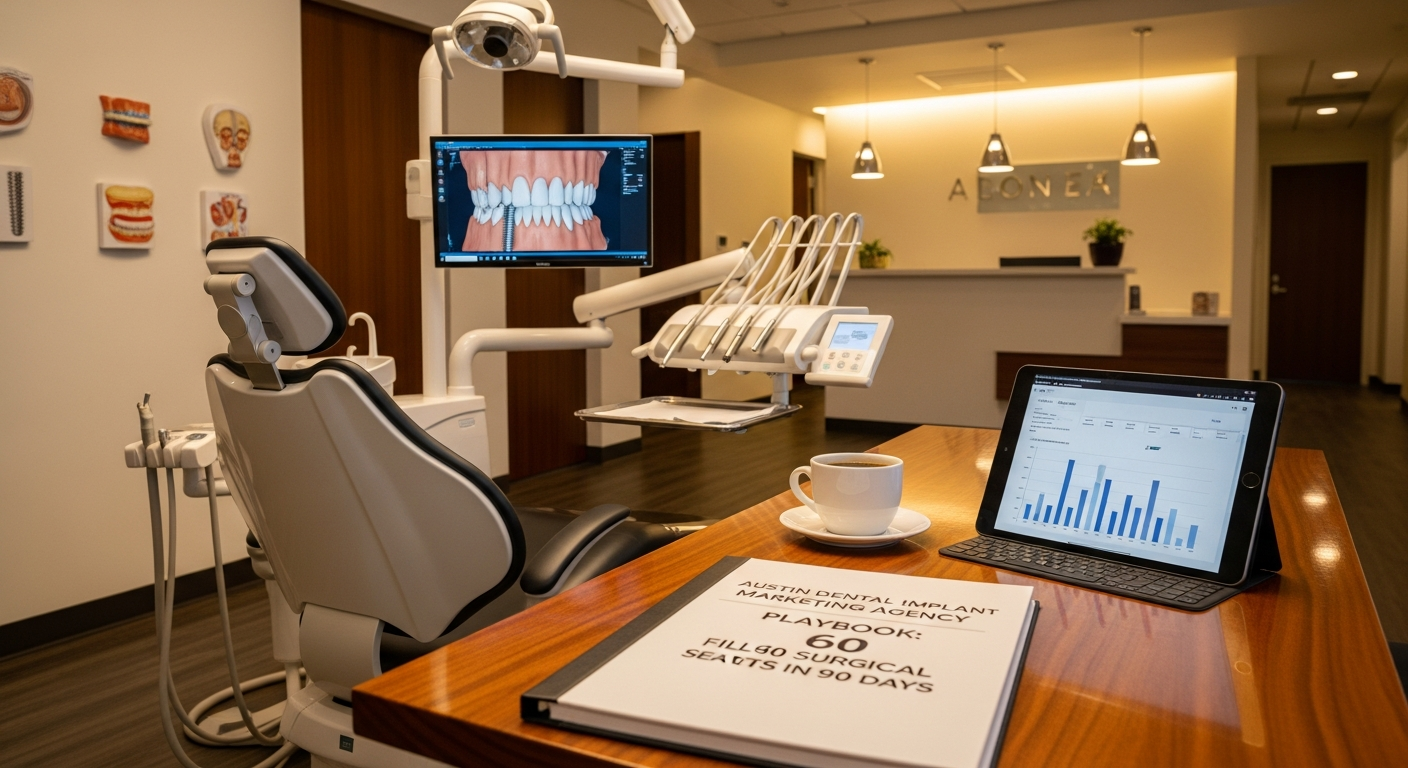
Austin Dental Implant Marketing Agency Playbook: Fill 60 Surgical Seats in 90 Days
Austin Dental Implant Marketing Agency Playbook: Fill 60 Surgical Seats in 90 Days