Introduction
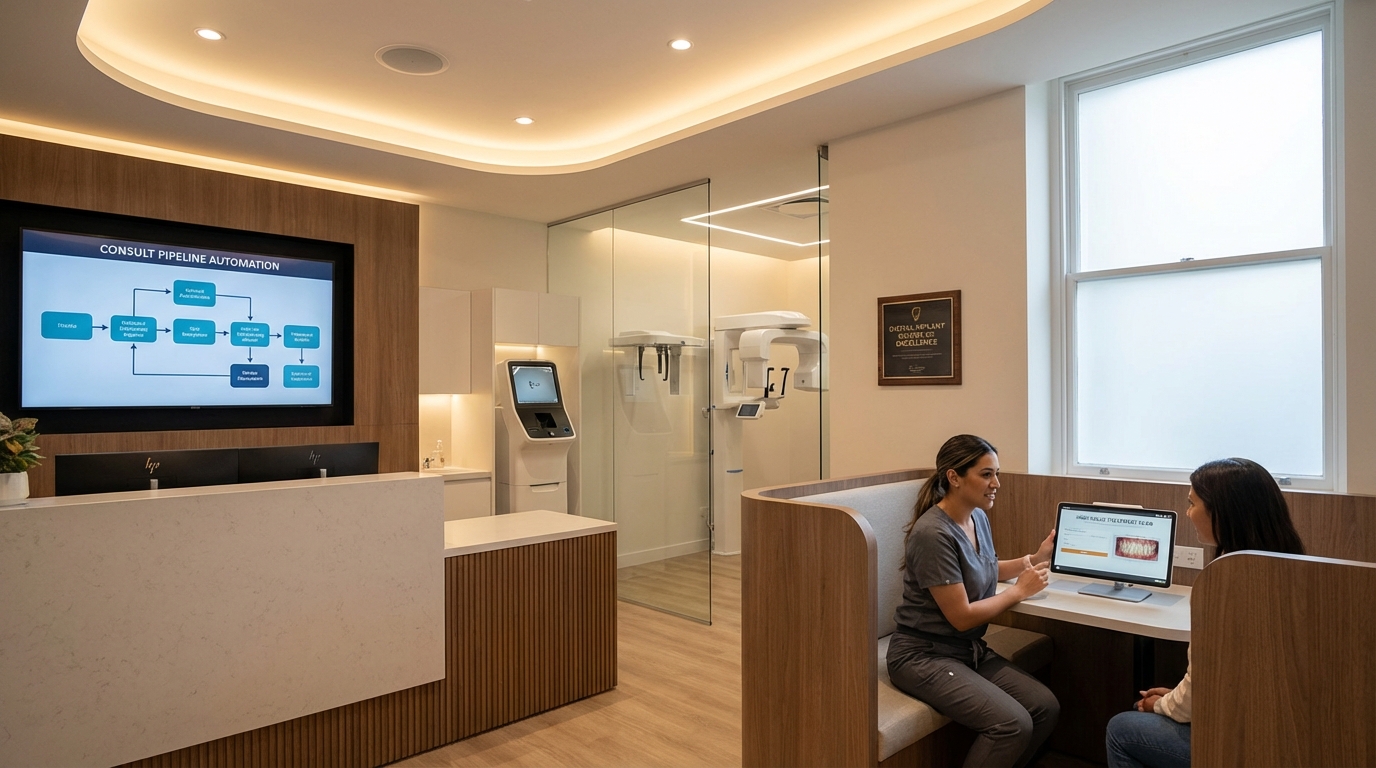
The practices that consistently close high-value implant cases are not the ones that chase every new lead source. They are the ones that engineer a pipeline—starting with content-aware SEO and ending with a consult experience that feels effortless for patients and staff. A consult pipeline prevents leads from falling through the cracks, shortens the decision cycle, and gives your team a repeatable way to book, educate, and convert prospects without discounting their expertise. This post shows how to build that pipeline with BOFU-rich content, automation, and measurement so you can increase the number of implant consults turning into signed cases.
Diagnose the gap between consult volume and signed plans
Consults without nurture are revenue cliffs
Many practices invest heavily in paid ads or organic content to drive implant consults, yet the consultation-to-treatment conversion rate still hovers in the 30–40% range. That gap represents tens of thousands of dollars every month in unrealized revenue, especially when the consults already feel qualified. According to data shared by Dental Economics, sluggish follow-up and inconsistent financing conversations are among the top reasons consults stall—and that is fixable with an automated consult pipeline that responds immediately after the call is booked.
Patients expect clarity evenly across channels
Patients no longer experience your practice as a single phone call. They see your PPC landing page, read your SEO article, interact with a chatbot, open an email, and finally walk into the room for a consult. Every touch needs to communicate the same high-value promise. Your pipeline should reflect the financing decision engine you teach in training: the story, financing options, and automation must move in lockstep so patients trust the process before they even arrive. When the experience is consistent, you guard against competitors hijacking the decision with discount-oriented messaging because yours already positions value and logistics clearly.
Beacon your pipeline with BOFU content and local SEO
Layer GEOGRAPHIC BOFU content on top of local intent
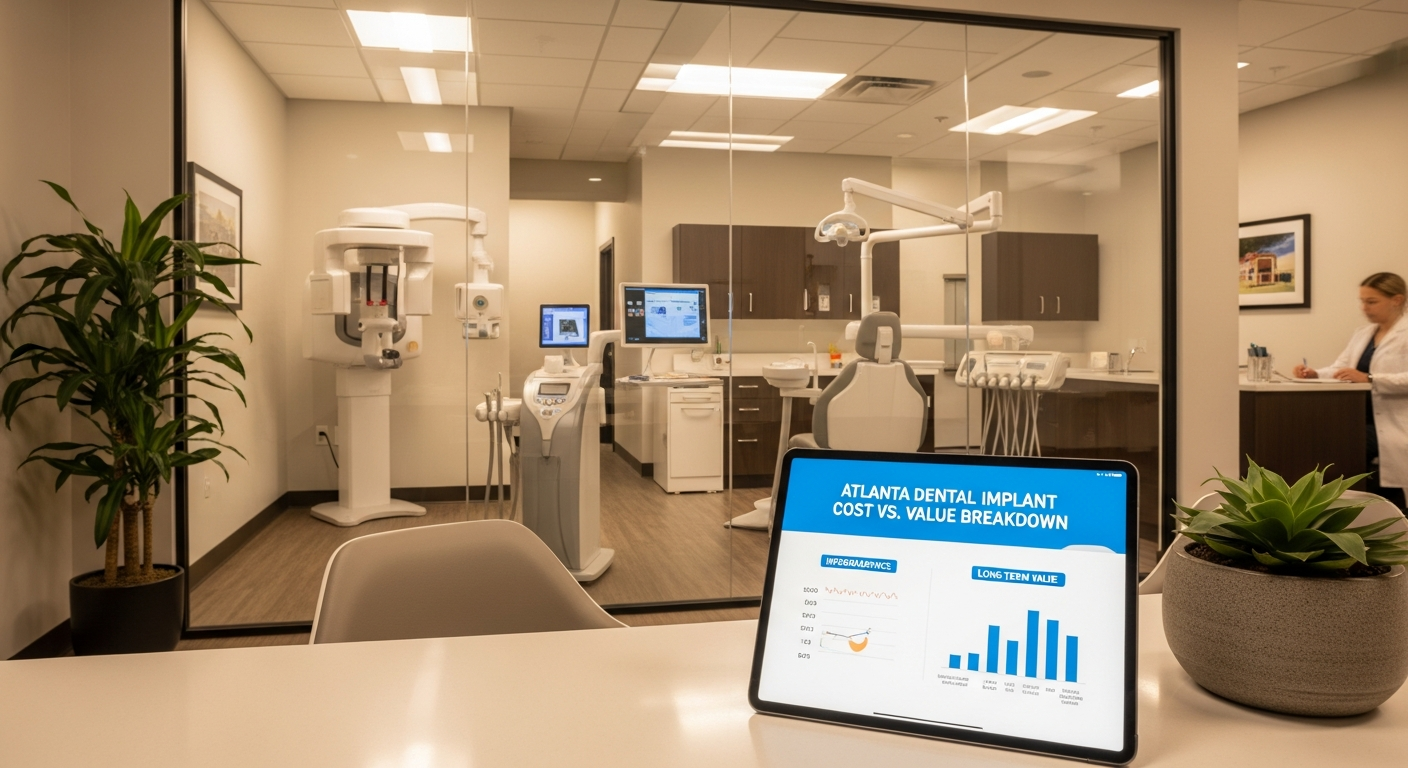
Start with a BOFU content slate that speaks directly to the implant patient who is nearly ready to buy. Drop those articles on localized landing pages such as South Florida high-value dentistry content or your implant pricing pillar. Use keyword clusters that include “implant consult near me,” “full-arch financing options,” and “implant consultation cost,” then publish them as blog + pillar combos that point to consult-booking CTAs. Google’s Local SEO grading guidelines emphasize consistency in NAP data, citation quality, and localized content depth, so pair your BOFU articles with accurate business listings and schema signals (Moz and Google’s Search documentation are great references for the technical side).
Connect each piece of content to a consult experience
Each BOFU blog must link to a consult page that describes your consult workflow, financing options, and the value you deliver. Use internal linking to the dental-appointment-setting-service-guide or other service pages so Google sees the relevance path and patients can immediately jump to booking. External references like Search Engine Journal’s local SEO checklist remind searchers that your practice is the authority in your market, which reduces friction when the patient finally calls.
Automate the consult-ready touchpoints
Automate booking, education, and financing clarity
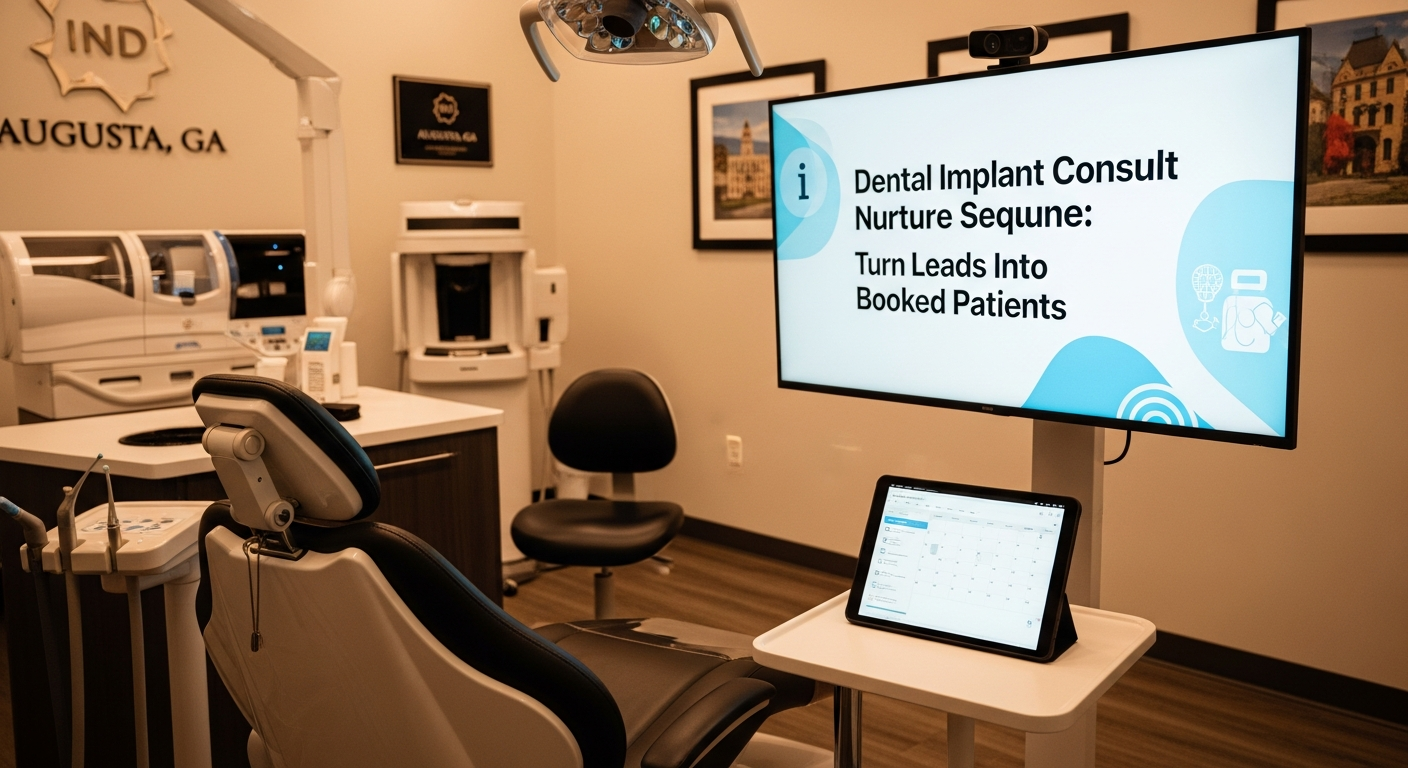
The consult pipeline is only as strong as the automation that supports it. When a new implant consult schedules, your automation should trigger three parallel flows: 1) confirmation + directions, 2) financing education (structured around your dental-crm-follow-up-guide), and 3) a short social proof or case study reminder that keeps interest warm. Use conditional logic so that financing messages change if the patient selects internal financing vs. third-party lenders. Automations also prevent human error in the handoff between front desk and treatment coordinator, keeping the entire team synchronized around the same financing decision engine and consult script.
Nudge patients without sounding pushy
Between the consult and the signature, your automation should send precisely timed nudges: a 24-hour follow-up with the treatment proposal, a 72-hour check-in with a testimonial, and a one-week reminder that offers a short call if they are still undecided. The Dental Economics research backs the idea that consistent follow-up—not aggressive discounting—closes more high-value cases. Script each follow-up to ask a question (“Which option would you like to start with?”) so the patient replies and your team can re-enter the conversation.
Measure, iterate, and keep the pipeline healthy
Track the right KPIs on a dashboard
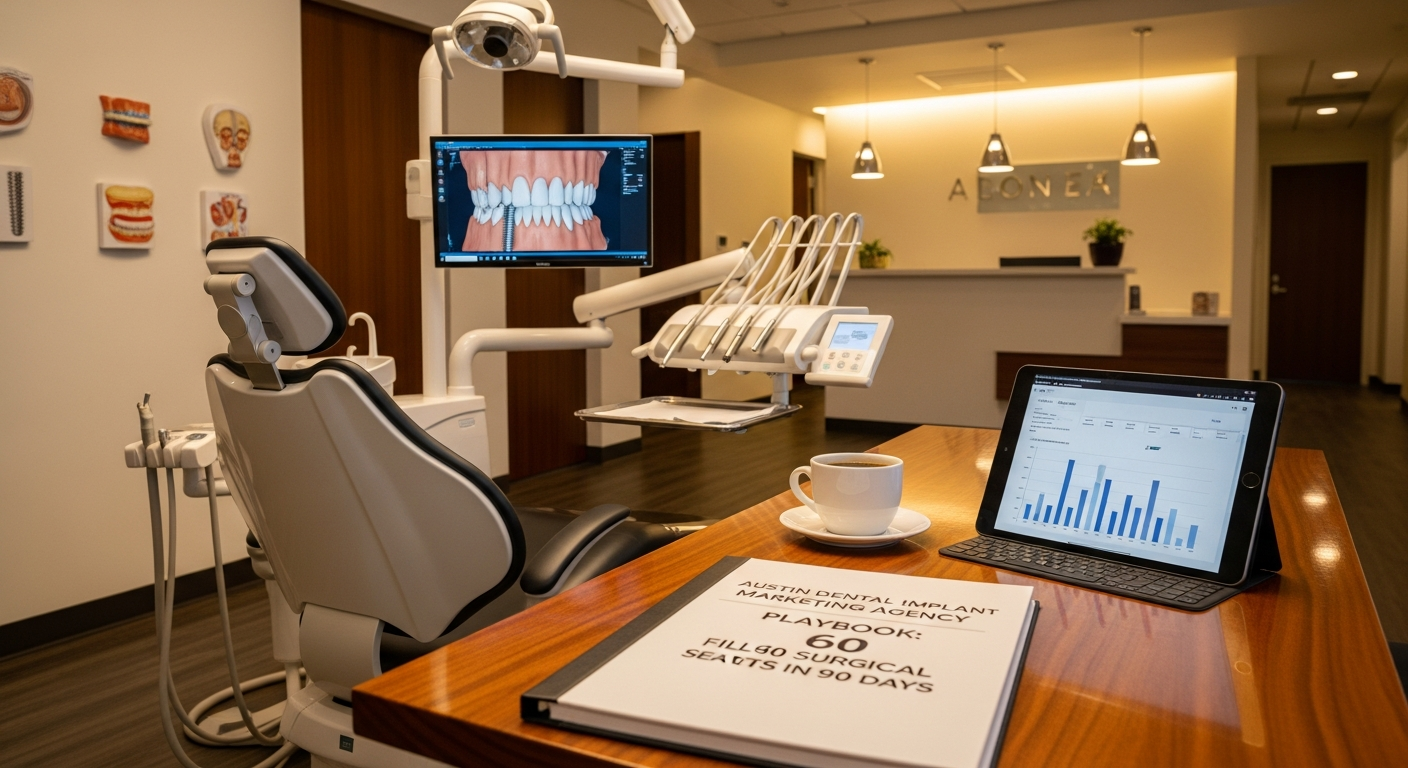
The consult pipeline needs guardrails. Track metrics like consult show rate, consult-to-plan conversion, average treatment value, and time between consult and signature. Tie these to your dental-practice-growth-benchmarks so you can spot when the pipeline slows down and adjust messaging or staffing. External data from Medical Economics highlights that high-value clinics monitor consult velocity constantly—those insights align with your mission of scaling revenue without adding marginal headcount.
Iterate on messaging, automation, and content
Don’t let your pipeline stagnate. When conversion dips, review the automation copy, consult scripts, and landing page content simultaneously. Use internal experiments like convert-more-dental-implant-leads to test new hero statements or financing stories, then push the winners across paid ads, email, and SEO. Measure each change, snapshot the results, and document what works so future iterations start from a proven baseline.
A predictable implant consult pipeline is the lever that unlocks higher monthly revenue without chasing arbitrary leads. If you want to align your content, automation, and consult experience into a single system, Book a free strategy call (https://www.closingmorecases.com/contact-us) or Book a free website audit (https://www.closingmorecases.com/contact-us).
Q: What does an automated consult pipeline include?
A: It includes BOFU content driving consult bookings, automation that educates and follows up, and measurement that keeps the engine optimized. The goal is to create a fluid journey from search to signed plan without manual handoffs.
Q: How long before I see results from this pipeline?
A: With the right content + automation in place, expect measurable improvements in consult-to-signature conversion within 4–6 weeks. Senior teams monitor show rates weekly and update messaging every sprint to keep momentum.
Q: Do I need to change my financing options to build this pipeline?
A: Not necessarily. The pipeline is about clarity, not new products. Package your existing financing options into a decision engine, automate the delivery, and tie it to follow-up so patients understand their path forward.
Q: How do I keep the automation from feeling robotic?
A: Write copy in your brand voice, include short stories or testimonials, and keep the call-to-action conversational. The automation should feel like a knowledgeable concierge, not a generic drip.
Q: Can the same pipeline work for other high-value treatments?
A: Yes—once the BOFU content, automation, and measurement are built, you can layer in other services (sleep apnea, cosmetic dentistry) by swapping storylines and CTA paths while keeping the underlying system intact.