Intro
Implant consults are expensive to win and easy to lose. A single cancellation can leave a full-operating-room slot empty for days while the front desk chases a warm lead that is harder to lock back in. The smartest practices treat every recall as a production event: they signal the moment a patient slips, auto-trigger the right response, and report on the outcome before the next open chair goes cold.
This playbook walks through the four high-leverage levers that keep implant consults booked during the busiest seasons: detect the recall gap early, automate CRM-to-SMS workflows, script empathetic yet urgent messaging, and close the loop with measurable dashboards. Each chapter includes actionable internal resources and the outside authority you need to justify automation investment to skeptical partners.
Detect the recall gap before consults slip
Before you write a single SMS or phone script, build a dashboard that watches for the telltale signals: consult cancellations, “book me in September” replies, and patients who opt out of the reminder sequence. Track those metrics weekly alongside your historical consult-to-treatment conversion and anchor them to benchmarks like our Dental Implant Consult Follow-Up Cadence playbook. When the retention rate dips by even 5%, your alert should fire and assign a teammate to the account.
Combine your internal data with the ADA’s seasonal demand research so leadership understands that recall slippage is natural but controllable (ada.org/resources/research). Make “recall health” part of your weekly huddle: report on the number of consult blocks rescued, the conversion velocity after a trigger, and the closed cases tied to automation. When you correlate dashboard output to revenue, leadership stops treating recalls as a front-desk annoyance and sees them as the beginning of a booked implant session.
Action steps:
- Add a recall column to your production dashboard with consult cancellations, reschedules, and rescheduled-to-treated ratios.
- Flag patients who ask for “call me back in a few weeks” and tag them by intent (sedation, implant, cosmetic) so you can tailor follow-ups.
- Share this data weekly with finance so you can quantify the revenue gap a single unfilled chair creates.
Automate CRM, SMS, and email nudges with precision
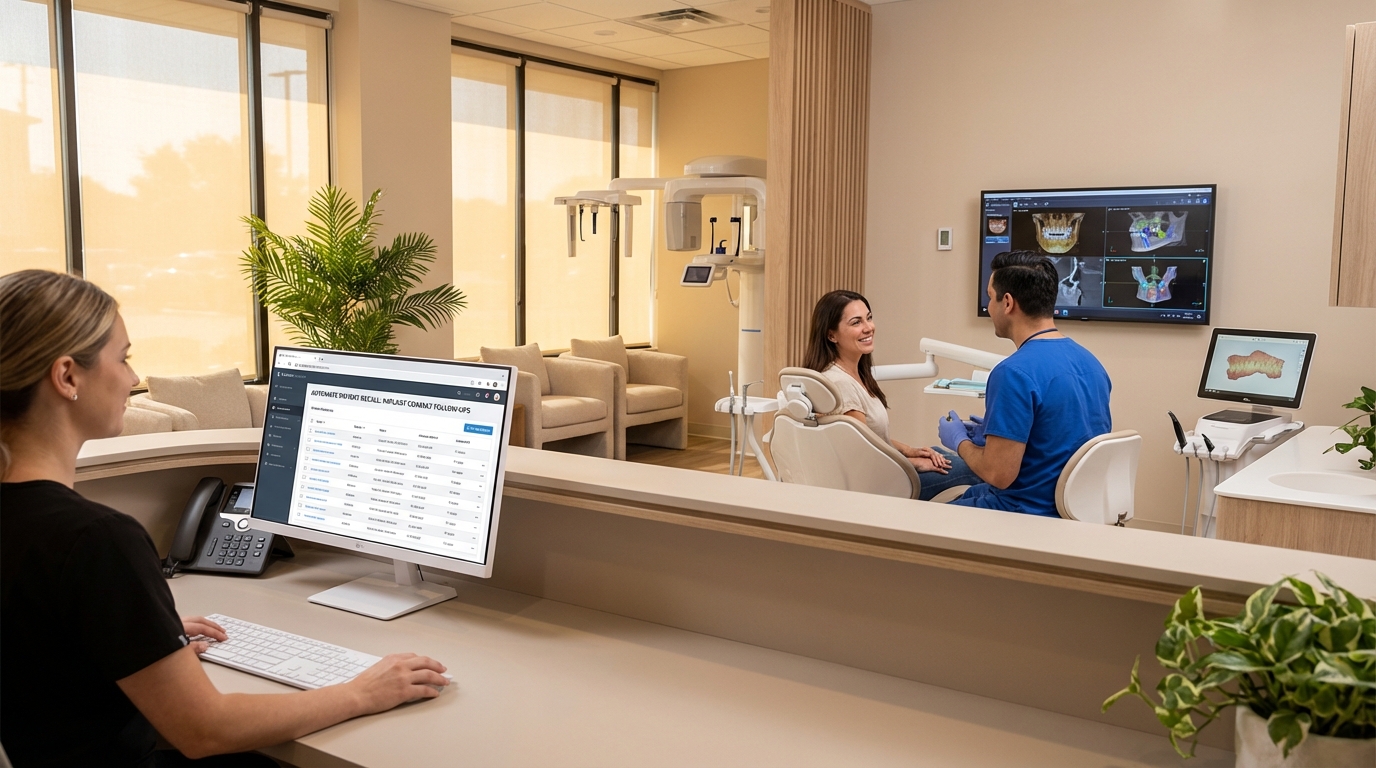
Once you can see the recall gap, automate the response. Use your CRM to trigger multi-step workflows: 1) confirmation email the moment the consult is booked, 2) SMS reminder 48 hours before, 3) a personalized voicemail if the patient cancels, and 4) a follow-up email that highlights limited sedation slots. Tie these workflows to the Dental CRM Follow-Up Guide so your team follows consistent messaging while maintaining real-time updates across the practice.
HubSpot’s marketing automation insights remind us that the right message at the right time increases conversion rates by up to 80% (blog.hubspot.com/marketing/marketing-automation). Match that precision to your calendar: don’t just resend the same reminder to every patient, add conditional branches that ask, “Did you secure financing?” or “Need another date?” so front-desk staff can escalate with the proper tone.
Action steps:
- Create automation templates that include internal notes (e.g., sedation requirements, provider preference) so every SMS feels handcrafted.
- Deploy a fallback team member who receives alerts when a high-value consult cancels and can immediately call with alternate dates and urgency messaging.
- Log every automated touch in your CRM so you have a clean handoff to the coordinator who ultimately books the repeat consult.
Script consult-worthy follow-ups and financing nudges
Automation is only persuasive if the language feels worthy of a high-price implant. Build a set of recall scripts that 1) acknowledge the patient’s hesitation, 2) emphasize the treatment outcome, and 3) clarify the financing path. Link your scripts to the Dental Implant Financing Options guide so teams can easily quote payment plans, partner programs, and seasonal specials without hesitation.
Back your messaging with consumer confidence from the CFPB’s financial wellness resources (consumerfinance.gov/consumer-tools). Highlight that treatment can start today with predictable monthly plans, and remind patients that pausing until the fall risks longer waitlists, lab delays, and higher anxiety. Offer a “summer advantage” rebate or a financing consultation that frames the decision as a strategy call, not a sales pitch.
Action steps:
- Develop a “consult recovery” script card with conversational bullets: personalization, urgency, financing, and action.
- Train coordinators to pull up the script while the patient is on the phone; automate an email with every script that summarizes the investments discussed.
- Create downloadable decision trees for patients so they can share financing options with spouses before the next consult.
Report, reward, and iterate with measurable recall dashboards
The final lever is feedback. Build a recall dashboard in your practice ops tool that tracks 1) automation outreach (SMS/email/phone), 2) recall-to-booked rate, and 3) revenue recovered. Link this dashboard to the Dental Practice Growth Benchmarks so every department knows how recall automation feeds the business KPIs. Pair internal reporting with health system research on operating rhythms—Health Affairs shows that organizations that monitor scheduling supply and demand weekly fill appointments more predictably (healthaffairs.org/content/forefront/2019/04/29/keeping-the-right-enterprise-schedule).
Action steps:
- Hold a weekly “recall review” for your scheduling, marketing, and ops leads with a simple scoreboard (automations fired, conversions, revenue impact).
- Celebrate the top recall coordinator so the team understands how automation + empathy create measurable wins.
- Use the dashboard to test hypotheses: does adding a video to the recall email boost replies? Does a midweek call outperform weekend texts? Iterate quickly to keep automation fresh.
Summary & Next Steps
Embark on this automation sprint by auditing recall data, wiring CRM/SMS flows, equipping coordinators with consult-worthy scripts, and reporting on the revenue impact. Each step should reference internal resources and external research to keep stakeholders aligned.
Need a partner to architect the automation, scripts, and dashboards? Book a free strategy call so we can design a recall playbook together. Prefer a technical review of your web journey and messaging? Book a free website audit and we’ll ensure your recall automation drives consistent conversion across every channel.
- How soon should we automate recall workflows for implant consults? Start as soon as a consult block is booked. The earlier you automate, the more touchpoints you capture—confirmation, reminders, and recovery sequences—before the patient has a chance to say “I’ll wait until fall.”
- What channels should we include in the recall automation? Cover email, SMS, and voice, with automation pathways that escalate to a live call if a high-value patient cancels. Include internal notes on sedation, financing, and provider preference to keep the handoff smooth.
- How do we keep automation personal instead of robotic? Use template scripts that include personalization tokens (patient name, treatment, last visit) and vary the message tone depending on the patient’s intent (finance-focused vs. urgency-focused). Humanize every automated touch by referencing their specific concern.
- Do we really need a financing script in every recall? Yes. High-value patients often pause because they need a financial plan. A quick reference to your financing guide and a follow-up call with a financing expert can unlock the consult without waiting weeks.
- What metrics prove recall automation is working? Track booked consults recovered after a cancellation, the conversion rate of recall-triggered follow-ups, and the revenue tied to those recoveries. Tie those numbers back to your practice growth benchmarks so leadership sees the dollar impact.
- Can we export this automation data to share with the whole team? Absolutely. Use your practice dashboard to share weekly reports, and link those reports to your KPI board so scheduling, marketing, and finance all see the recall ROI.
Book a free strategy call and see how we help dental practices add 40+ new patients in 90 days.
Book Your Free Strategy Call