Many practices treat high-value treatment plan conversions as a people problem—"we just need another coordinator or front desk person." In reality, it is a systems problem dressed up in human drama. When there are repeatable triggers, clear technology, and accountability built into the journey, your current team can close more cases without burnout. This article walks through the blueprint, financing automation, and reporting practices that let you scale treatment plan conversions with the staff you already have.
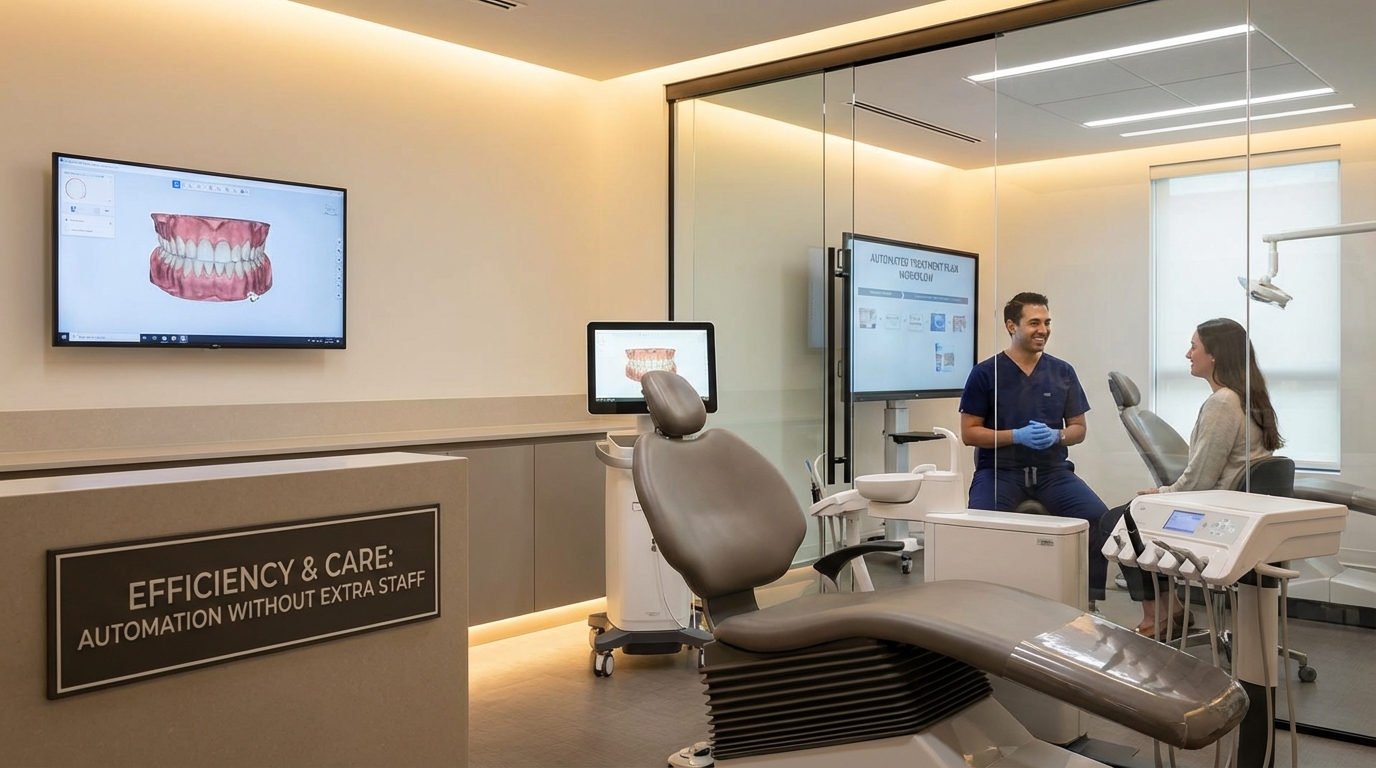
Automate High-Value Treatment Plan Conversions Without Adding New Staff
By KamGeneral1,413 words7 min read
Blueprint the consult journey so every handoff feels precise
Every handoff during a consult is an opportunity to insert friction. The first step is to map the entire patient journey—from the call to the post-procedure follow-up—and decide exactly what happens at each milestone. Start by codifying the discovery questions that schedulers must ask and the data points your implant coordinators update in your CRM. Link that checklist to your dental implant consultation conversion rate tracker so every consult that drops is traceable to a missed step.
Use the data your practice already collects. If you know, for example, that 38% of consults stall because financing is unclear, automate a two-message sequence: first, a confirmation text that outlines the payment tiers, and second, a follow-up email with a short explainer video or graphic. Practices that document these workflows and train every role to execute them report 20–25% higher conversion lifts, according to the American Dental Association practice research.
Treat every metric as a decision point. When you blueprint the consult path, align it with the behaviors that lead to a yes—clear financing, confident surgeons, and confident coordinators. That blueprint becomes your automation map.

Automate financing and objection handling so it feels effortless
Financing conversations trigger objections when they are ad-hoc. Instead, embed financing information into appointment confirmations, intake surveys, and the consultation room narrative. Train your team on the exact script, then automate nudges that reinforce it: a scheduler text that says, "We hold financing spots for implants with two flexible plans; you pick the one that works with your timeline," and an email that links to your dental implant financing playbook for patients who want to review options before arrival.
Pair automation with storytelling. Give schedulers and coordinators a short, evidence-based story they can share in 30 seconds—the same story that marketing uses on your website and social feeds—so the consult feels cohesive. Harvard Business Review calls these micro-stories the antidote to forgettable scripts because they help teams remember what to say when the pressure is on (source). Automate reminders to practice those stories and share weekly wins, then measure adoption via a simple form that tracks whether financing was discussed, when it was discussed, and which option the patient preferred.
Finally, connect your automation to your CRM so nothing falls through. A completed funding application should trigger a celebratory Slack/Teams message for the coordinator and mark the opportunity as "financing sent" inside your sales cadence. That keeps follow-up sequences tight without someone having to chase a spreadsheet.

Layer technology and accountability to keep the journey synchronized
Your automation layer is only as good as the accountability surrounding it. Use your practice management platform (like Open Dental, Dentrix, or Eaglesoft) to flag consults that pass a certain ticket threshold and automatically enroll them in the high-value treatment plan workflow. Once flagged, your automation stack—texts, emails, internal alerts—kicks in so nothing is manual and your team can stick to the plan they trained on.
Add a weekly huddle where the entire team reviews three metrics: consults flagged for automation, financing applications submitted, and cases accepted. Celebrate wins with short shout-outs so coordinators know the automation is working, and diagnose misses by asking, "Did the automation fire? Did the patient see it?" These huddles reinforce accountability while also surfacing opportunities for improvement.
For patients, this feels like a concierge experience. For your team, it means automation is the scaffolding, not the substitute for human expertise. The McKinsey research on automation in healthcare notes that practices that layer human oversight around automated workflows see the biggest lifts in patient satisfaction and conversion when they are transparent about the process (source). Your operations page, whether it is the Closing More Cases strategy hub or your internal operations manual, should capture the workflow so onboarding new coordinators is a matter of reviewing one living document.
Measure conversions and reinvest the insights into your automation stack
Automations without measurement are just nice emails. Track each stage of the high-value treatment plan conversion funnel: consult booked, financing presented, financing approved, case accepted, and procedure scheduled. Maintain a dashboard that links these stages to revenue so you can spot where the funnel leaks. For example, if financing approvals jump but procedure bookings lag, the issue may be surgeon availability or case presentation, not automation.
Use a simple internal dashboard that pulls data from your practice management software and marketing automation platform. Weekly snapshots that compare conversion rates to the previous four weeks highlight whether your automation tweaks are working. The Centers for Disease Control and Prevention publishes oral health performance benchmarks so you can cross-check your conversion improvements against national averages (reference). When you see momentum, double down by expanding automation to similar services—implant-supported bridges, full-arch cases, or cosmetic packages—without adding extra staff.
Finally, loop marketing into the measurement. When a consult is marked as "automation-ready," tag the patient source and see if organic traffic, paid campaigns, or referral partners are feeding the high-value funnel. That allows you to reinvest marketing dollars into the channels that regularly deliver pipeline-ready consults, not just volume, and highlights why practices often book a website audit before relaunching messaging tied to high-value funnels.
Summary + CTA
The fastest way to automate high-value treatment plan conversions without hiring more staff is to blueprint the journey, automate financing and objection handling, keep technology anchored with accountability, and measure your outcomes. When consults are predictable, your current team can operate at a higher level without burning out.
Ready to scale your treatment plan conversions? Book a free strategy call to map the automation, or book a free website audit if you need to align marketing to those high-value cases: Book a free strategy call or Book a free website audit.
- How do I know if my practice is ready for automation? If you already track consult conversions and financing outcomes, you are ready. The automation should start with the data you already have and simply add triggers and accountability. Practices that want to avoid new hires should focus on the dozen consults that would benefit most from automation before scaling to the entire practice.
- Will automation remove the human touch? No. Automation is the scaffolding that keeps your team focused on the conversations they do best. The automation you build should hand the patient back to a coordinator or surgeon at the golden moments, not replace the human experience.
- What tools do I need to automate high-value treatment plans? Any practice management system with tagging or custom fields (Open Dental, Dentrix, Eaglesoft) works, backed by a marketing automation tool that can send texts, emails, and notifications. Link those tools with a CRM or spreadsheet so your coordinators can see exactly which step the patient is on.
- How do I keep the automation updated? Treat it as a weekly checklist. During your huddles, review what happened with the automation: did the patient get all the automations? Did anything feel robotic? Adjust copy, add personalization, and update scripts so the automation evolves with the way your team talks.
- Can this model work for procedures beyond implants? Yes. The blueprint adapts to any high-value treatment—full-arch, cosmetic, surgical, or orthodontic—by adjusting the milestones, financing options, and scripts to match the new service line.
- What reporting should I share with ownership? Share conversion rates across the funnel plus the revenue tied to automation. A simple dashboard that shows "automation-enrolled consults" versus "cases accepted" plus revenue impact keeps leadership informed and confident in the system.
Ready to Close More Cases?
Book a free strategy call and see how we help dental practices add 40+ new patients in 90 days.
Book Your Free Strategy CallRelated Articles
General6 min read
Asheville Dental Marketing Agency Playbook for High-Value Case Growth
Asheville Dental Marketing Agency Playbook for High-Value Case Growth
General7 min read
Atlanta Dental Marketing Agency Pricing: What It Takes to Buy Consistent Implant Cases
Atlanta Dental Marketing Agency Pricing: What It Takes to Buy Consistent Implant Cases
General6 min read
Back-to-School Revenue Reset for Dental Practices
Reset your practice for the back-to-school rush with scheduling, messaging, and financing systems that turn seasonal slumps into predictable consults.